

Matching your wall colors with your furniture is one of the most impactful things you can do when decorating your home. When your walls and furniture work together in harmony, the entire room feels intentional, balanced, and beautifully designed.
However, trying to figure out how to match wall colors with furniture manually can turn into a frustrating cycle. Spending money on endless paint sample pots, spending hours attempting complex photo editing software, or guessing how a tiny color swatch will look next to your sofa takes far too much effort and time.
If you are ready to stop guessing and start creating a cohesive space, this guide covers everything you need to know about pairing paint with your existing furniture pieces.
How to Match Wall Colors With Furniture
Look at your living space right now. Do your walls and sofa feel like they belong in two completely different homes?
When a room feels disjointed, the issue is rarely the quality of your furniture—it is almost always an accidental clash between the wall paint and your upholstery or wood finishes. Walls make up the largest surface area in any room, meaning they set the backdrop for every single piece of furniture placed against them.
Here is the secret: matching wall colors to furniture isn't about making everything the exact same shade. It is about creating intentional visual relationships.
When you learn how to coordinate your wall color with furniture, you gain complete control over the room's atmosphere:
- Unified Palette: Selecting complementary paint shades ties your sofa, tables, and accent chairs into a single cohesive environment.
- Proportional Balance: The right furniture and wall color combination prevents heavy dark furniture from overwhelming the room.
- Enhanced Style: Exploring curated wall color ideas with furniture in mind brings out the rich textures of leather, wood grain, and upholstery fabrics.
To build a solid foundation, start by exploring why you should Look at Your Furniture Color Before Choosing Paint.
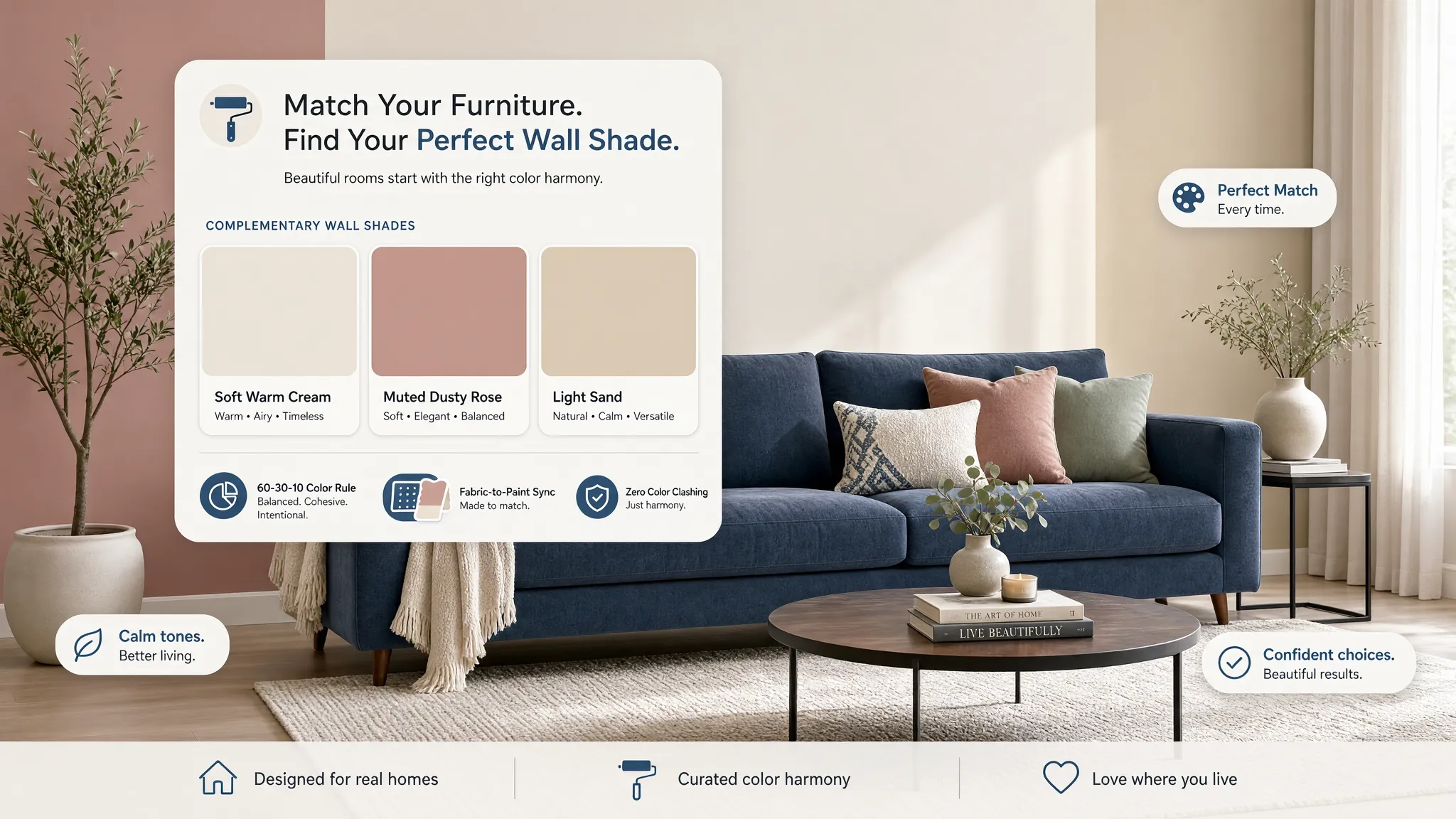
Look at Your Furniture Color Before Choosing Paint
Here's the biggest mistake people make during a home renovation: picking out a paint color before considering the furniture that will sit in the room.
Paint is available in thousands of custom tinted shades, making it virtually unlimited. Your furniture, on the other hand, is fixed. Replacing a quality leather sofa, custom dining set, or hardwood credenza just to match a $50 can of wall paint is expensive and unnecessary.
The Selection Rule: Always choose your wall color based on your non-negotiable furniture pieces—never the other way around.
When you choose wall color based on furniture, you start your design journey with clear boundaries. Evaluating your dominant furniture color and wall color relationships first narrows down thousands of paint chips into a manageable shortlist, making choosing paint color simple and stress-free.
If your space features rich woods or tan upholstery, learn how to handle Warm Furniture and the Wall Colors That Work With It.
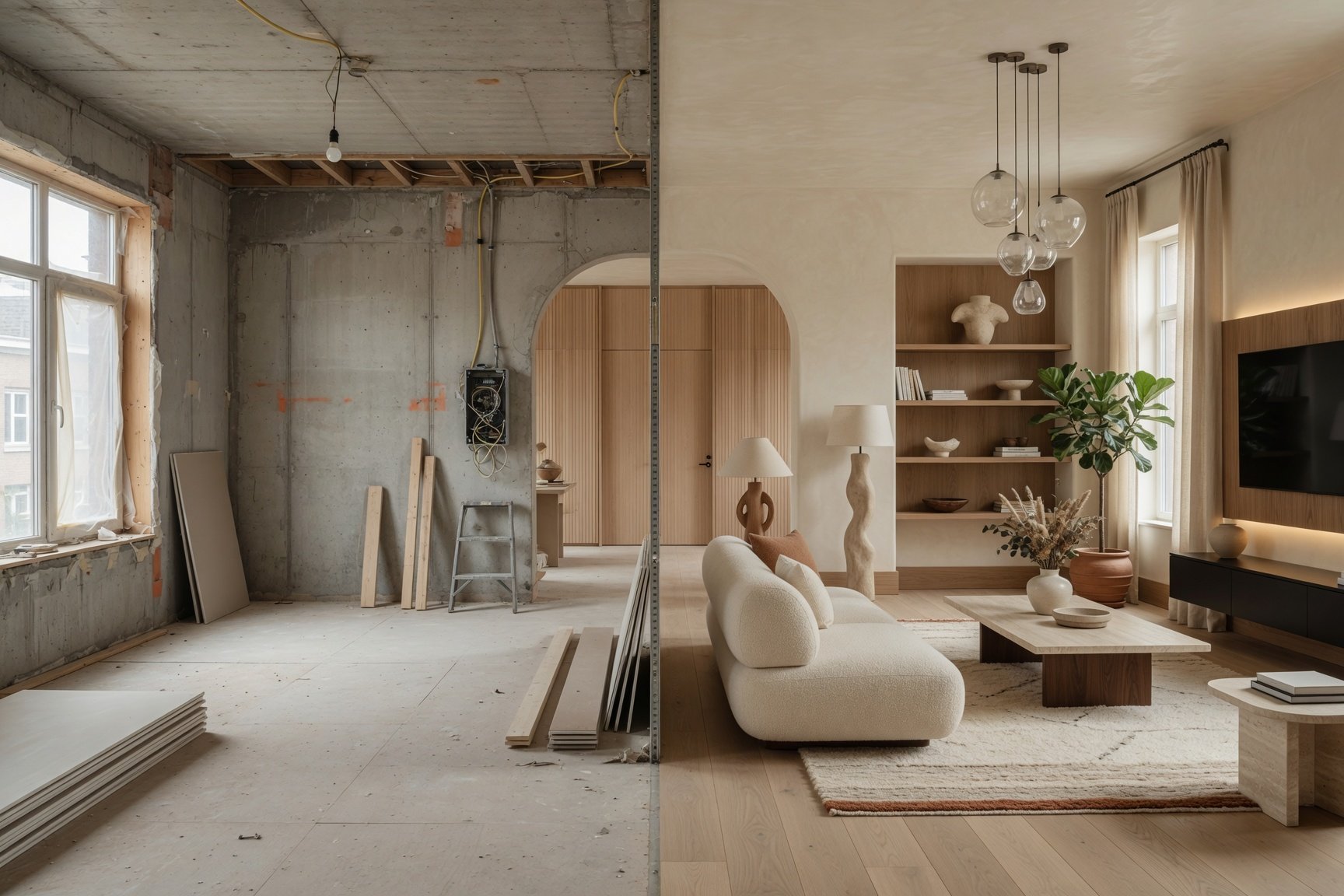
Warm Furniture and the Wall Colors That Work With It
If your room is filled with warm wood tables, camel leather, tan upholstery, or warm beige seating, you need a wall palette that honors those golden, earthy foundations.
When choosing wall colors for warm furniture, the goal is to enhance the natural richness of the materials without making the space feel overly orange or muddy.
Consider these proven pairings:
- Wall Color With Brown Furniture: Soft creamy whites and warm alabasters soften deep wood grains without creating harsh contrast.
- Wall Colors With Wood Furniture: Muted greens like sage or moss contain warm yellow undertones that pair effortlessly with natural timber.
- Paint Colors With Beige Furniture: Choose a greige paint that is two shades darker or lighter than your beige sofa to build subtle depth.
Using these warm furniture color combinations creates an inviting atmosphere that highlights your room's natural textures.
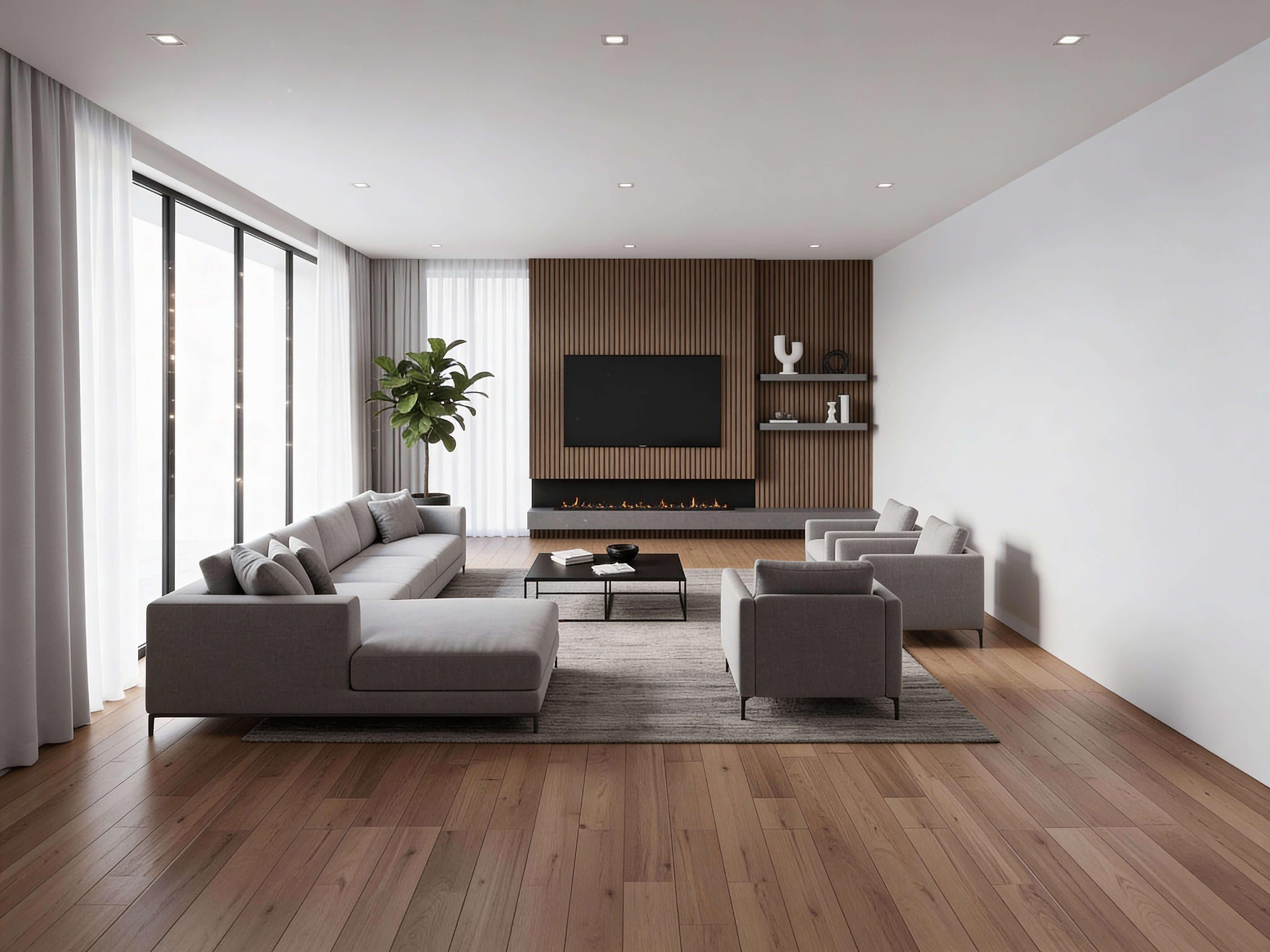
Cool Furniture and Wall Colors That Balance It
What if your living room centers around a charcoal gray sectional, navy accent chairs, or modern black lacquered tables?
Cool-toned furniture looks sleek and modern, but pairing it with the wrong wall color can make your room feel sterile, cold, or clinical.
To create balance when selecting wall colors for cool furniture:
- Introduce Subtle Warmth: Pair cool gray seating with an off-white wall containing subtle warm undertones to keep the room welcoming.
- Coordinate Cool Tones: A wall color with gray furniture can lean into cool mineral tones if you add warmth through wood accents and warm lighting.
- Soft Contrast: Try pairing a navy sofa with soft oatmeal walls—the subtle temperature contrast makes the blue upholstery pop.
Mastering these cool furniture color combinations prevents your home from feeling overly stark.
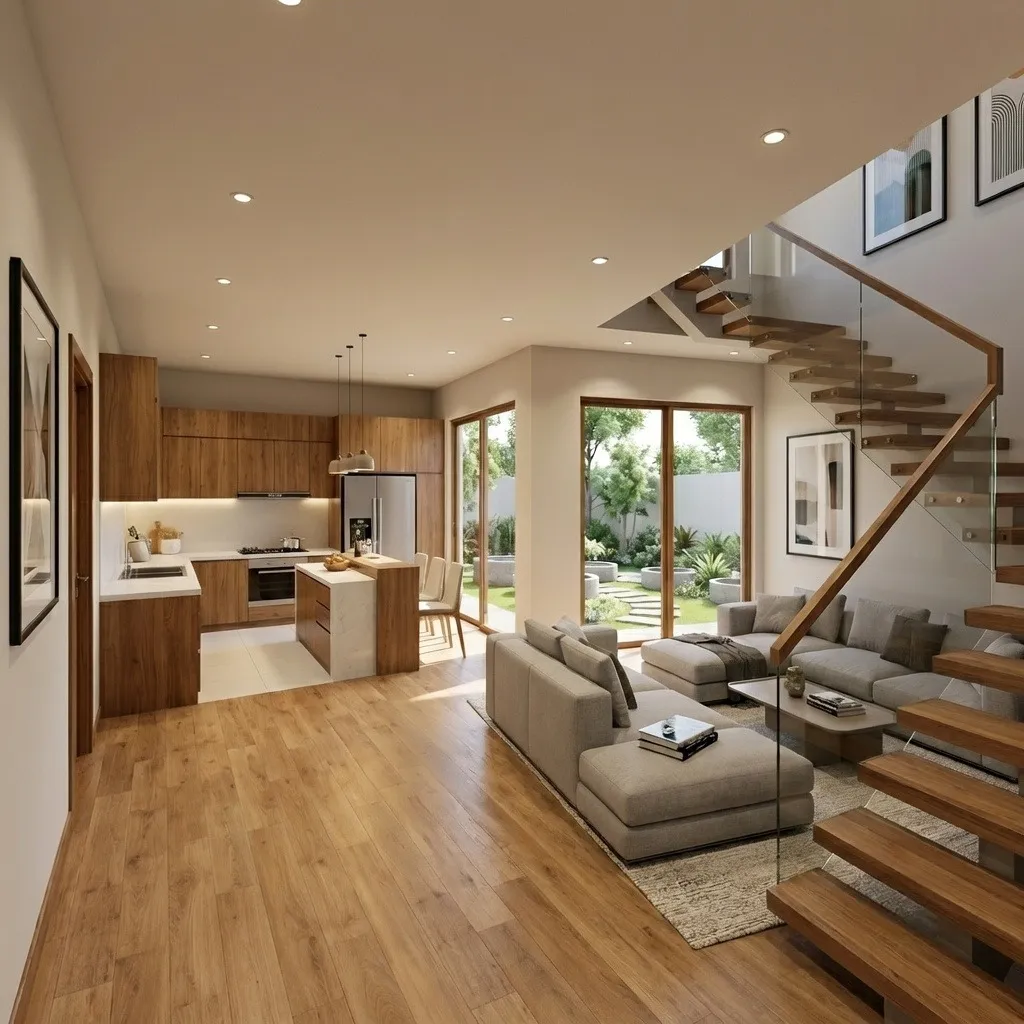
Best Wall Colors for Brown and Wood Furniture
Wood furniture is a timeless staple in most homes, but matching wall paint to wood tones often causes confusion. People often worry that dark wood will make the room look tiny, or that light wood will wash out against pale paint.
Here is how to select the best wall colors for brown and wood furniture based on wood depth:
- Wall Colors With Dark Wood Furniture: Light, warm neutrals provide crisp contrast that brings out the intricate wood grain of dark espresso tables.
- Paint Colors With Wood Furniture: Muted olive greens and dusty slate blues sit opposite red and orange wood tones on the color wheel, creating balanced contrast.
- Wall Color With Wooden Furniture: To make a room with heavy mahogany feel lighter, use soft warm whites to keep the background open and airy.
Exploring these brown furniture room ideas helps you showcase your wood pieces without darkening your space. You can also explore how to match wall colors with your flooring to complete the look.
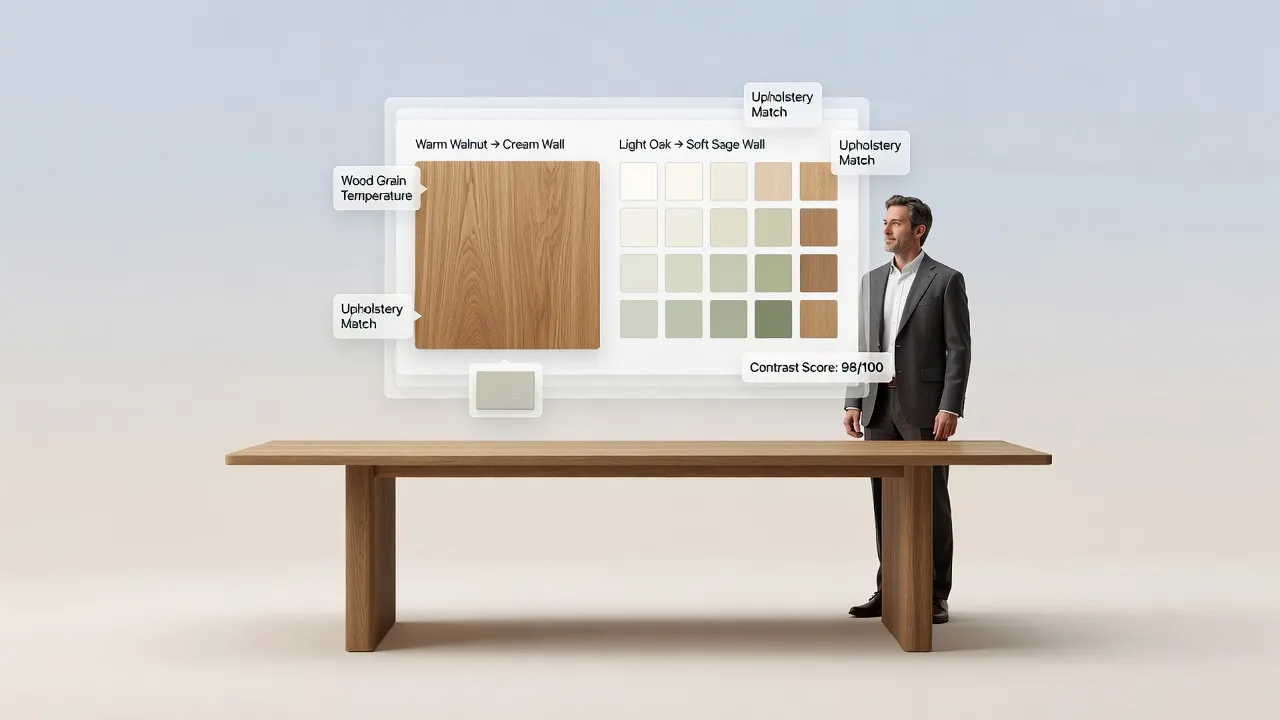
What Wall Color Works With a Gray Sofa?
A gray sofa is one of the most popular furniture purchases today, yet finding the right wall paint to match it remains a major challenge.
Here's why: gray is rarely just gray. Every gray fabric has a hidden undertone—blue, purple, green, or brown.
Here's how to choose the right wall color with gray sofa setups:
- Identify the Base: Hold a pure white sheet of paper against your gray couch. If the fabric looks bluish, it's a cool gray. If it looks taupe or brown, it's a warm gray.
- Select Paint Colors With Gray Sofa: For cool gray couches, choose warm greige or creamy white wall paint to balance the chill. For warm taupe-gray couches, soft sage or warm alabaster creates a beautiful look.
- Styling a Gray Couch Wall Color: If you want a dramatic look, paint the wall behind your charcoal sofa a deep navy, using ambient lighting to highlight the dark backdrop.
Matching your wall colors for gray furniture transforms a standard gray sectional into a striking centerpiece.

How to Match Wall Color With a Beige or Cream Sofa
Beige and cream sofas offer a soft, versatile foundation, but pairing them with identical wall paint can leave your room looking flat and uninspired.
To make a light neutral sofa shine, your wall paint needs to provide subtle visual depth.
Try these strategies for a wall color with beige sofa layout:
- Create Soft Depth: Choose a wall color with cream sofa upholstery that is slightly darker than the cushions, such as a rich warm greige or light mocha.
- Bold Contrast: Pair beige seating with deep terracotta, navy, or dark olive walls to make your light upholstery pop.
- Harmonize Beige Furniture Wall Colors: Keep trim and ceilings crisp alabaster to define the boundaries between wall and furniture.
These cream furniture room ideas ensure your light upholstery stands out instead of blending into the background.
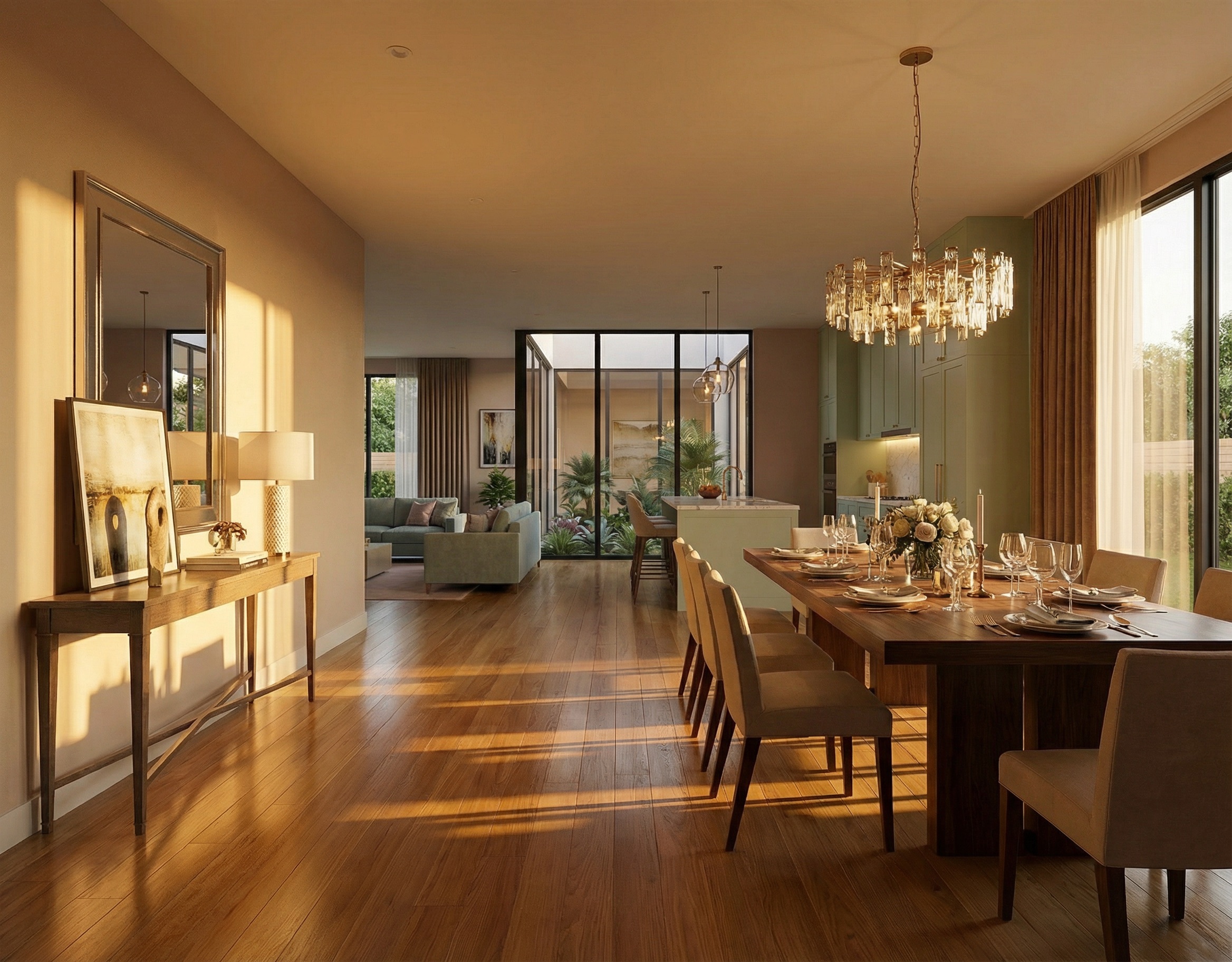
Use Furniture Undertones to Find the Right Paint Color
Have you ever paired two neutral items that seemed identical in the store, only to find they clashed terribly once placed in your living room?
This frustrating issue happens when undertones conflict.
Undertone Principle: Mass tone is the main color you see on the surface; undertone is the hidden base pigment (yellow, pink, green, or blue) that comes through under natural light.
Mastering furniture undertones and wall color requires checking for base pigments:
- Identify Paint Undertones: Compare your paint swatch against pure white paper to reveal hidden pink, blue, or yellow bases.
- Audit Furniture Undertones: Inspect your wood grain or fabric in natural daylight to spot golden, red, or ash tones.
- Ensure Harmony: Align warm vs cool undertones across both surfaces so your wall paint and furniture complement each other seamlessly.
Understanding matching paint undertones eliminates guesswork and ensures your colors look great together.
Should Your Walls Match or Contrast With Your Furniture?
When deciding on a design direction, you face a fundamental choice: should your wall paint blend in with your furniture, or contrast against it?
Both approaches work well—it all depends on the atmosphere you want to create.
Here's how to decide:
- Wall Color That Matches Furniture: Painting walls in a shade similar to your main furniture creates a cozy, enveloping look that visually expands small rooms.
- Contrasting Wall Colors: Painting walls darker or lighter than your furniture highlights structural silhouettes, making a bold statement piece stand out.
- Balancing Furniture Color Combinations: If your furniture and walls feature high contrast, add neutral rugs and window drapery to soften the transition.
Understanding these wall and furniture color ideas helps you choose the right balance for your home.
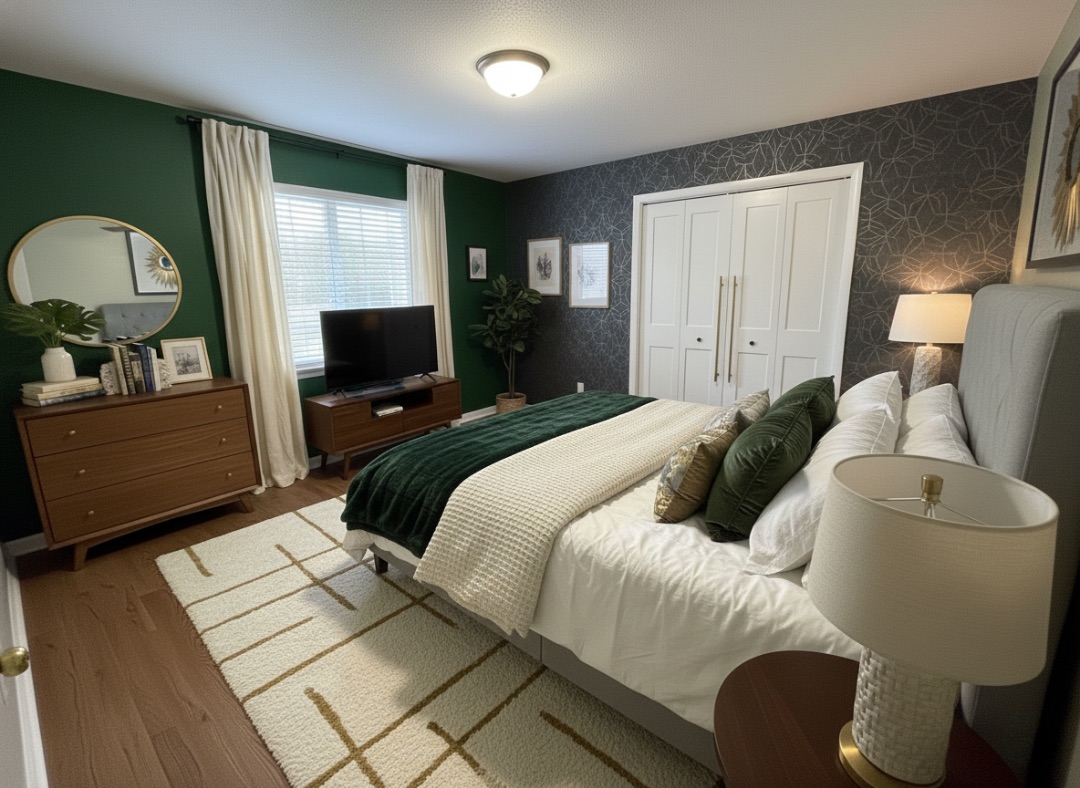
How Lighting Changes Wall Color Around Your Furniture
Have you ever picked a paint swatch that matched your sofa perfectly in the store, only to find it looked totally different once applied to your living room wall?
Light temperature completely alters how pigments interact on different surfaces.
Keep these factors in mind when evaluating lighting and wall color:
- Natural Sunlight Orientation: North-facing rooms receive cool light that can dull warm paint, while south-facing rooms bring out golden tones.
- Artificial Bulb Selection: Pair your room's palette with warm 2700K bulbs to maintain color harmony after dark.
- Evaluating Surface Reflectivity: Matte wall paint absorbs light, while velvet or polished wood furniture reflects it, creating subtle variations between adjacent surfaces.
To test these lighting shifts with your actual furniture without making a mess, explore Test Wall Colors With Your Furniture Before Painting.
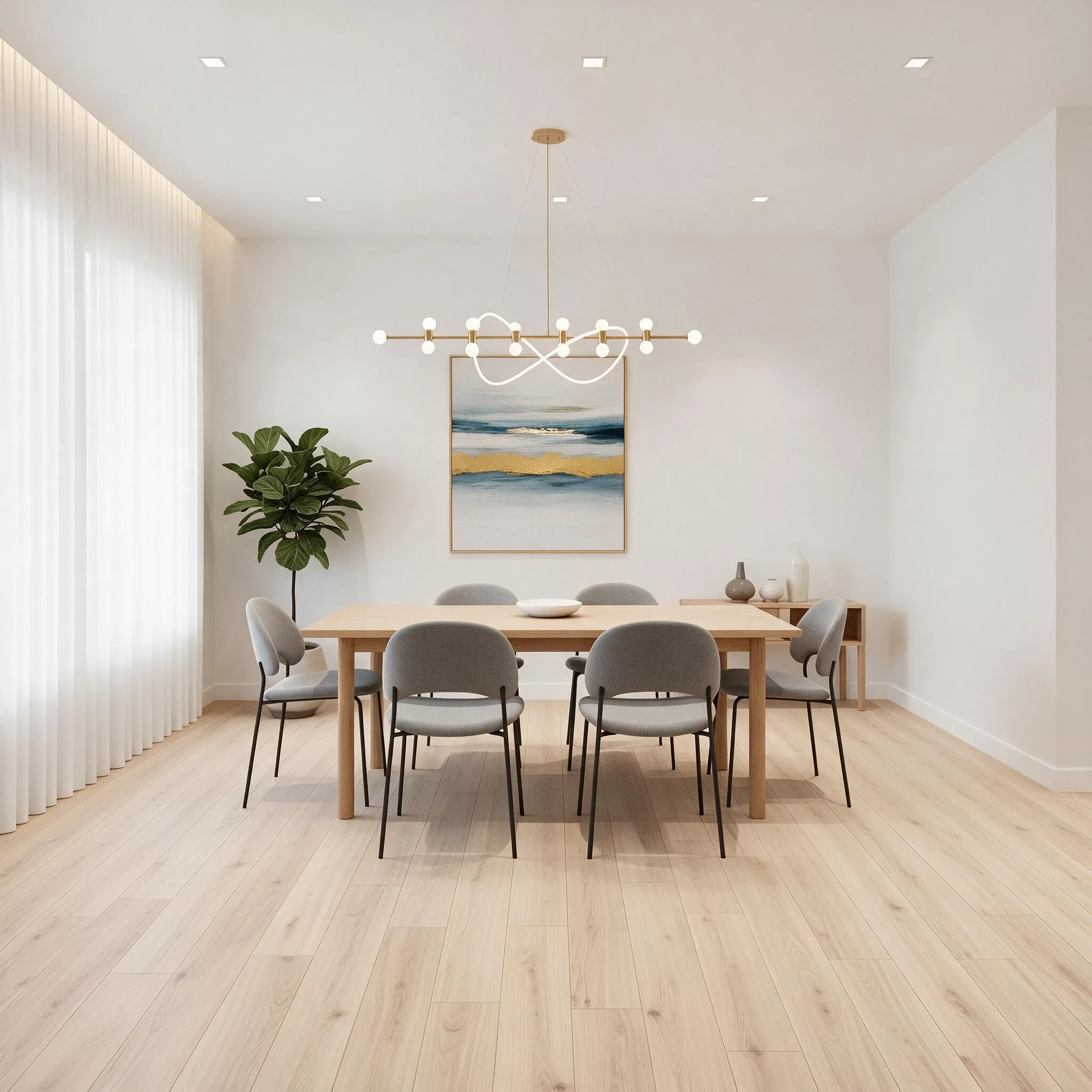
Test Wall Colors With Your Furniture Before Painting
Here is the biggest obstacle in home decorating: trying to predict how a new wall color will look behind your actual furniture.
In the past, testing colors meant buying expensive sample cans, painting messy patches on your walls, or spending hours trying to edit photos in complex software. Not only is manual editing tedious and time-consuming, but standard design apps also flatten lighting and distort fabric textures, leaving you unsure of the final result.
You don't have to guess or waste money anymore.
• Paint messy patches on walls
• Hours spent in editing software
• High risk of expensive mistakes
• Hit "Generate" for instant render
• Accurate lighting & shadows
• Fast, zero mess, exact match
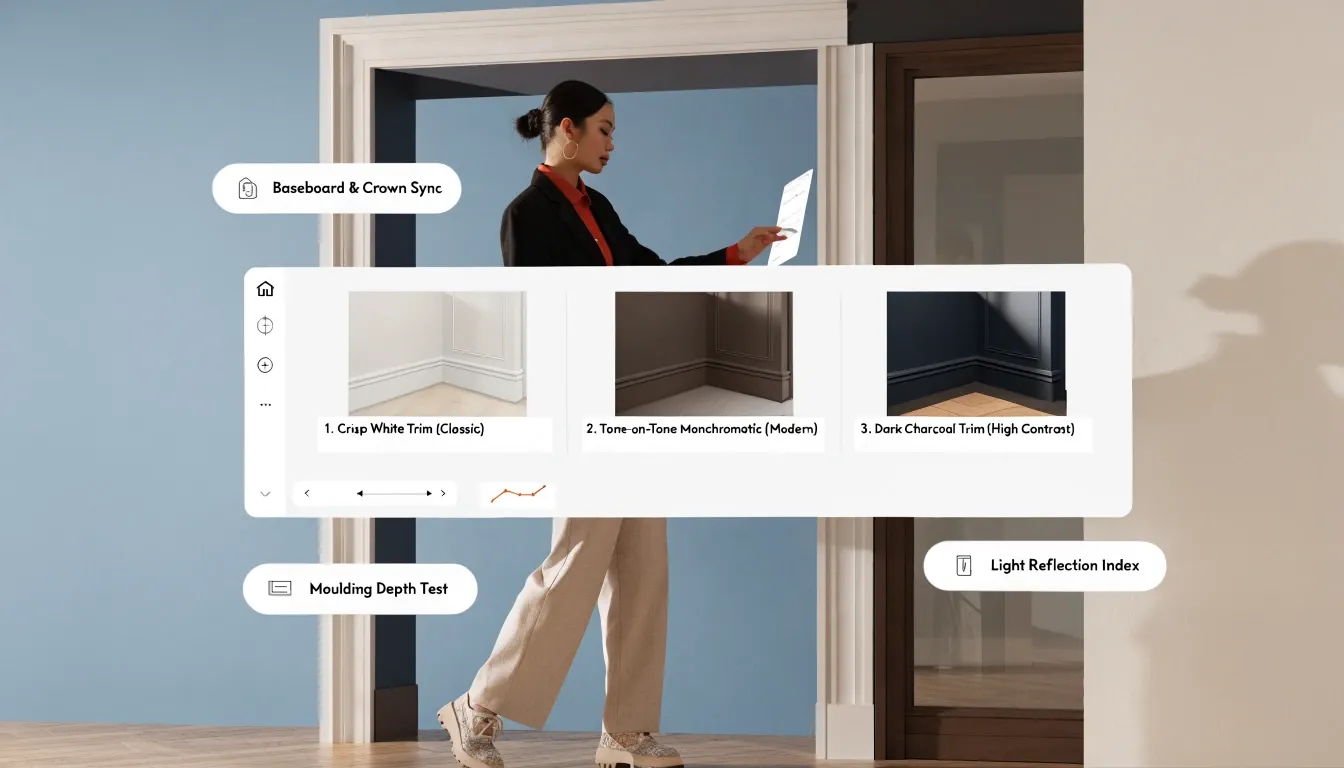
Instead of relying on generic tools that produce unrealistic results, DesignHome Synthesis™ does the heavy lifting for you. Our spatial layout intelligence analyzes your uploaded room photo—evaluating your actual furniture shapes, wood grains, fabric textures, and room lighting.
Simply upload an image of your room with your furniture and hit generate.
In seconds, DesignHome Synthesis™ places realistic custom wall colors directly behind your existing furniture. You can instantly test dozens of palettes, explore subtle undertones, and see exact matches before spending a single dollar on paint.
Create a Wall and Furniture Color Palette That Feels Cohesive
When you align your wall paint with your furniture, your home transforms from a collection of individual items into a beautifully designed sanctuary.
To bring your final palette together seamlessly, follow this comprehensive checklist:
By choosing your wall and furniture color combinations intentionally, you create a thoughtful furniture color palette that brings out the best in your home.
Take the guesswork out of decorating, protect your time and budget, and enjoy a perfectly coordinated home you'll love every single day.
FAQs About Matching Wall Paint with Existing Furniture
Should I choose my wall paint or buy my furniture first?
Always buy or evaluate your anchor furniture before choosing wall paint. Paint can be mixed in tens of thousands of custom hues, tints, and sheens, while furniture options—especially leather sectionals, upholstered sofas, and solid hardwood tables—are limited and costly to replace. When you choose wall color based on furniture, you set clear visual boundaries that make selecting paint far easier.
What wall colors work best with dark wood or brown furniture?
When finding wall colors with brown furniture, focus on balancing weight and warmth. Deep walnut, mahogany, or espresso pieces are heavy, so they need backdrop shades that provide contrast without feeling cold:
- Soft Cream & Warm Alabaster: Highlights dark wood grain cleanly while keeping the space open.
- Muted Sage Green: Complements earthy wood pigments naturally with subtle warmth.
- Dusty Slate Blue: Creates refined contrast against dark reddish-brown timber tones.
How do I choose the right wall color for a gray sofa?
Finding the ideal wall color with gray sofa upholstery requires checking the fabric's undertone:
To balance wall colors for cool furniture, pair icy gray couches with warm creamy backdrops to keep your living room from feeling chilly.
Which wall colors complement a beige or cream sofa without making the room look boring?
If you pair a beige couch with identical beige paint, the room can look flat. To elevate a wall color with beige sofa setup:
- Create Subtle Depth: Paint walls a warm greige shade that is two steps darker than your cushions.
- Try Contrast: Combine a wall color with cream sofa seating against deep navy, moody terracotta, or muted olive walls to let light upholstery stand out.
- Add Texture: Use eggshell paint on walls and add natural woven accents to make light neutral seating pop.
How do I identify undertones in my furniture and wall paint?
Mass color is what you see on the surface, while undertones are base pigments (yellow, pink, blue, or green) hidden beneath. To master furniture undertones and wall color:
- Hold a sheet of pure white printer paper next to your sofa or dining table in direct natural sunlight.
- If your beige couch looks yellowish, it has warm golden undertones; if it looks rosy, it has cool pink undertones.
- Compare paint chips against that same white paper to ensure your wall pigments align with your furniture color palette.
Should wall color match or contrast with furniture?
Both methods work—it depends entirely on the atmosphere you want to create:
- Low Contrast / Matching: Selecting a wall color that matches furniture closely creates a serene, cocooning space that makes smaller rooms feel open and seamless.
- High Contrast: Pairing light furniture with dark walls (or dark furniture with pale walls) defines structural lines and turns key furniture pieces into artful focal points.
What are the best wall colors for warm furniture like camel leather or honey oak?
When selecting wall colors for warm furniture, lean into soft earth tones and cool balanced shades that soften yellow or orange wood tones:
- Crisp Cream & Warm Off-White: Softens amber wood grains effortlessly.
- Muted Mineral Sage: Sits opposite red-orange tones on the color wheel, creating natural, restful contrast.
- Light Greige: Blends warm ochre furniture into modern, cohesive furniture and wall color layouts.
How does lighting change the way wall colors look next to furniture?
Lighting changes surface tones significantly throughout the day:
- North-Facing Light: Cool, bluish sunlight turns warm gray walls flatter and darkens wood tones.
- South-Facing Light: Warm, golden rays heighten yellow and tan fabrics.
- Evening Bulbs (2700K Warm LEDs): Softens paint pigments and brings out rich grain in dark furniture.
Tip: Always observe your wall color ideas with furniture under both afternoon sunlight and evening artificial lighting before painting.
Can I paint my walls the exact same color as my couch?
Yes, this is known as monochromatic color layering. Painting walls in the exact shade of your main sofa creates an enveloping, modern feel. To execute this cleanly, vary the textures: pair a matte wall finish with rich velvet, woven linen, or textured leather upholstery so the furniture remains distinct.
10. What wall paint works best with modern black furniture?
Black furniture provides strong geometric lines. To pair walls with modern dark pieces:
- Warm Alabaster / Chalky White: Delivers a high-impact, minimalist look.
- Muted Terracotta / Clay: Softens dark silhouettes with cozy, organic warmth.
- Soft Mineral Gray: Creates a muted, tone-on-tone environment with modern character.
What wall color should I pick if I have a mix of different wood finishes?
If your room combines honey oak, walnut, and painted furniture, don't try to match every piece individually. Instead, choose a neutral bridge color—such as warm greige, soft off-white, or muted sage—that unites disparate wood undertones into a cohesive wall and furniture color combinations scheme.
How can I test wall colors next to my actual furniture without buying paint samples?
You don't need to spend money on sample pots or try messy swatches on your walls. Using DesignHome Synthesis™, you can upload a photo of your room to visualize wall colors with furniture instantly. The software analyzes your room's real-world lighting, wood grains, and fabric textures automatically, serving as an accurate room color visualizer so you can test wall colors with furniture before spending a dollar on paint.


