

You look out your back window at a patch of green grass. On paper, you have an outdoor space. But in reality? You only step outside to run the mower or chase down a stray toy.
Most backyards sit empty not because people hate being outside, but because the space simply does not work for daily life.
When every trip onto the patio involves stepping around clutter, fighting intense sun exposure, or tracking mud across the kitchen floor, going inside becomes the easiest choice.
Making your yard work better does not require a massive crew or a huge budget. It takes a clear setup built around how you actually live.
Here is how to transform an underused yard into a comfortable space you use every single day.
1. Figure Out Why You Aren't Using Your Backyard
Before picking out patio sets or scrolling through landscaping pictures, stop and ask yourself one simple question:
What exact friction point drives you back inside?
If you do not fix the root issue first, buying new outdoor furniture will not change your routine. You will just end up with an expensive table nobody sits at.
Common obstacles usually fall into four main categories:
- Physical discomfort: Blaring afternoon sun, chilly evening winds, or intense glare.
- Logistical friction: No direct path from the kitchen, heavy glass sliding doors, or lack of lighting.
- Visual distraction: Piles of garden hoses, lawn equipment, or scattered toys taking over the view.
- Unusable surfaces: Soggy grass, sharp gravel, or uneven pavers that make walking uncomfortable.
When you identify what makes going outside feel like a chore, you can fix that specific issue and make your outdoor space genuinely inviting.
2. Give Every Part of Your Yard a Job That Makes Sense
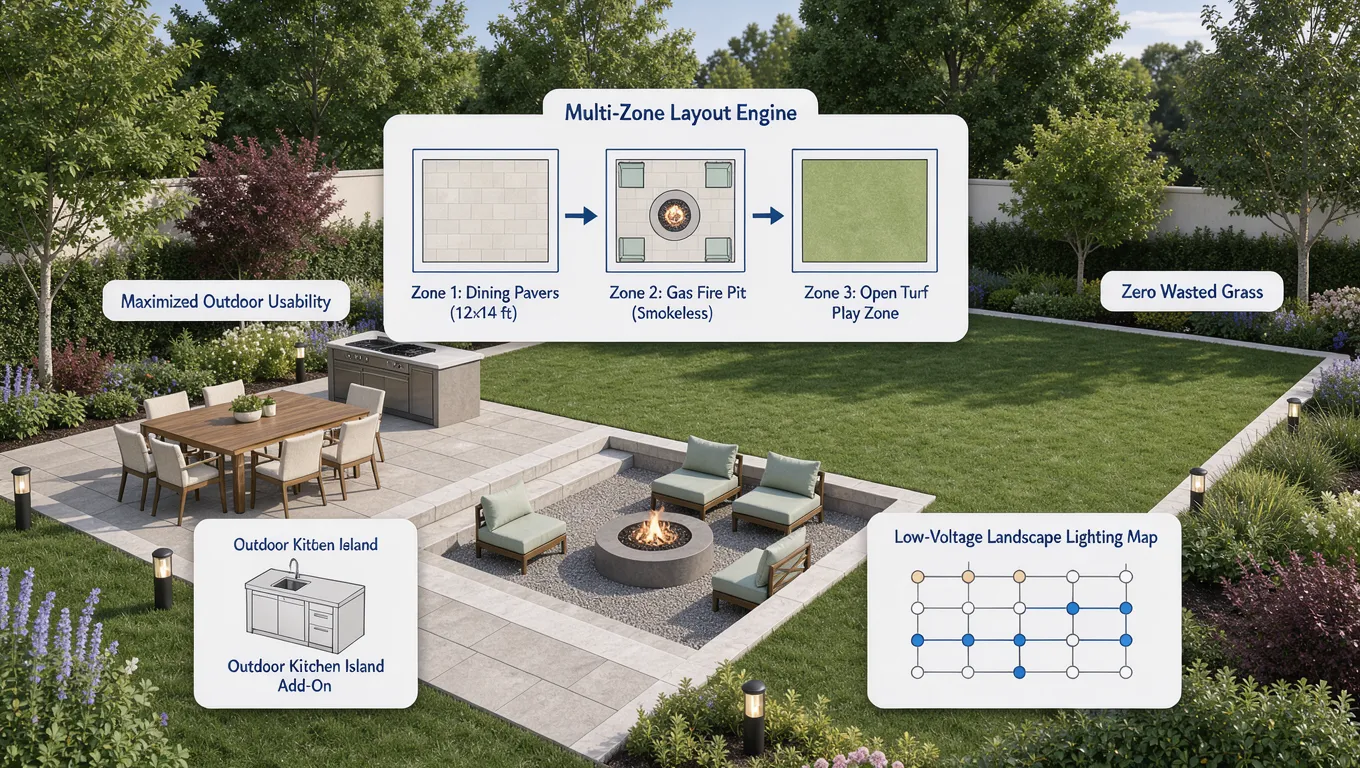
A giant square of lawn looks clean, but it rarely serves a practical purpose. To make a yard truly useful, break it down into clear activity zones.
Think of your outdoor space like an open-floor-plan interior. Each section needs a clear purpose so activities do not overlap or create friction.
[ Back Door / Entrance ]
         |
         +---> [ Cooking & Dining Zone ] (Close to house)
         |
         +---> [ Lounging & Relaxation ] (Shaded, comfortable corner)
         |
         +---> [ Active Play / Utility ] (Farthest perimeter)
Start by assigning specific areas for your everyday routines:
- The Dining Zone: Position this near the back door so carrying dishes and food back and forth stays quick and painless.
- The Relaxation Zone: Place soft seating away from high-traffic zones, ideally nestled near trees or under a shaded pergola.
- The Utility & Play Zone: Keep lawn games, garden tools, and pet areas along the far perimeter to maintain clean sightlines from the main patio.
Grouping your yard by daily activities prevents furniture clutter and keeps the whole space feeling balanced and orderly.
Struggling to visualize how to arrange your layout?
Instead of moving heavy furniture around by hand, upload a picture of your yard to DesignHome to quickly map out layout zones, test patio placements, and preview your changes before buying anything.
3. Fix the Routes That Make Everyday Outdoor Tasks a Hassle
If walking across your yard means dodging muddy patches, tripping over garden hoses, or stepping on uncomfortable stones, you will naturally avoid using it.
Smooth, clear pathways connect your outdoor zones and turn simple tasks into effortless habits.
[ Kitchen Door ] ===( Smooth Paver Path )===> [ Grill / Patio Table ]
                                                        |
                                            ( Stepping Stone Path )
                                                        |
                                                        v
                                             [ Shed / Garden Bed ]
Focus on rebuilding your main routes:
- The Main Corridor: Create a wide, level path from your house door directly to your main seating or dining area. Use smooth stone pavers, poured concrete, or tightly fitted flags.
- Secondary Stepping Routes: Use stepping stones or gravel beds to form clean connections between the patio, garden beds, and storage sheds.
- Boundary Trimming: Keep tree branches and bushy plants trimmed back at least two feet from any walking path so you never have to dodge wet leaves after it rains.
A clear walking layout removes physical friction, making stepping outside feel as easy as walking into another room.
If you are dealing with awkward transitions right where your house meets your yard, addressing steps to update a house front elevation will help you create smooth entryways that bridge indoor and outdoor spaces.
4. Make Outdoor Meals Easier From Preparation to Cleanup
Eating outdoors sounds great until you are balancing hot plates in one hand, opening a screen door with your foot, and realizing you forgot the salt shaker inside.
To make outdoor dining truly enjoyable, design your setup to handle preparation, serving, and quick cleanup without constant trips indoors.
Keep these essential upgrades in mind:
- Add side prep space: Place a weather-resistant counter or cart right next to your grill to hold marinades, serving platters, and tongs.
- Choose sturdy dining tables: Select tables with solid, easy-wipe surfaces instead of wide-slatted tops where food crumbs and utensil tips can drop through.
- Keep serving gear outdoors: Store plastic plates, napkins, and acrylic drinkware in a sealed outdoor sideboard so you do not have to carry everything out from the kitchen every time.
If your meal space connects directly to a living area, review these ideas for connecting indoor and outdoor spaces to make moving between your kitchen and patio completely seamless.
5. Make Room for Play Without Taking Over the Whole Yard
Families often struggle with a common dilemma: the kids need space to run around, but the adults want an inviting spot to sit and unwind.
You do not have to pick one over the other. The trick is creating shared boundaries so play areas do not overtake the entire yard.
+-------------------------------------------------------------------+
|                        YOUR BACKYARD                              |
|                                                                   |
|  [ Adult Seating & Patio ] <--- Low Hedge/Planter ---> [ Play Area ] |
|  (Clean, quiet, cushioned)                            (Turf, storage) |
+-------------------------------------------------------------------+
Try these layout strategies to keep the balance:
- Use natural visual barriers: Set up low planter boxes, raised vegetable beds, or short decorative fences to subtly mark where the lawn area transitions into a play zone.
- Pick dual-purpose elements: Add bench seating with built-in storage boxes underneath. That way, balls, toys, and sports gear can be stowed away instantly when playtime is over.
- Choose durable surfaces for high-use spots: Lay down thick wood chips, smooth gravel, or resilient turf under play sets to prevent muddy bare patches from forming in high-traffic areas.
Setting clear zones keeps play equipment organized while leaving plenty of open, relaxing space for everyone else.
6. Stop Outdoor Clutter From Spreading Across the Yard
Nothing ruins an outdoor area faster than scattered garden tools, stray seat cushions, leaking hoses, and misplaced toys.
When items lack a clear home, they wind up sitting on the lawn, getting weathered, and creating visual mess.
[ Activity Spot ] ------------> [ Storage Setup Right Next to It ]
Patio Chairs                   Deck Box for Seat Cushions
Garden Beds                    Wall-Mounted Hose Reel & Tool Rack
Kids' Play Zone                Waterproof Storage Bench
The easiest fix is putting storage right next to where those items get used:
- Place deck boxes near seating: Keep a waterproof deck box right alongside your main patio set so you can tuck soft cushions away in seconds before rain hits.
- Mount hose reels on the wall: Get garden hoses off the ground with wall-mounted reels or sleek storage pots to eliminate tripping hazards.
- Add a compact tool locker: Install a narrow, vertical storage locker against an exterior wall to hide long-handled shovels, brooms, and bags of soil without taking up floor space.
When gear is easy to stash away, keeping your yard clean and organized takes almost no effort at all.
7. Make the Yard Comfortable When the Sun, Rain, or Evening Chill Gets in the Way
If your yard only feels comfortable during perfectly mild weather, you will lose out on using it for most of the year.
Smart weather protection extends how often you can enjoy being outside, keeping you comfortable through hot summer afternoons and cool autumn evenings.
   [ Summer Midday ] ------------> Overhead Cantilever Umbrella or Shade Sail
   [ Passing Rain Shower ] ------> Covered Pergola or Solid Patio Roof
   [ Autumn Evening ] ----------> Low-Smoke Fire Pit or Radiant Heater
Shield against harsh sunlight: Install retractable awnings, shade sails, or large cantilever umbrellas over main seating areas to block intense heat and glare.
Plan for passing rain: Cover part of your patio with a fixed pergola roof so a brief afternoon shower does not ruin your outdoor plans.
Add evening heat sources: Set up a low-smoke propane fire table or wall-mounted radiant heaters to keep the patio warm long after the sun goes down.
Adding basic weather shielding makes your outdoor space comfortable across all four seasons.
If you are planning to add cozy evening seating around a heat source, explore these backyard fire pit area concepts to pick a setup that fits your yard's layout.
8. Deal With Mud, Puddles, and Uneven Ground Before Adding More Features
Putting expensive outdoor furniture on an uneven, poorly drained yard is a quick recipe for frustration.
Standing water kills grass, creates breeding grounds for insects, and turns high-traffic routes into messy mud pits after a light rain.
   [ Rain Event ]
         |
         v
   ( Poor Slope ) --------> [ Standing Water & Mud ] ---> Unusable Yard
         |
   ( Corrected Slope ) ---> [ French Drain / Gravel ] ---> Dry, Functional Lawn
Fix surface issues early on with these steps:
- Level out low spots: Fill in shallow dips across your lawn with a topdressing blend of sand and topsoil to stop water from pooling.
- Install French drains: If water collects near your patio foundation, lay a perforated underground drainage pipe wrapped in gravel to channel excess water away from living areas.
- Replace high-wear grass with hard surfaces: If grass continually dies and turns to mud near steps, dog runs, or gates, replace those patches with permeable stone pavers or decorative river rock.
Addressing drainage problems early protects your landscaping investment and keeps your yard clean year-round.
9. Make a Small Backyard Do More Without Cramming It Full
Having a compact backyard does not mean you have to give up on functionality. It simply means every single piece of furniture needs to pull its weight.
Overcrowding a small patio with bulky items makes the space feel cramped, awkward, and hard to navigate.
• Round wide-legged patio table
• Oversized individual armchairs
• Narrow rectangular drop-leaf table
• Stacking chairs or storage benches
Maximize a compact footprint with these smart choices:
- Select scaled-down furniture: Choose slim, open-framed metal or wooden chairs that let light pass through rather than heavy, solid resin wickers.
- Use vertical wall space: Mount hanging planter boxes, wall lights, and foldable drying racks onto fences or exterior walls to free up valuable floor space.
- Opt for fold-away options: Pick drop-leaf tables or wall-mounted folding desks that can be tucked away flat when you need open floor space.
Keeping small spaces open and clear makes them feel surprisingly spacious and far more useful.
If you are working with a tight footprint and want to maximize every square foot, check out our guide on ways to make a small patio feel bigger for clever visual layouts.
10. Choose Improvements That Won't Create More Weekend Chores
A great outdoor space should help you relax, not add hours of tedious yard work to your weekend to-do list.
Complex landscaping features like intricate flower beds, high-maintenance lawns, and delicate wood decking can quickly turn your yard into a constant chore.
Large Grass Lawn
Intricate Mulch Beds
Native Perennials & Gravel Beds
River Rock / Permeable Pavers
To keep yard maintenance fast and simple:
- Switch to composite materials: Build decks and railings with wood-plastic composites that never need sanding, staining, or sealing.
- Mulch with decorative stone: Replace dark bark mulch with gravel or river rock around shrubs so you do not have to top it off every single spring.
- Plant native species: Choose local plants, bushes, and grasses that thrive in your regional climate without needing constant fertilizers or daily watering.
Reducing ongoing upkeep frees up your time so you can actually sit back and enjoy your outdoor space.
If you want to cut down on mowing entirely while keeping your space looking sharp, explore these clever ideas for backyards without grass.
11. Improve the Backyard You Already Have Before Starting From Scratch
You do not need to tear up your entire yard or spend tens of thousands of dollars to make meaningful improvements.
Working with your yard's existing layout and refreshing what you already own can yield huge results at a fraction of the cost.
[ Existing Dated Yard ]
         |
         +---> Power-wash dirty concrete & stone surfaces
         |
         +---> Apply fresh stain to weathered fencing
         |
         +---> Refresh light fixtures & switch to warm LED bulbs
         |
         v
[ Revitalized Outdoor Living Space ]
Try these high-impact, low-cost updates:
- Power-wash old surfaces: Strip away years of built-up grime, algae, and dirt from concrete patios, brick pathways, and wooden fences to make them look brand-new.
- Stain weathered fences: Apply a fresh coat of dark charcoal or warm cedar stain to instantly modernize tired wooden fences.
- Upgrade your exterior lighting: Replace old porch lights with warm, modern LED fixtures and string low-voltage Edison bulbs along seating areas for instant evening charm.
Focusing on targeted upgrades lets you build a clean, stylish outdoor space without going over budget.
If you are balancing outdoor updates alongside interior plans, read through our budget strategy guide on how to compare home renovation quotes to keep project spending on track.
12. Turn Your Ideas Into a Backyard Plan You Can Actually Follow
Saved ideas and bookmarked photos are great for inspiration, but turning them into reality requires a clear, organized plan.
Without a structured plan, it is easy to buy mismatched items, place features in awkward spots, or overspend on unnecessary steps.
  [ Step 1: Measure Dimensions ]
                |
  [ Step 2: Mark Sun/Shade Zones ]
                |
  [ Step 3: Draw Activity Footprints ]
                |
  [ Step 4: Execute Phase 1 Upgrades ]
Follow this step-by-step approach to build your outdoor layout:
- Measure your space accurately: Map out the exact dimensions of your patio, lawn edges, and main pathways before shopping for furniture.
- Track sunlight patterns: Watch how light moves across your yard throughout the day so you place shade sails and sun loungers in the right spots.
- Start with core functional needs: Tackle essential repairs, drainage issues, and main seating setups first before moving on to decorative details.
- Add decorative touches last: Once your main layout works smoothly, finish the space with outdoor rugs, planter pots, and ambient lighting.
Turn Inspiration Into a Complete Design Plan
Ready to stop guessing and start building an outdoor space that truly works for your lifestyle?
With DesignHome, you can instantly visualize floor plans, layout ideas, and full home makeovers. Try out different patio configurations, furniture arrangements, and overall styles to craft a functional yard design with complete confidence.
Frequently Asked Questions About Making a Backyard More Functional
Why do I have a large grass yard but still feel like I have nowhere to sit or hang out?
An open grass lawn looks tidy, but wide-open grass without defined areas leaves you without an actual place to relax. If you don't have a solid flat patio, dedicated seating, or weather shade, your lawn becomes a zone you only visit when mowing. Turning an underused lawn into a functional space starts with dividing your yard into specific activity zones—such as dedicated spots for outdoor dining, cooking, relaxation, and play.
What is the most affordable way to make an awkward backyard layout useful?
The cheapest way to boost outdoor functionality is removing physical obstacles before spending money on new features. Power-washing old concrete, leveling out muddy walking paths, laying low-cost gravel corridors, and rearranging your existing outdoor furniture around daily routines creates immediate structure. Defining your cooking and seating areas near the back door reduces constant trips inside, making the space feel instantly more organized without a costly renovation.
How do I design a family-friendly yard that accommodates kids without looking like a chaotic playground?
The secret to a balanced family yard is visual zoning. Instead of letting toys and play sets scatter across the entire lawn, group play equipment along a far perimeter framed by low planter beds or a decorative screen. Pairing play areas with hidden storage benches allows you to stow away balls, jump ropes, and garden toys in seconds. This separation gives kids plenty of room to run around while keeping your main patio clean, quiet, and adult-friendly.
How can I stop my backyard from turning into a muddy pit after every light rainstorm?
Soggy grass and standing puddles are caused by poor ground slope and compacted soil holding onto water. Fixing low spots with topdressing sand-soil blends or installing an underground French drain channels excess water away from high-traffic routes. For areas near gates, dog runs, or steps where grass continually dies, swapping out dead sod for permeable stone pavers or decorative river rock keeps your walkways dry and usable year-round.
How do I fit outdoor dining, seating, and a grill onto a small patio without crowding it?
Maximizing a compact footprint comes down to choosing slim, space-saving furniture instead of heavy, bulky items. Swap wide round tables and deep wicker sectionals for narrow drop-leaf tables, wall-mounted folding bars, and open-frame metal chairs. Placing seating benches against perimeter walls frees up floor space, while vertical wall planters get greenery off the ground so you can cook, serve, and dine comfortably without bumping elbows.
What low-maintenance landscaping upgrades will cut down my weekend yard work?
To enjoy your yard without spending hours pulling weeds and trimming bushes, replace high-maintenance features with easy-care alternatives. Swapping natural wood decking for composite materials eliminates the need for staining, while switching from bark mulch to river rock stops weeds and prevents annual top-offs. Planting local, native perennials and replacing fussy grass patches with gravel or pavers drastically cuts down on watering and mowing duties.
How close to the house should I place my outdoor grill and prep area?
Your grill and outdoor food prep station should be placed within 10 to 15 feet of your kitchen door for maximum convenience. Keeping your outdoor cooking setup close to the house eliminates long, awkward walks carrying heavy food trays, hot pots, and utensils back and forth. Just ensure your grill sits at least 10 feet away from wooden siding, vinyl fences, and low-hanging tree branches to maintain safe ventilation.
How can I extend the use of my patio into late autumn and cool evenings?
Extending your backyard use past summer requires shielding your seating space from evening wind and low temperatures. Adding a propane fire table, wall-mounted infrared patio heaters, or a cozy fire pit creates an instant heat source that draws family outside on chilly nights. Pair your heating source with warm overhead string lighting and weather-resistant windbreak screens to make your patio comfortable through late fall and early spring.
What is the best way to keep outdoor patio cushions, toys, and garden tools organized?
The easiest way to beat outdoor clutter is placing waterproof storage directly where the clutter gets created. Keep a weatherproof deck box right alongside your main patio furniture so seat cushions can be tucked away in seconds before a rain shower. Installing a wall-mounted hose reel and a narrow vertical tool locker against an exterior wall hides shovels, brooms, and hoses without taking up valuable floor space on your patio.
How do I plan a backyard makeover when I have a dozen different ideas and a tight budget?
When you have a long list of ideas, trying to do everything at once usually leads to overspending and chaotic results. Start by measuring your yard, mapping out sunlight patterns, and fixing underlying issues like drainage or uneven ground first. prioritize your core needs—such as an easy walking path and comfortable seating—before adding decorative upgrades. Breaking your outdoor plan into phases lets you build a functional backyard at your own pace without going over budget.


