

You sit down on your patio with a cool drink, ready to finally unwind after a long day. You lean back, close your eyes, and take a deep breath. Then you hear it—a window sliding open next door, footsteps on a raised deck, or a neighbor staring directly into your lap from their kitchen window. Instantly, your shoulders tense up. You feel like a fish in a bowl. Instead of enjoying your outdoor space, you gather your things and head right back inside.
That constant feeling of being watched turns a perfectly good yard into a useless square of grass.
The good news? You do not have to live inside a fortress or build a massive wall around your property to get real peace and quiet.
With the right layout choices and smart boundary fixes, you can block awkward sightlines and transform your outdoor space into a quiet, secluded retreat. Here is how to create a private backyard you will actually want to spend time in.
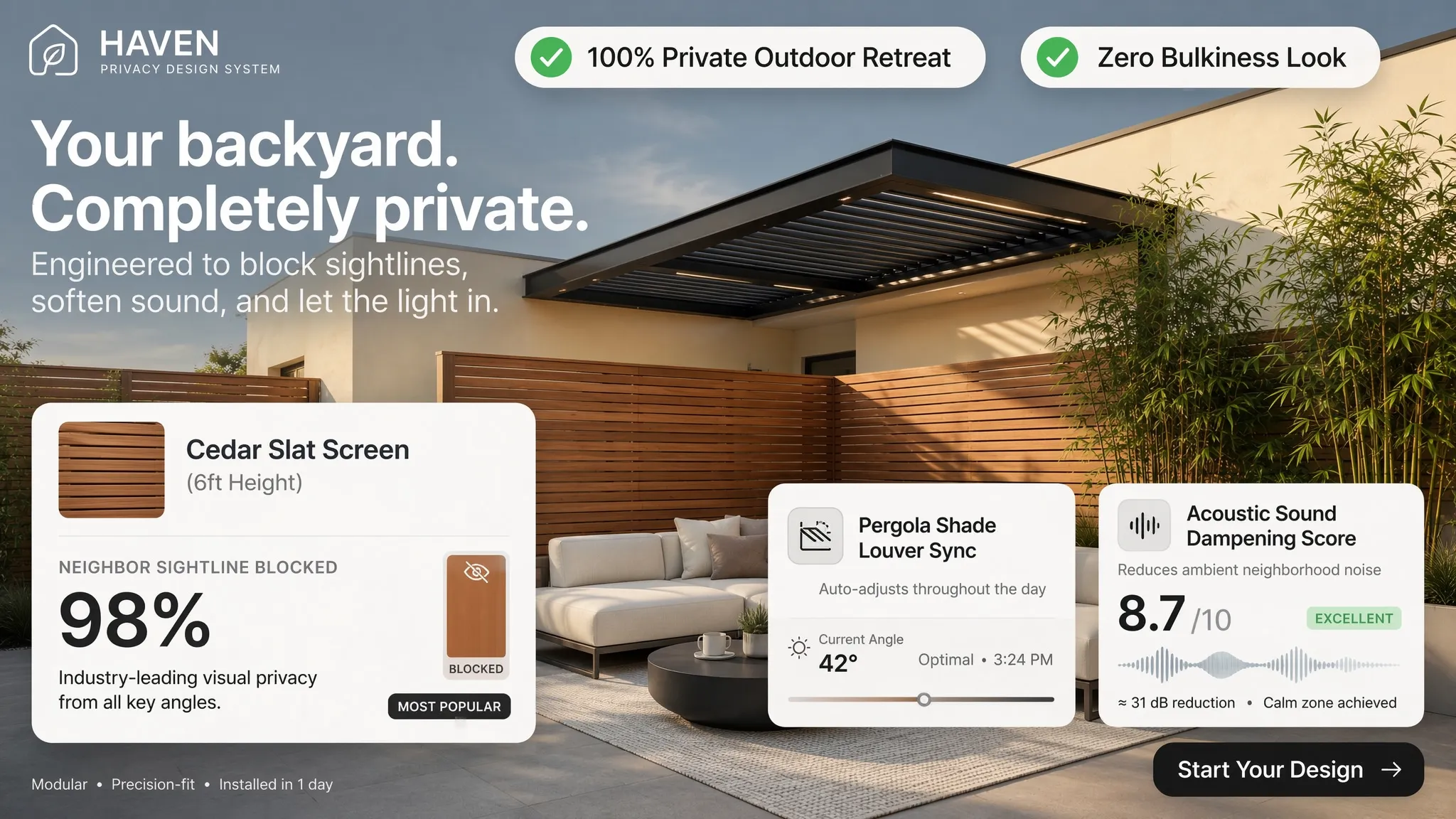
1. Find the Exact Views That Make Your Backyard Feel Exposed
Before you spend a single dollar on fencing, timber panels, or fast-growing trees, take a step back and inspect your space.
Most people make a massive, expensive mistake right out of the gate: they try to hide their entire yard all at once.
You rarely need to wall off your whole property to get total comfort. You just need to block the specific sightlines that cut straight into your main living zones.
[ Neighbor's House / Window ]
           \
            \  ( Unwanted Sightline )
             \
              v
     [ Your Patio Table ]  <=== Place Targeted Screen Here!
Sit down in the exact spots where you want to eat, read, or relax, and look out for these common exposure points:
- Elevated Second-Story Windows: Neighboring upper-floor windows that look straight down onto your patio furniture.
- Property Boundary Gaps: Open gaps between garage walls, existing fences, or neighboring trees.
- Street-Level Lines of Sight: Direct views from sidewalk foot traffic or passing cars cutting into your yard.
When you pinpoint the exact angles where people can see in, you can put targeted screening right where it matters most—saving you thousands of dollars in unnecessary construction.
2. Choose Between a Fence, Plants, and a Privacy Screen
Once you know where your main exposure points are, you need to pick the right structural material for the job.
Every screening option comes with tradeoffs in installation time, budget, and long-term upkeep.
Pick the path that aligns best with your immediate needs:
- 1. Hardwood Fencing
A high boundary fence provides instant, year-round separation from adjacent properties. It locks in complete ground-level boundary security, but check your local building codes or homeowner association rules first—most residential areas cap perimeter fence heights at six or eight feet. - 2. Natural Living Screens
Living boundaries soften harsh structural lines and bring beautiful organic texture into your garden. While growing a full hedge takes patience, evergreen plants provide dense, soft privacy that structural walls simply cannot match. - 3. Decorative Modular Screens
Free-standing wood or laser-cut metal privacy panels give you total control over small spaces. They install in a few hours, fit into tight corners easily, and work exceptionally well for renters or homeowners who want fast results without permanent digging.
Unsure which layout will look best in your space?
Instead of guessing how tall a fence or screen should be, upload a photo of your yard to DesignHome to preview different boundary heights, test screen placements, and visualize your patio layout before spending money on materials.
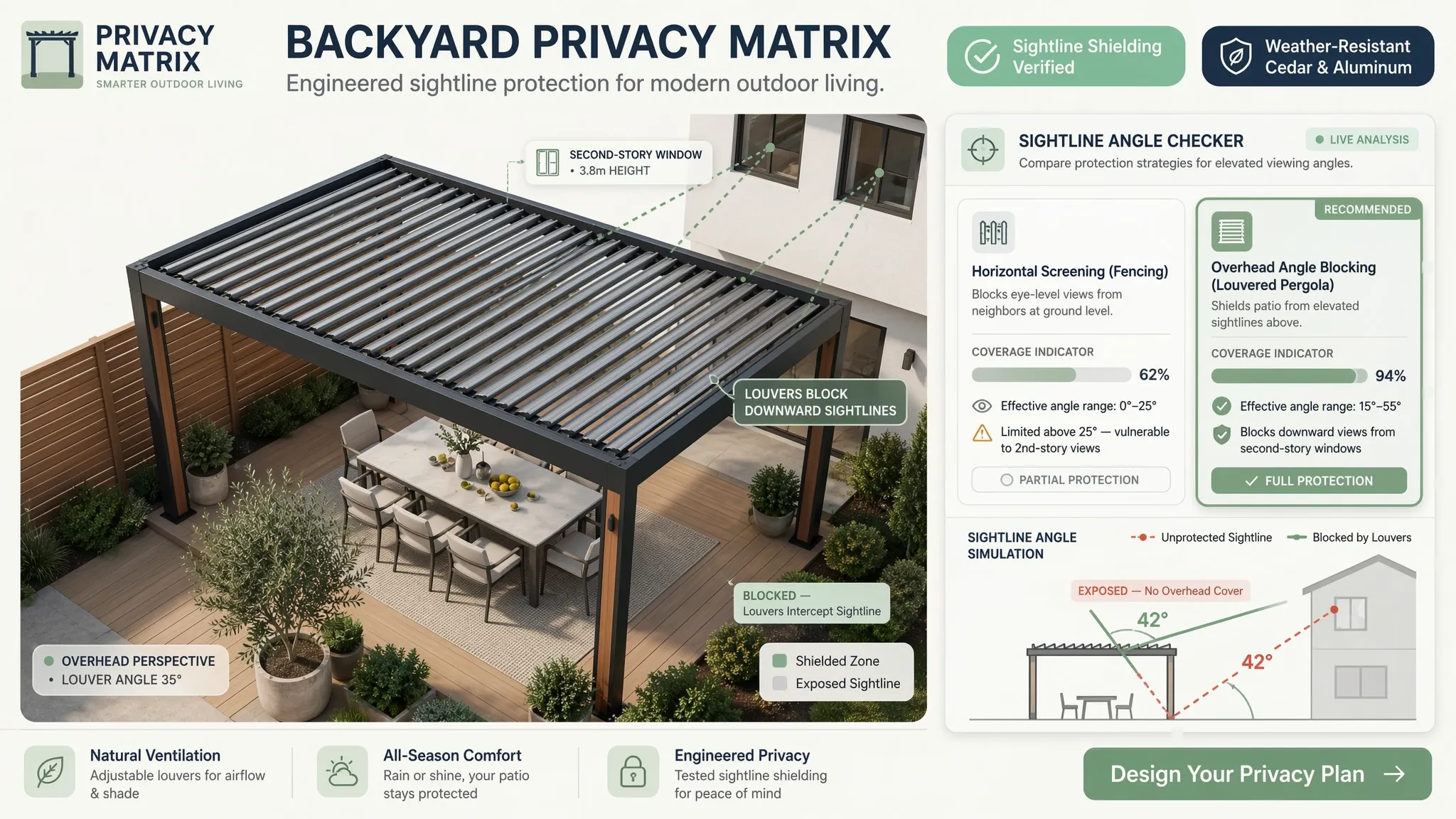
3. Block Upstairs Windows Without Building a Wall Around the Yard
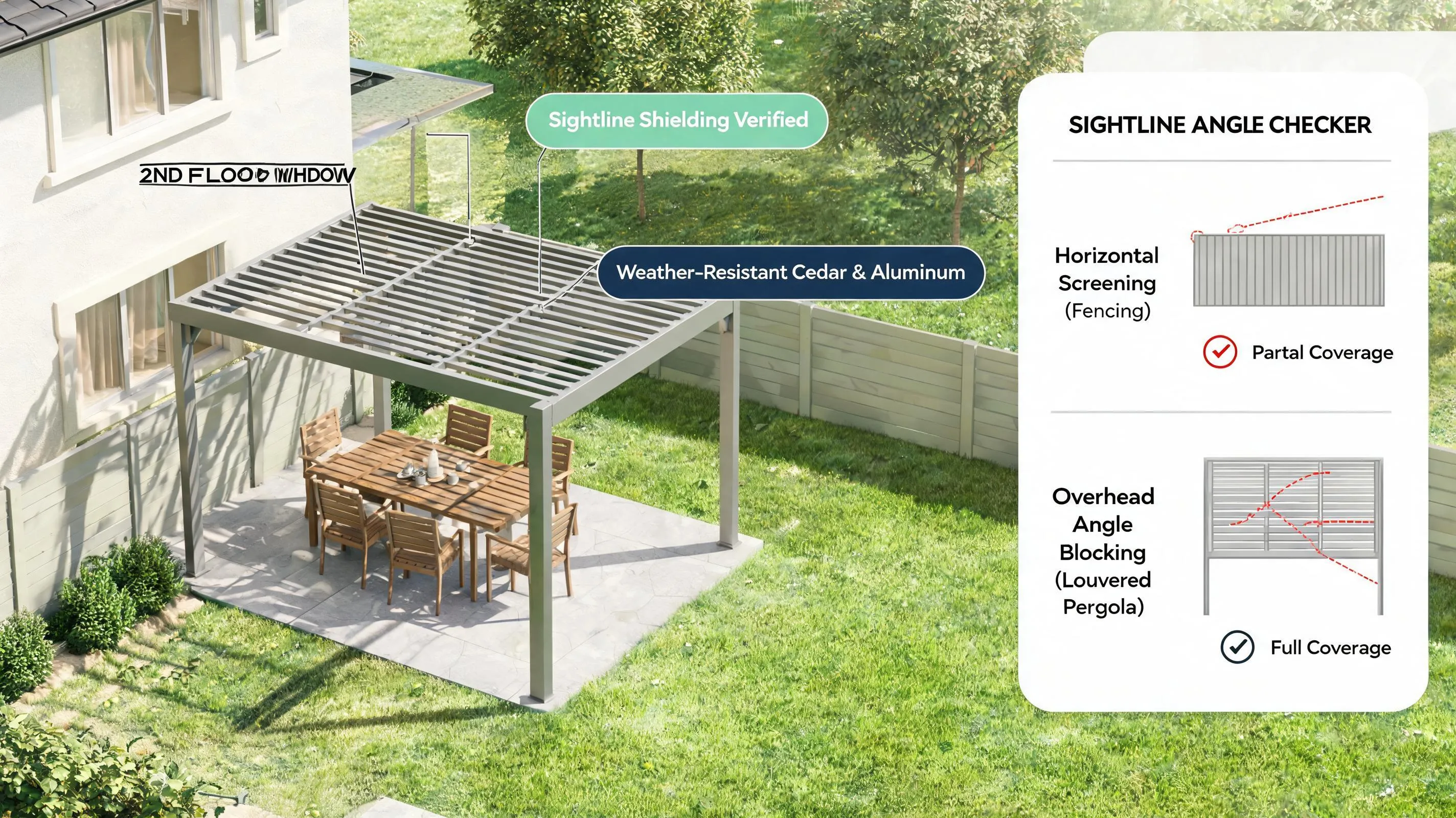
Standard six-foot boundary fences do great work at ground level. But if your neighbor has a two-story home or a raised back deck, that fence will not stop them from looking straight down into your sitting area.
You do not need an impossibly tall wall to fix this problem. You just need overhead shade structures positioned close to your seating zone.
[ Neighbor's 2nd-Story Window ]
              \
               \  ( Blocked Line of Sight )
                \
                 v  [ Pergola Roof / Shade Sail ]
                    -----------------------------
                         [ Your Outdoor Sofa ]
Try these overhead blocking options to block angled sightlines:
- Install a wooden pergola: Set up a timber pergola directly over your main patio and add wood slats, climbing vines, or outdoor fabric panels across the roof to block downward views.
- Plant small canopy trees: Plant compact shade trees like serviceberry or Japanese maple near your sitting areas. Their upper branches form an organic umbrella that hides your patio from above.
- Hang angled shade sails: Anchor heavy-duty shade sails to posts or exterior walls. Tilting the sail toward the neighboring property line blocks upper-story sightlines while keeping your yard open and airy.
If you are coordinating overhead patio covers with existing home entryways, explore these steps to update a house front elevation to make sure structural additions blend seamlessly with your roofline.
4. Use Plants to Create Privacy Without Losing the Garden
Enclosing your yard with solid wooden fences on every side can quickly turn your bright outdoor area into a claustrophobic, dark box.
Using layered greenery is a far better way to get full privacy while preserving light and openness.
[ Boundary Fence ]  --->  [ Tall Narrow Evergreens ]  --->  [ Layered Shrubs & Perennials ]
   (Backing Layer)              (Middle Tier)                      (Front Tier)
Create a natural living screen using a three-tier planting strategy:
- The Upper Canopy: Plant tall, upright conifers or ornamental trees along property lines to catch high sightlines.
- The Mid-Level Screen: Add broadleaf evergreen shrubs that stay leafy all year long to create a solid, middle-tier green wall.
- The Lower Border: Fill out the base with flowering perennials, soft ornamental grasses, and container plants to bring color and depth right up to your patio edge.
Layering plants of varying heights creates a soft, natural barrier that absorbs unwanted noise, blocks wind, and keeps your garden feeling open and lush.
5. Make a Small Backyard Feel Private Without Making It Feel Smaller
Creating privacy in a compact yard is tricky. Heavy, dark fences or thick hedges take up precious floor space and can make a small patio feel tight and boxed in.
The trick is using slim vertical screening elements that block eyes without consuming your layout.
• Wide double-sided stone walls
• Bulky deep planter boxes
• Metal trellises with climbing vines
• Hanging wall planters & tall pots
Maximize your space with these vertical ideas:
- Install narrow horizontal wood slats: Space thin wood slats slightly apart on a frame. The narrow gaps let breezes and light filter through while breaking up direct lines of sight.
- Use slender climbing trellises: Set up slim iron trellises along small patios and train fast-growing vines like jasmine or clematis to grow straight up.
- Plant tall ornamental grasses in containers: Group narrow planters packed with tall feather reed grass along your patio perimeter to create a lightweight, moveable privacy screen.
If you are working with a tight footprint, read our guide on ways to make a small patio feel bigger to pair smart layout choices with light-reflecting plant arrangements.
6. Create One Secluded Spot for Eating, Reading, or Relaxing
Trying to hide every single inch of your lawn can quickly drain your budget.
Instead, focus on building one fully private, cozy sanctuary right where you spend the most time.
[ Open Lawn Area ] ======> [ Screened Nook Corner ]
                           - L-shaped privacy panel
                           - Deep outdoor lounge sofa
                           - Potted bamboo boundary
Here is how to create a cozy, secluded nook:
- Anchor a corner: Choose a back corner of your patio or yard that already has a house wall or existing fence on one side.
- Add an L-shaped screen: Set up a two-sided screen or tall planter array around the remaining open sides to create an intimate enclosure.
- Furnish for comfort: Add plush lounge chairs, an outdoor rug, and a low coffee table to transform the space into a private outdoor reading room.
If you want to add a cozy evening glow to your private nook, check out these backyard fire pit area concepts to choose a safe, compact heat setup.
7. Add Privacy Without Blocking Sunlight and Fresh Air
A common mistake homeowners make when trying to block neighbors is building solid, massive barriers that choke off daylight and stop natural airflow.
A dark, stuffy patio is just as uninviting as an exposed one.
[ Traps Heat & Stagnant Air ]
[ Smooth Breeze Filters In ]
Maintain light and air movement with these design tweaks:
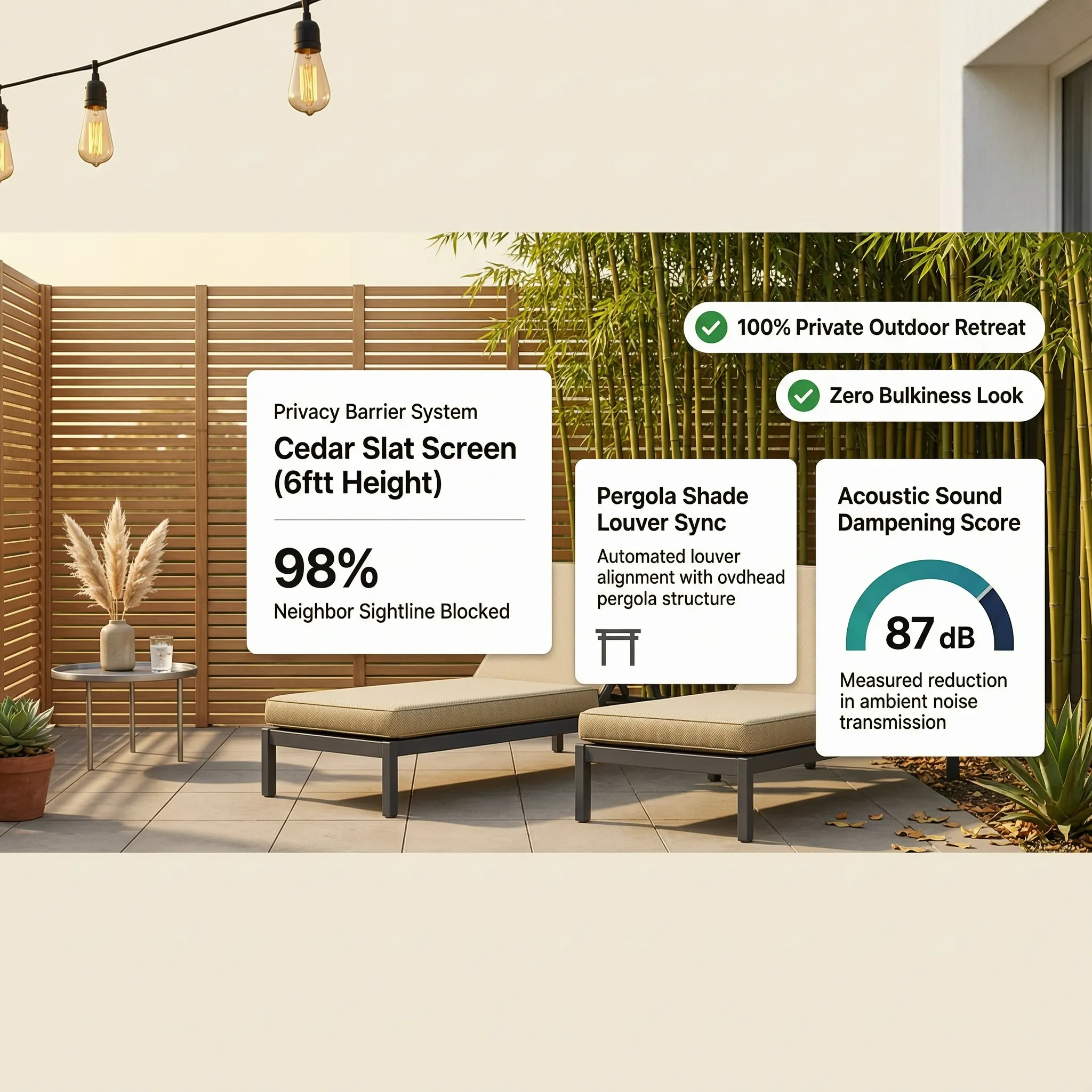
- Opt for adjustable louvered screens: Use wooden or aluminum screen panels with adjustable slats. You can angle the louvers to block views from neighboring windows while letting sunlight pour into your patio.
- Plant airy foliage: Pick trees with fine, delicate leaves—like birch or bamboo—instead of heavy, dense evergreens. Their leaves diffuse harsh light and rustle gently in the breeze without creating dark shadows.
- Incorporate frosted glass panels: Use frosted tempered glass partitions along patio borders to block clear sightlines completely while allowing clean, diffused daylight through.
To see standard safety guidelines and zoning restrictions on boundary walls and fence heights before building, consult the official American Planning Association residential guidelines.
8. Get More Privacy Without Taking on a Big Landscaping Project
You do not need a team of contractors or weeks of construction to secure your outdoor space.
If you are renting or looking for a fast, affordable weekend update, quick-fix screening solutions work wonders.
[ Exposed Open Patio ]
          |
          +---> Hang weather-resistant outdoor curtain rods
          |
          +---> Position tall moveable container plants
          |
          +---> Attach reed or bamboo roll screening to existing fences
          |
          v
[ Instant Weekend Privacy ]
Try these fast, low-cost options:
- Hang outdoor fabric curtains: Mount heavy-duty, weather-resistant curtain rods along outdoor patio frames or pergolas. Pull the curtains closed when you want solitude, and tie them back when you want an open view.
- Use bamboo roll fencing: Fasten inexpensive bamboo or reed rolls directly onto existing chain-link or low wooden fences using heavy-duty zip ties for an instant, natural upgrade.
- Arrange tall planter pots: Line up tall ceramic or resin pots planted with upright shrubs along your patio edge to build a flexible, moveable screen.
If you are balancing outdoor privacy updates with broader interior home improvements, review our guide on how to compare home renovation quotes to keep project spending under control.
9. Choose Privacy Plants That Won't Become a Maintenance Problem
Planted screens look fantastic, but picking the wrong plant species can leave you stuck with constant weekend pruning, messy fall cleanup, or invasive root systems.
Avoid planting aggressive species like non-contained running bamboo or oversized hedges that require trimming every few weeks just to stay under control.
Look for these low-maintenance plant qualities:
- Clumping growth habits: Always pick clumping bamboo (like Fargesia) rather than running varieties so roots never spread uncontrollably into neighboring yards.
- Naturally narrow footprints: Choose columnar evergreen trees that grow straight up without expanding wide, saving you from trimming back overhanging branches.
- Regional climate resilience: Select plants adapted to your hardiness zone to cut down on artificial watering and fertilizing. Check the official USDA Plant Hardiness Zone Map to find species that thrive in your area.
For sustainable planting advice and native species recommendations that require minimal watering, explore resources from the National Wildlife Federation.
If you want a low-upkeep garden layout to go with your privacy plants, check out these clever ideas for backyards without grass.
10. Put Your Backyard Privacy Plan Together Before You Buy Anything
Jumping into a privacy project without a clear sequence usually leads to mismatched materials, awkward gaps, and wasted money.
A smart layout plan ensures every screen, plant, and structure works together smoothly.
  [ Step 1: Map Sightlines & Exposure Points ]
                       |
  [ Step 2: Set Budget & Material Choices ]
                       |
  [ Step 3: Check Local Building Codes ]
                       |
  [ Step 4: Install Hard Structures First ]
                       |
  [ Step 5: Layer Plants & Soft Furnishings ]
Follow this step-by-step installation order:
- Map out your sightlines: Stand inside your home and sit on your patio to identify every view that needs screening.
- Verify property lines and local codes: Check property boundaries, easement rules, and local fence height limits before digging post holes. You can review property line regulations and permit guidelines through the International Code Council.
- Install hard structures first: Set fence posts, build pergolas, and anchor screens before planting so heavy equipment does not damage your garden beds.
- Finish with soft landscaping: Plant trees, shrubs, and potted greens around your new structures to soften the look and complete your private retreat.
Turn Inspiration Into a Private Outdoor Sanctuary
Ready to stop dodging your neighbors' eyes and build an outdoor space that feels completely your own?
With DesignHome, you can instantly visualize floor plans, patio layouts, and full outdoor makeovers. Try out different privacy screen arrangements, pergola placements, and plant layouts to design a secluded yard with complete confidence.
Frequently Asked Questions About Creating a Private Backyard
How can I make my backyard private from neighbors without spending a fortune?
You don't need a ten-thousand-dollar masonry wall to block nosy eyes. The fastest, most budget-friendly trick is using targeted privacy panels or bamboo roll screening attached straight onto an existing perimeter fence. Placing tall potted bamboo, ornamental grasses, or outdoor curtain rods around your main seating nook builds immediate boundary protection for a fraction of the cost of full property construction.
How do I block two-story windows from looking down into my patio?
Standard six-foot fences only work at ground level—they won't stop second-story neighbor windows from staring right onto your patio. To block angled sightlines from above, position overhead shade structures close to your seating area. Installing a timber pergola draped with climbing vines, mounting angled shade sails, or planting small canopy trees like serviceberry creates an upper shield that protects your privacy from above without making the garden feel dark.
What are the best fast-growing plants for natural privacy hedges?
If you want dense green screening without waiting five years, look for fast-growing evergreen species like 'Emerald Green' Arborvitae, Columnar English Oak, or clumping bamboo (Fargesia). Clumping bamboo grows vertical green coverage fast without spreading invasive roots into neighboring yards. Choosing columnar evergreens gives you tall privacy while keeping a narrow footprint, perfect for tight lot lines.
Will a tall privacy fence make my small backyard feel like a cramped prison?
Building a solid, dark six-foot wall along every inch of a tiny yard will definitely make the space feel smaller and darker. Instead, use slim vertical screens with open horizontal wood slats, metal trellises trained with climbing jasmine, or tall sheer planter boxes. These lightweight privacy barriers block direct sightlines while letting light and fresh breezes filter through, keeping your small patio feeling open, airy, and expansive.
How do I get complete patio privacy while still keeping my yard bright and sunny?
You don't have to choose between sunlight and privacy. Adjustable louvered screen panels let you angle wooden or aluminum slats to block views from nearby windows while guiding sunlight onto your patio floor. Using frosted tempered glass partitions or light-filtering outdoor curtains blocks clear views completely while diffusing soft daylight throughout your living space.
Do I need a permit to build a privacy screen or tall fence in my yard?
Building permit regulations vary by local municipality and home care association rules. Most suburban residential zones allow standard privacy fences up to 6 feet in backyards without special variances, but freestanding trellises, pergolas, or taller boundary walls may require local approval. Checking local property codes before digging post holes prevents costly tear-downs later.
How can renters make an exposed backyard or apartment patio private?
Renters should focus on non-permanent, zero-damage privacy solutions. Free-standing modular screen panels, heavy-duty tension rods paired with weatherproof outdoor curtains, and tall potted container plants offer total privacy without drilling into exterior walls or digging up lawn space. When your lease ends, you simply pack up your screens and take them to your next home.
How can I visualize how tall my privacy screens or plants need to be before buying materials?
Guessing barrier heights often leads to buying screens that are too short to cover sightlines or trees that overgrown your patio. Using DesignHome, you can upload a photo or floor plan of your outdoor space to map out exact sightlines, preview different fence heights, test pergola placements, and visualize privacy screening before spending a single dollar on materials.
What is the difference between running bamboo and clumping bamboo for privacy?
Running bamboo spreads rapidly underground through aggressive runners, quickly invading nearby garden beds, cracking concrete patios, and causing neighbor disputes. Clumping bamboo (Fargesia) grows in tight, controlled clusters that expand slowly outward without invading surrounding soil. Always specify clumping bamboo when shopping for low-maintenance, container-friendly living privacy screens.
How do I stop neighbors from seeing straight through gaps in my existing fence?
Instead of tearing down a sound wooden or chain-link fence, mount secondary screening right over the existing structure. Attaching outdoor bamboo reed rolls, adding lattice toppers across the fence line, or planting dense climbing vines like clematis or ivy along the interior frame fills in gaps quickly and gives your yard a polished, natural look.


