

You stand at your back door, looking out over a patchy lawn that demands your attention every single Saturday. Between mowing in the stifling heat, fighting stubborn weeds, dragging a tangled hose across dead yellow spots, and watching your water bill climb higher every summer, the frustration is real. You lean against the frame, take a sip of water, and ask yourself: Why am I sacrificing my free time for a yard that doesn't even look good?
Here is the ultimate truth about modern outdoor space: executing a high-impact backyard design without grass isn't about covering your property in sterile concrete—it is about combining architectural hardscaping, tactile gravel paths, structural decking, and self-sustaining ground covers that transform your yard into a luxury living space.
A yard fails when traditional turf steals your weekend hours, when muddy patches drag dirt into your house, and when soft grass sinks under the weight of patio furniture legs. By swapping out lawn space for precision-laid stone pavers, composite timber decks, and native planting borders, you create an effortless, high-performance outdoor sanctuary that elevates your lifestyle every single day.
Whether you are converting a tight suburban footprint or redesigning a sprawling property, here is how to zone, layer, and execute a flagship lawn-free backyard step by step.
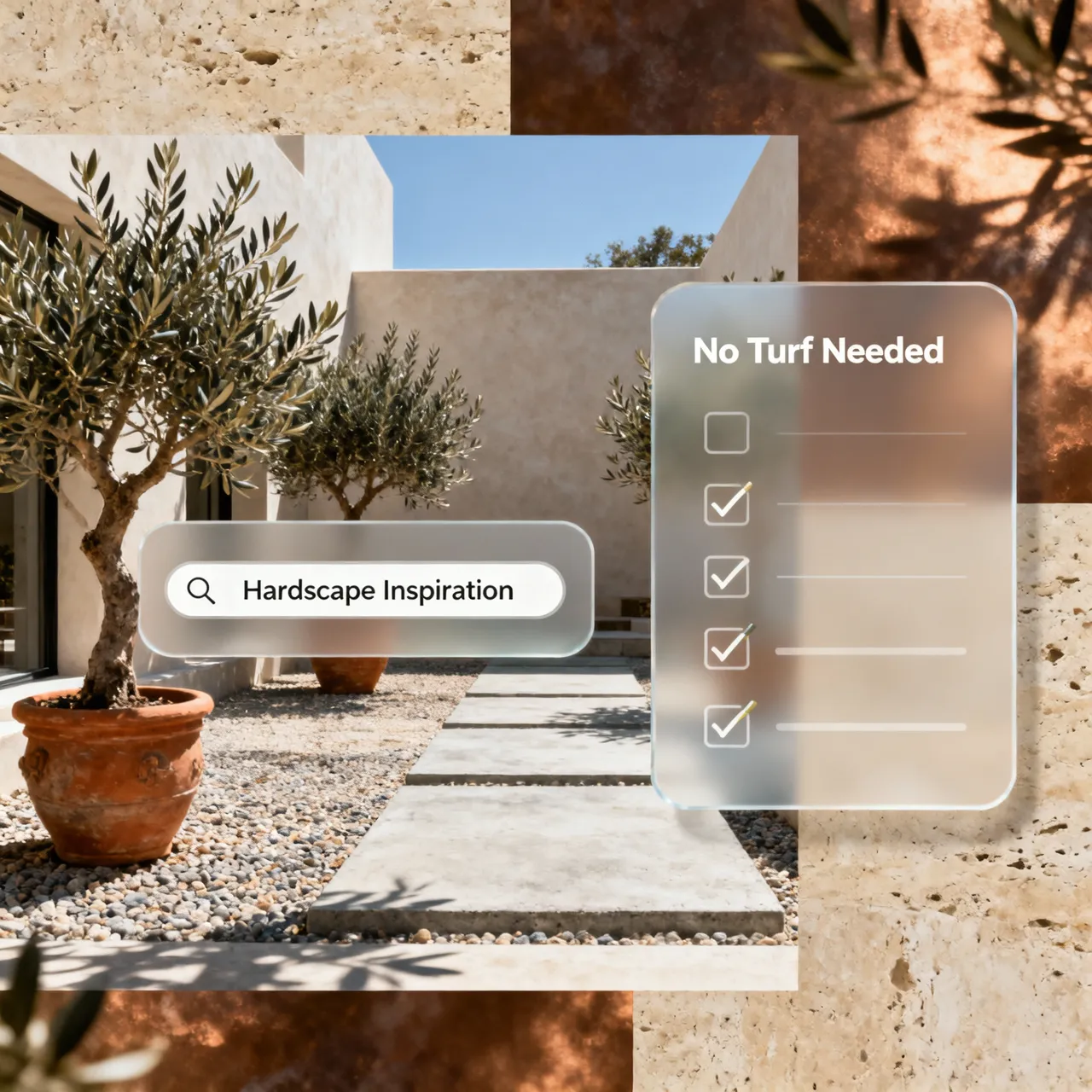
1. Backyard Design Without Grass: Create a Beautiful Lawn-Free Space
Before ripping out sod or ordering stone deliveries, take a moment to evaluate how much time you actually spend enjoying your yard versus working on it.
Most conventional yards fail because homeowners fall into the trap of maintaining high-strung turf grass, spending thousands on fertilizers and weed treatments for an area nobody actually uses.
To execute a breathtaking backyard design without grass and explore creative backyard ideas without grass, structure your hardscape strategy around three core rules:
- Establish Rigid Functional Destinations: Assign permanent physical surfaces to eating, lounging, and gathering areas so activities never conflict.
- Layer Tactile Materials for Visual Warmth: Combine large-format pavers, natural gravel, and rich timber tones to prevent your yard from looking cold or flat.
- Incorporate Zero-Mow Greenery: Use deep-rooted perennial ground covers and raised planting beds to keep the lush feel of a natural garden without ever touching a lawnmower.
Explore our architectural strategies for concealed home office ideas to learn how spatial proportion principles transform living spaces inside and out.
2. Decide How You Want to Use Your Backyard Before Choosing Materials
Dropping random materials into your yard before defining how your family lives outdoors leads to awkward walking paths, unused corners, and wasted money.
Developing a functional grass-free backyard design and executing smart backyard planning ideas starts with an honest spatial diagnostic.
Follow this 3-step diagnostic to map your lawn-free footprint:
- Map Primary Traffic Paths: Trace the exact walking lines from your sliding glass doors out to your grill, seating, and garden gates to ensure clear passageways.
- Identify Sun and Shade Hours: Track low-angle afternoon sun patterns to position dining tables under natural shade and loungers in direct sun.
- Audit Drainage and Slope Angles: Check ground slopes to ensure water flows smoothly away from your home foundation during heavy rainstorms.
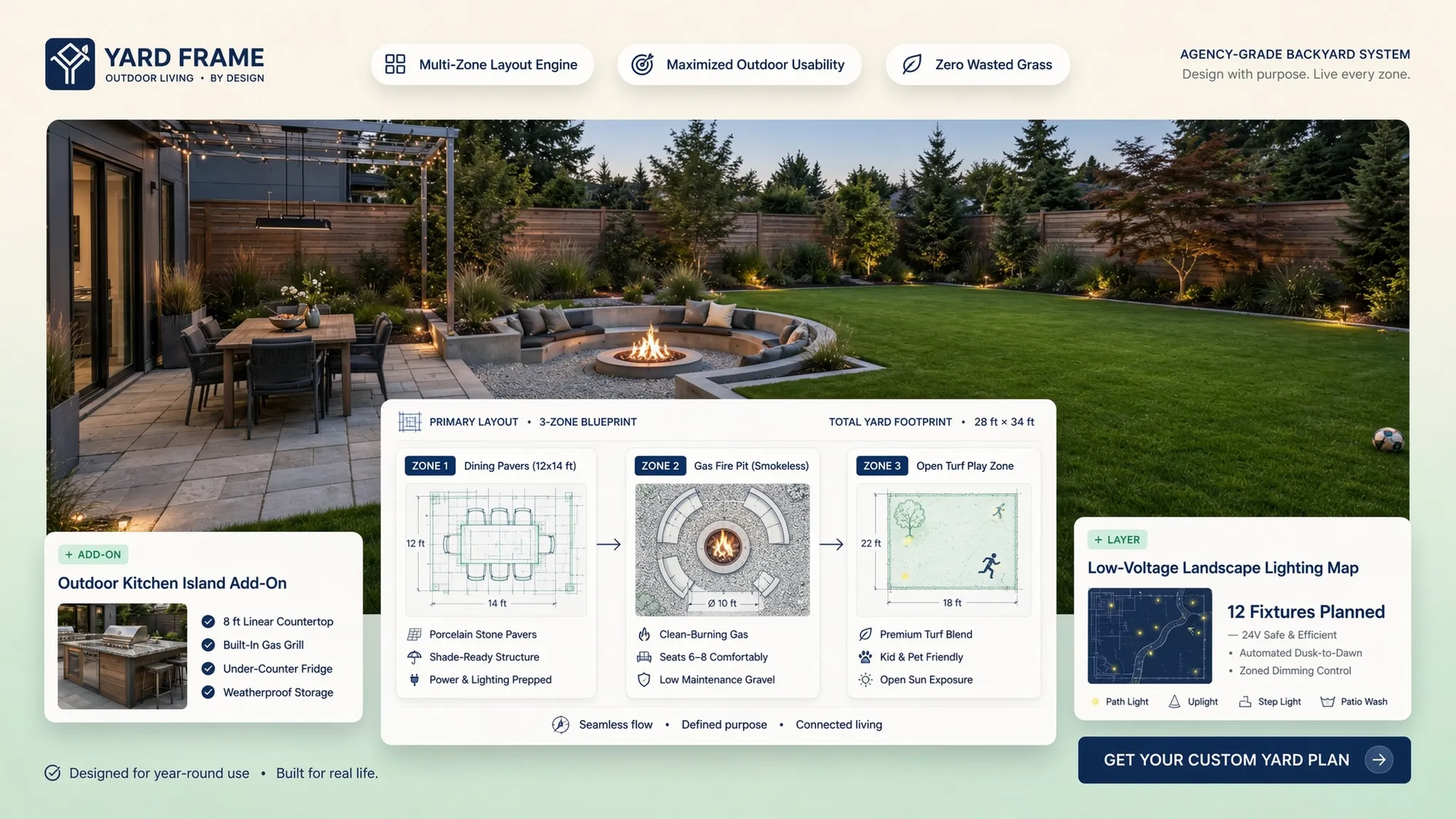
3. Use Pavers to Create a Clean and Structured Backyard
If you want a solid, level surface that anchors your outdoor furniture while eliminating weeds forever, high-density stone pavers are the ultimate hardscape upgrade.
Exploring backyard paver ideas, executing backyard paving without grass, and building with stone patio ideas gives your yard a crisp, architectural structure that lasts for decades.
• Sinks under heavy furniture weights
• Creates mud pits during heavy rain
• Minimal 2mm joints block weeds permanently
• Non-porous surface repels food & wine stains
Paving execution rules:
- Select Large-Format 24x24-Inch Pavers: Choose light alabaster or soft gray porcelain pavers. Larger tile sizes cut down on grout lines, creating a sweeping visual field that makes small yards look twice their size.
- Set Over a 4-Inch Compacted Base: Lay your pavers over a crushed gravel base and seal the joints with polymeric sand. Polymeric sand hardens like concrete, stopping ants and weeds in their tracks.
- Maintain Slope Gradients: Slope your paved patio 1/4-inch per linear foot away from house walls to keep rainwater moving away from structural foundations.
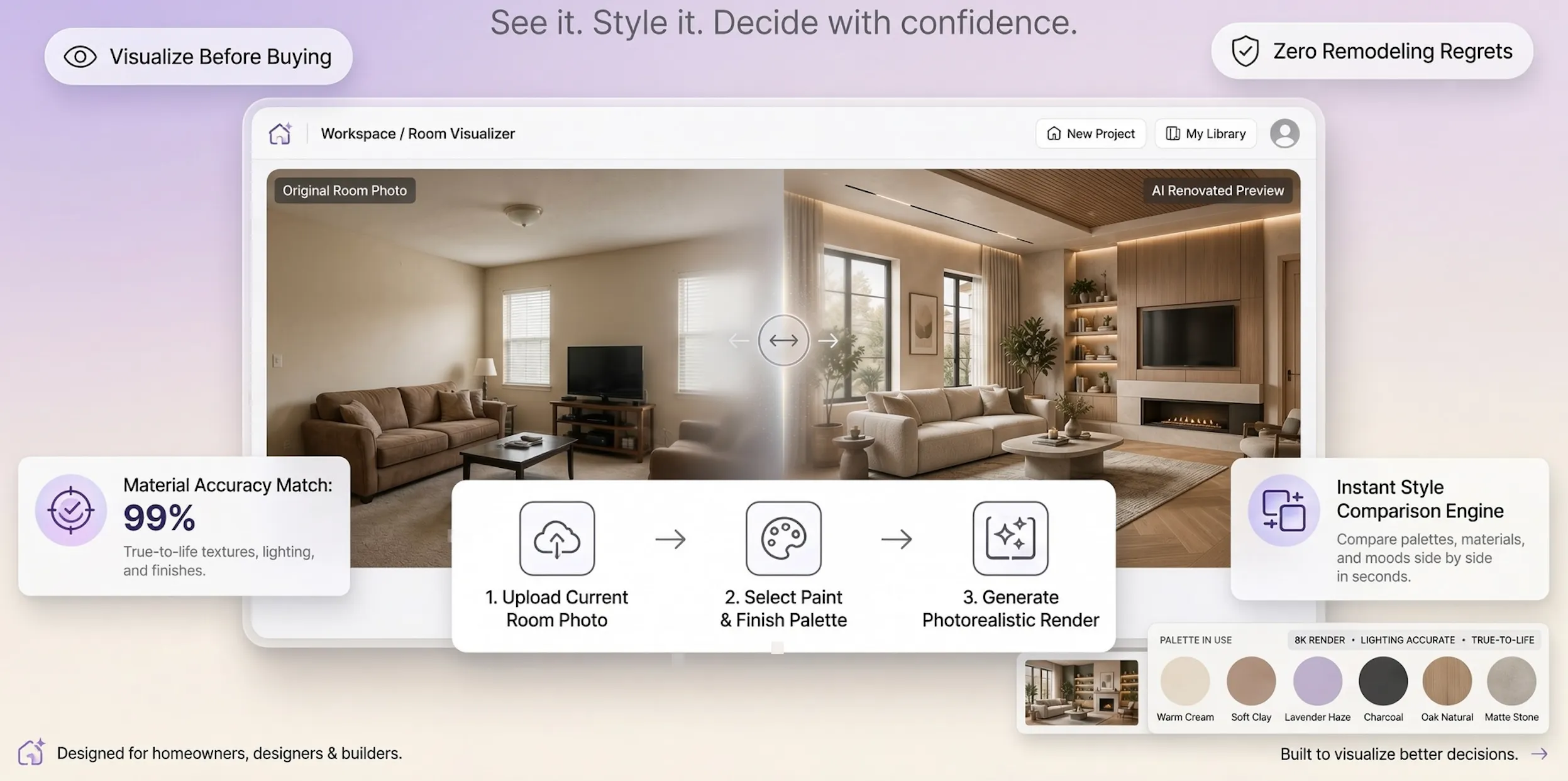
Visualize Your Lawn-Free Sanctuary in Seconds
Struggling to calculate paver clearances, test whether a gravel patio fits your property, or picture how composite decking replaces your patchy lawn? You don't need expensive landscape architects or confusing manual tape measurements to create a beautiful, low-work outdoor sanctuary.
Start Designing Your Lawn-Free Yard Today with DesignHome →4. Replace the Lawn With Gravel for a Simple Outdoor Layout
If you want an affordable, fast-draining surface that adds rich texture and a relaxing crunch underfoot, decorative gravel is a game-changer for lawn-free yards.
Gathering gravel backyard ideas, designing backyard landscaping without grass, and building out a gravel garden design transforms empty ground into an elegant patio area.
Gravel installation tactics:
- Lay Heavy-Duty Geotextile Fabric: Always lay commercial-grade woven geotextile fabric directly on bare subsoil before spreading gravel. This stops gravel from sinking into dirt while blocking weeds from growing up.
- Maintain a 2-to-3-Inch Depth: Spread gravel at a uniform 2-to-3-inch thickness. Going deeper makes walking feel like trudging through deep sand, while going shallower exposes the fabric underneath.
- Install Rigid Metal Edging: Anchor heavy-duty steel or aluminum landscape edging along gravel borders to lock stones in place and keep them from spilling into flower beds.
5. Add a Deck to Create a Comfortable Outdoor Living Area
Raising your living space off the ground creates an architectural transition from your back door to your yard, turning an uninspired yard into a resort-style retreat.
Gathering backyard deck ideas, building a grass-free backyard deck, and selecting low-maintenance outdoor decking elevates your home's exterior value instantly.
• Requires annual sanding & staining
• Fades & absorbs moisture during rains
• Cleans up effortlessly with soap and water
• Retains rich wood grain color for 25+ years
Decking design guidelines:
- Specify Capped Composite Boards: Choose capped composite boards over treated pine. Composite decking resists rot, splinters, and insect damage, eliminating annual sanding, staining, and sealing.
- Incorporate Integrated Perimeter Benches: Build low-profile bench seating directly into the outer edges of your deck. Integrated seating reclaims floorboards while providing built-in places for guests to sit.
- Mount Recessed LED Step Lights: Install low-profile LED riser lights into deck steps to illuminate level changes safely after sunset.
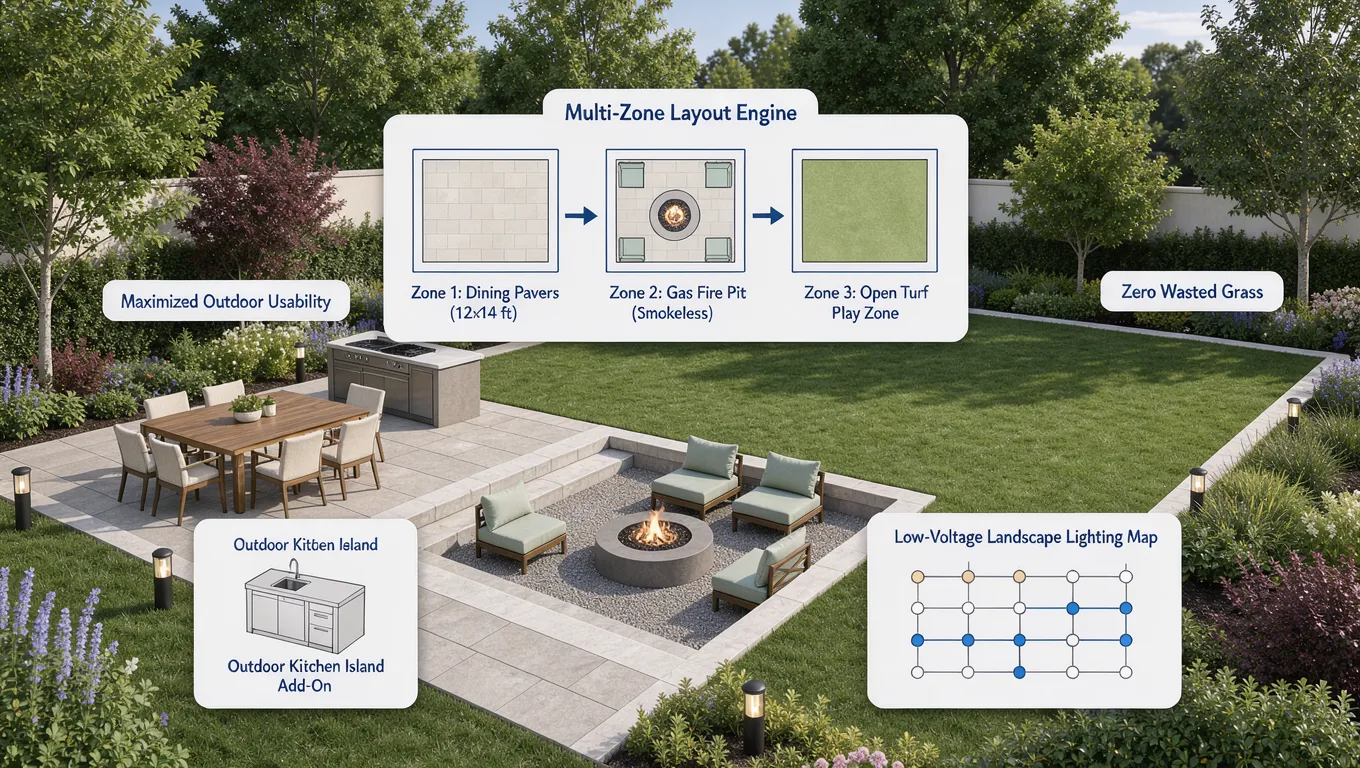
6. Use Ground Cover Plants Instead of a Traditional Grass Lawn
Giving up grass doesn't mean giving up lush greenery. You can enjoy a soft, vibrant landscape without ever pushing a mower or dragging a sprinkler again.
Planting ground cover plants instead of grass, choosing grass-free landscaping, and exploring lawn alternatives creates a living carpet that thrives on natural weather cycles.
Ground cover tactics:
- Plant Creeping Thyme in Paver Gaps: Tuck creeping thyme plugs into stepping stone gaps. It releases a wonderful herbal scent when stepped on and requires zero mowing all year long.
- Use Clover for Soft Green Yards: Replace high-maintenance turf with micro-clover. Clover stays vibrant green during summer heatwaves, fixes nitrogen into the soil naturally, and stays low to the ground.
- Incorporate Irish Moss for Shade: Plant lush Irish moss in shaded side yards. It forms a deep velvet carpet that looks stunning beside dark stone flagstones.
7. Create Garden Beds That Add Greenery Without Filling the Entire Yard
If you want colorful flowers, aromatic herbs, and structural plants without taking on hours of weeding, group your plants into defined beds.
Building backyard garden beds, designing grass-free garden ideas, and mounting raised garden beds gives you target areas for greenery without taking over your open patio space.
Garden bed design rules:
- Raise Beds 18 Inches Off Hardscapes: Construct raised garden beds using cedar, stone, or corrugated steel. Elevating beds saves your back during planting and prevents weeds from invading your garden space.
- Group Plants by Water Needs: Practice hydro-zoning by grouping drought-tolerant perennials together. This keeps you from wasting water on plants with different moisture needs.
- Cover Open Soil with Cedar Mulch: Apply a 3-to-4-inch layer of organic shredded cedar mulch over garden beds to suppress weeds, retain moisture, and keep soil cool during hot spells.
If you are exploring creative organization strategies across compact outdoor footprints, check out our guide on how to improve kitchen storage for high-efficiency point-of-use layout tactics.
8. Combine Pavers, Gravel, and Plants for a More Interesting Backyard
Using only one material across an entire yard can leave your space looking flat, industrial, and uninviting.
Designing a mixed-material backyard design, pairing pavers and gravel backyard elements, and applying modern backyard landscaping principles builds rich visual depth.
Material blending tactics:
- Establish Material Contrast: Pair smooth, light-colored concrete pavers with dark crushed basalt gravel to create a sleek, contemporary look.
- Break Up Hardscapes with Greenery Strips: Leave 4-inch gaps between large stone steppers, planting vibrant sedum in the joints to soften hard edges.
- Transition Surfaces with Stepping Stones: Use smooth flagstone steppers to transition naturally from a raised timber deck down across a gravel fire pit area.
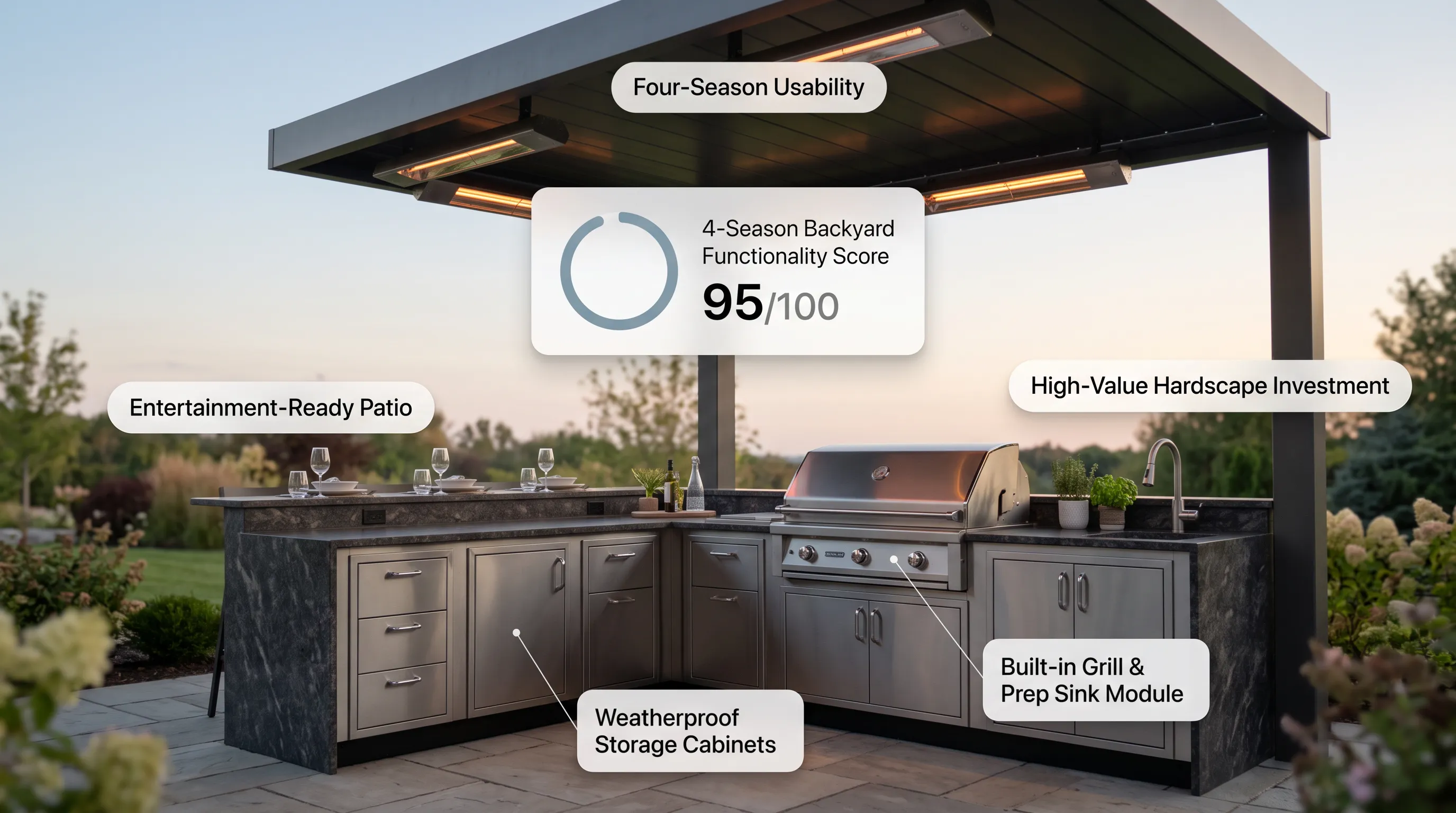
9. Add Seating and Dining Areas Without Depending on a Lawn
Removing grass gives you a major advantage: you get a rock-solid, flat foundation for outdoor sofas and dining sets that won't wobble or sink into mud.
Gathering backyard seating ideas without grass and building out a grass-free outdoor dining area elevates your hosting flow and day-to-day comfort.
• Table wobbles on uneven ground
• Stains furniture legs with mud
• Smooth chair sliding without catching
• Clean, dry environment for shoes & plates
Seating layout rules:
- Preserve 48 Inches Around Dining Tables: Ensure you have at least 48 inches of clear hardscape between table edges and surrounding planters or railings so guests can slide chairs back easily.
- Anchor Lounges with All-Weather Rugs: Lay down a woven polypropylene outdoor rug underneath your lounge sofa to group the seating area visually and feel soft underfoot.
- Incorporate Perimeter Bench Walls: Build smooth capstone tops onto low stone retaining walls around your patio to gain permanent seating without swallowing extra floor space.
10. Use Paths, Edging, and Borders to Keep the Backyard Organized
When different materials like gravel, mulch, and paving meet without proper borders, your yard quickly looks messy and unorganized.
Installing backyard pathway ideas, applying smart garden edging ideas, and designing a clear backyard border design keeps every surface clean and well-defined.
Border control rules:
- Anchor Gravel with Corten Steel Edging: Install flexible Corten steel edging along gravel pathways. Metal edging bends smoothly around curves while keeping gravel stones out of your garden beds.
- Use Soldier Courses Along Patios: Frame paver patios with a border of contrasting stone pavers set perpendicular to the main pattern to give your layout a finished look.
- Keep Borders 2 Inches Above Soil: Ensure landscape edging sits at least 2 inches above garden soil to block mulch washouts during heavy rainstorms.
For official technical specifications on residential hardscape installation, slope drainage, and structural retaining wall safety standards, consult the International Code Council (ICC).
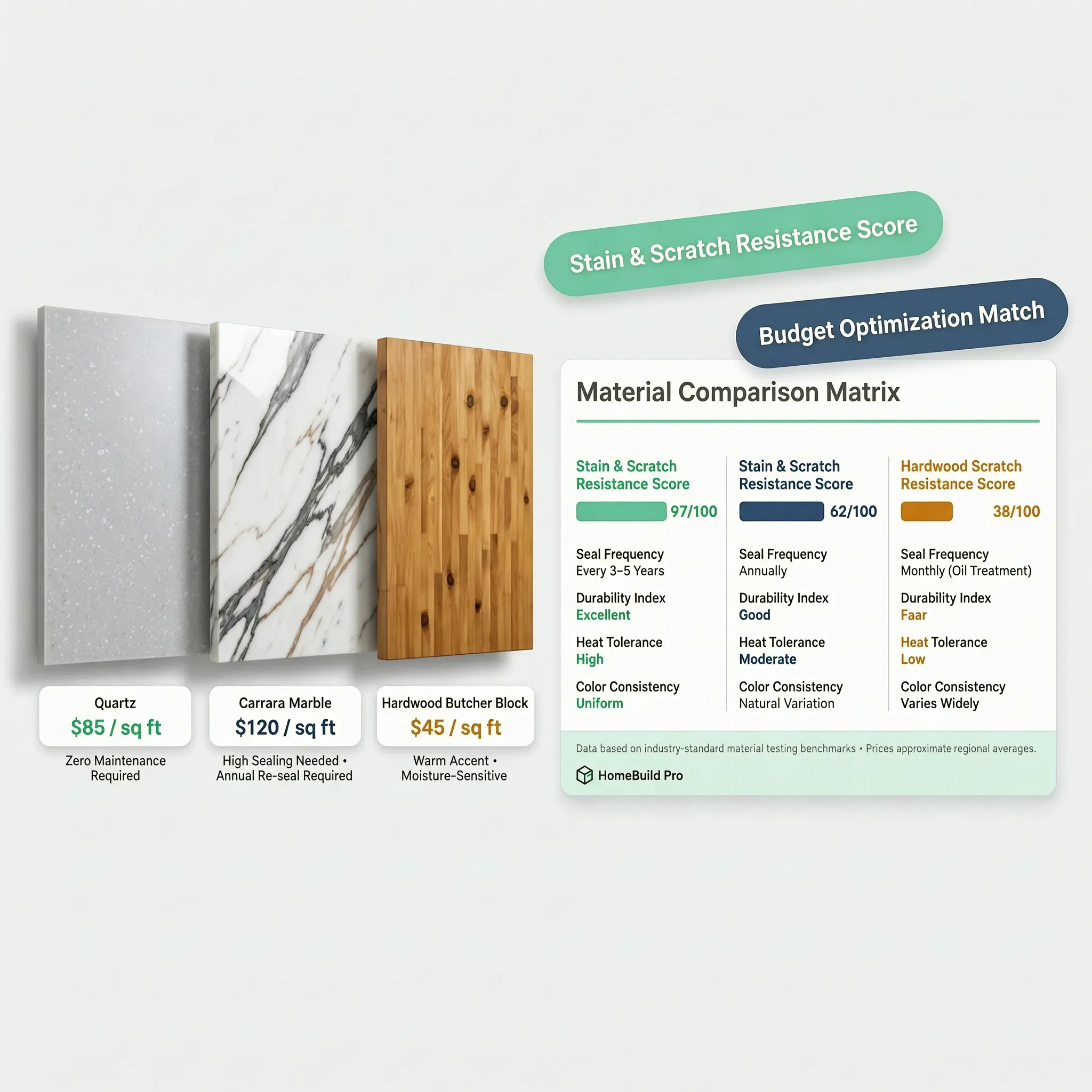
11. Choose Low-Maintenance Materials That Suit Your Climate and Budget
Choosing cheap materials or high-maintenance woods for your yard can leave you dealing with split timber, rusted metal, and constant repairs down the road.
Building a low-maintenance backyard without grass, picking an affordable grass-free backyard layout, and buying durable backyard materials guarantees long-term success.
Material selection guidelines:
- Specify Powder-Coated Aluminum Furniture: Choose outdoor furniture constructed from heavy powder-coated aluminum. It is 100% rust-proof, lightweight, and cleans up easily with a simple hose spray.
- Invest in Non-Porous Porcelain: Use 20mm outdoor porcelain pavers for dining and grill areas—they resist grease, red wine, and grill splatters effortlessly.
- Avoid Soft Pines and Unsealed Metals: Skip untreated pine woods and thin iron frames that warp, rot, or rust after a single season outdoors.
For guidance on non-toxic sealers, eco-friendly wood sourcing, and sustainable outdoor material standards, visit the Sustainable Furnishings Council (SFC).
12. Bring Your Grass-Free Backyard Design Together With a Complete Layout
Ready to transform your messy lawn into a stunning, high-performance outdoor sanctuary that frees up your weekends and gives you a space you're proud to show off?
Before ordering stone, laying gravel, or building raised beds, bring all your hardscape areas, pathways, seating zones, and planting borders together into a cohesive grass-free backyard layout, backyard design without lawn, and lawn-free backyard design.
The Ultimate Grass-Free Sign-Off Checklist:
Step Into Your Lawn-Free Sanctuary Today
You deserve an outdoor space that invites you to relax, entertain, and enjoy life—without stealing your entire weekend for chores. Designing a high-performance, lawn-free outdoor sanctuary doesn't require complex guesswork or settling for a boring concrete slab.
By focusing on flat hardscape foundations, rich material combinations, automated drip irrigation, and self-sustaining ground covers, you can eliminate yard work and build a gorgeous retreat tailored to your exact lifestyle.
What specific lawn headaches are holding you back right now? How can DesignHome help you visualize, craft, and refine your ultimate grass-free backyard layout today?
Frequently Asked Questions About Backyard Design Without Grass
I am tired of burning every weekend pushing a lawnmower across patchy dirt. How do I turn my yard into a real living space without grass?
Here is the raw truth: sacrificing your precious free time for a lawn that turns yellow every summer isn't caring for your home—it is staying trapped in a high-maintenance nightmare.
When your yard relies entirely on high-strung turf grass, you are locked into an endless cycle of mowing, watering, fertilizing, and weeding. Swapping out dead sod for precision stone pavers, composite decks, and vibrant ground covers establishes a clear backyard design without grass. Taking control of your spatial floor plan allows you to explore high-impact backyard ideas without grass, creating a resort-style retreat that doubles your usable living space while eliminating weekend chores.
How do I figure out what hardscape materials to buy so my yard actually fits our lifestyle?
Locking in your hardscape choices comes down to mapping out exactly how your family eats, relaxes, and hosts outside before ordering stone or timber deliveries.
Follow this 3-step diagnostic to map your grass-free backyard design:
- Audit Primary Activity Needs: Decide upfront whether your main priority is an outdoor dining terrace, a fire pit lounge, or a sunbathing deck to guide your backyard planning ideas.
- Trace Foot Traffic Paths: Map out the exact walking lines from your sliding glass doors out to your grill and seating areas to ensure clear passageways.
- Check Ground Slopes and Drainage: Verify surface angles to ensure rainwater moves smoothly away from your home foundation during heavy downpours.
Will laying down stone pavers give me a solid patio that never wobbles or sprouts weeds?
Absoutely—and it creates a clean, architectural look that makes your entire home feel more expansive and luxurious.
Executing smart backyard paver ideas delivers a rock-solid, permanent foundation:
- Lay Large-Format Porcelain Tiles: Choose light 24x24-inch porcelain pavers for your stone patio ideas to minimize grout lines and visually expand tight spaces.
- Set Over a Crushed Base: Install pavers over a 4-inch compacted gravel base sealed with polymeric sand to block ants and weed growth completely when organizing backyard paving without grass.
- Maintain Water Slopes: Slope your paved surface 1/4 inch per linear foot away from exterior walls to prevent water pooling near foundations.
Can replacing my lawn with gravel give me a clean patio layout without looking messy or unfinished?
Yes—provided you use the right stone size and lock your borders in place with rigid edging.
Gathering gravel backyard ideas allows you to build a stylish, fast-draining courtyard:
- Select 3/8-Inch Crushed Pea Gravel: Use smooth rounded gravel for fire pit lounges to create a tactile, comfortable surface underfoot using a gravel garden design.
- Lay Heavy Geotextile Fabric: Always place commercial-grade weed fabric under stone beds to prevent gravel from sinking into raw dirt during backyard landscaping without grass.
- Anchor Metal Edging Borders: Install heavy-duty steel or aluminum edging along gravel borders to keep stones securely contained inside your lounge footprint.
I want a luxury deck for relaxing, but I don't want to spend every spring sanding and staining wood. What are my options?
Building a raised deck off your back doors creates a seamless transition to the outdoors, but traditional pine decks require endless annual maintenance.
Gathering smart backyard deck ideas points directly to low-maintenance material upgrades:
- Specify Capped Composite Decking: Build a grass-free backyard deck using high-density composite boards that resist splinters, rot, and UV fading for decades.
- Eliminate Sanding and Sealing: Choose capped outdoor decking that cleans up with simple soap and water, freeing you from annual staining chores.
- Integrate Built-In Bench Seating: Construct perimeter bench seating straight into the deck frame to gain seating capacity while keeping open floorboards clear.
I don't want a grass lawn, but I still want vibrant greenery. What plants can replace turf?
Giving up grass doesn't mean surrounding yourself with cold, sterile concrete; you can enjoy soft, lush foliage without ever touching a lawnmower.
Planting ground cover plants instead of grass creates a vibrant, self-sustaining green sanctuary:
- Plant Creeping Thyme in Paver Gaps: Tuck creeping thyme plugs between stone steppers to form a scented, foot-tolerant mat for grass-free landscaping.
- Deploy Micro-Clover For Soft Yards: Replace high-strung turf grass with drought-tolerant clover that stays green all summer without synthetic fertilizers.
- Explore Living Lawn Alternatives: Layer dwarf mondo grass and sedums across open soil to create a rich green carpet that thrives on natural rain cycles.
How do I build garden flower beds that add beautiful plant color without taking over my patio space?
Scattered flower beds cut directly into open dirt invite weeds and force awkward foot traffic paths across your yard.
Building structured backyard garden beds keeps your greenery contained and easy to maintain:
- Construct 18-Inch Raised Cedar Beds: Raise your planting zones off hardscapes using stone or cedar frames to build high-yield raised garden beds that protect your back.
- Group Plants by Water Requirements: Practice hydro-zoning across grass-free garden ideas by pairing drought-tolerant perennials together to avoid wasting water.
- Spread Organic Cedar Mulch: Apply a 3-inch layer of shredded bark mulch across open soil beds to suppress weed seeds and insulate plant roots from summer heat.
How do I combine pavers, gravel, and wood decking so my lawn-free yard doesn't look plain or industrial?
Using a single hardscape material across your entire property can leave your yard feeling flat, monotonous, and uninviting.
Designing a mixed-material backyard design builds rich visual texture and clear functional zones:
- Pair Smooth Pavers with Crushed Gravel: Create sleek modern contrast by placing smooth porcelain pavers alongside dark crushed stone borders in a pavers and gravel backyard.
- Soft-Edge Stepping Pathways: Lay flagstone steppers through creeping thyme beds to transition naturally from a raised timber deck down to a gravel lounge.
- Execute Modern Backyard Landscaping: Use contrasting material textures to separate dining decks from lounge fire circles effortlessly.
Where will our guests sit and eat comfortably if we completely remove the grass lawn?
Removing soft turf actually gives you a major hosting advantage: a rock-solid, flat foundation where dining chairs and lounge sofas never wobble or sink into mud.
Gathering backyard seating ideas without grass elevates your daily comfort and host flow:
- Preserve 48 Inches Around Tables: Ensure your grass-free outdoor dining area maintains 48 inches of open paver clearance around dining tables for easy chair pull-backs.
- Anchor Furniture with Polypropylene Rugs: Lay down an all-weather outdoor area rug beneath lounge sectionals to frame seating zones visually.
- Build Capstone Seat Walls: Top low stone retaining walls with smooth capstones to gain built-in seating for large gatherings without swallowing extra patio space.
How do I keep my gravel paths, patio pavers, and garden beds from bleeding into one another?
When different hardscape materials meet without rigid structural borders, your yard quickly looks messy, unorganized, and unfinished.
Installing smart backyard pathway ideas maintains clean, sharp boundaries across your property:
- Install Corten Steel Edging: Lock gravel beds in place using flexible steel edging that creates clean lines along garden edging ideas.
- Frame Patios with Soldier Courses: Lay a contrasting stone paver border perpendicular to your main patio pattern for a polished backyard border design.
- Raise Borders Above Soil Lines: Ensure edging strips sit 2 inches above garden soil beds to block mulch washouts during heavy rainstorms.
What are the most durable, low-maintenance hardscape materials that won't blow my renovation budget?
Choosing cheap materials or unsealed woods leaves you dealing with split boards, rusted metal frames, and costly structural repairs down the road.
Building a low-maintenance backyard without grass starts with selecting high-performance surfaces:
- Invest in Non-Porous Porcelain Pavers: Select 20mm outdoor porcelain tiles for dining decks that repel wine, oil, and grill splatters effortlessly.
- Deploy Crushed Pea Gravel: Build an affordable grass-free backyard fire pit lounge using local pea gravel set over heavy weed fabric for fast installation.
- Choose Durable Backyard Materials: Buy powder-coated aluminum furniture frames and solution-dyed acrylic cushions that withstand heavy rain and sun exposure without fading.
How can I visualize my complete grass-free layout, material transitions, and furniture clearances before buying anything?
Stop guessing paver counts, wrestling with tight deck clearances, and worrying if your gravel patio will feel disconnected from your back door. You can test your exact floor plan, walking aisles, and visual sightlines in interactive 3D before spending a single dollar.
Professional-grade spatial design is now directly in your hands. DesignHome Synthesis AI merges architectural spatial mechanics with an intuitive dynamic canvas, giving you the tools to align structural headers, model flush floor sills, and test full-home lighting continuity with total authority.
Architect your ideal residence without limits. Test sweeping folding glass doors, coordinate material palettes across boundaries, and execute a cohesive floor plan.
Launch DesignHome →


