

You pull into the driveway, shift into park, and glance up through the windshield at your home’s front wall.
If your two-story Colonial looks encased in discolored 1980s vinyl siding, framed by undersized plastic shutters bolted flat to the drywall, and anchored by a faded front door tucked behind an ornate brass storm frame, it is easy to feel detached from your own residence.
Here is the frustrating reality:
Classic Colonial architecture possesses extraordinary structural lines, balanced window grids, and timeless proportions. Yet thousands of homeowners assume that updating a dated facade requires stripping its soul, tearing down historical porticos, or spending $100,000 on structural alteration.
• Undersized, decorative plastic shutters
• Small 36" door with brass storm cover
• Fussy, small brass eagle door knocker
• Tiny 8" builder-grade carriage lights
• Properly proportioned louvered wood
• Bold 42" iron or natural oak door
• Clean, oversized matte black hardware
• 18" black lantern sconces on both sides
You do not need to erase your home's historic charm to give it an elevated, current feel. By utilizing strategic modern colonial house exterior ideas, you can preserve core architectural proportions, introduce crisp material contrast, and build a front elevation that stands out in your neighborhood.
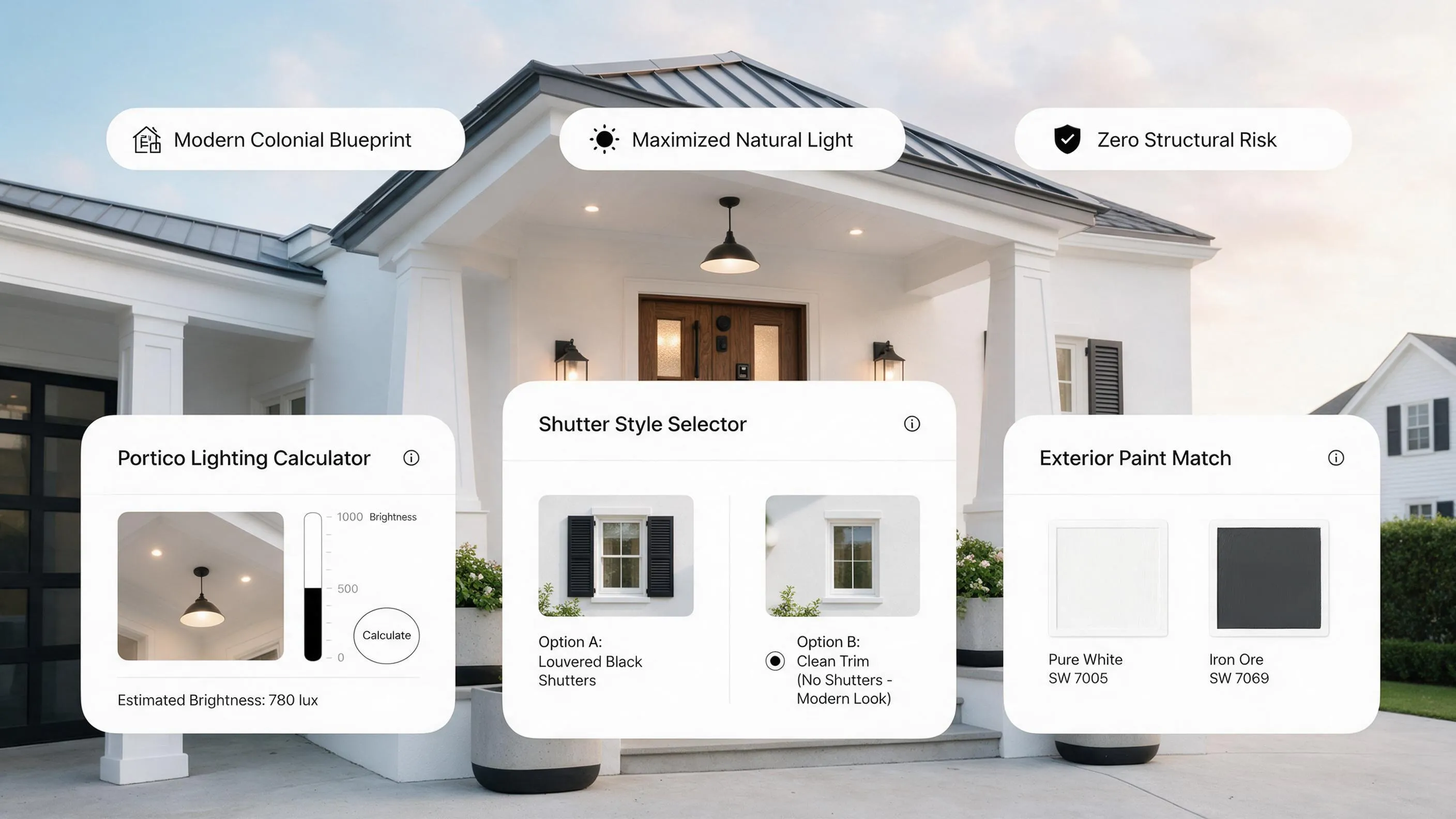
Which Colonial Features Should You Keep—and Which Can You Update?
Understanding how to modernize a modern colonial home without stripping its character requires separating core structural geometry from temporary surface details.
Colonial architecture relies on a rectangular footprint, a symmetrical roofline, a central front entrance, and balanced window arrangements across the second floor. Erasing these historic bones dilutes the style; refining them modernizes it.
│
├── 1. KEEP & PROTECT  --> Symmetrical footprint, main roof pitch, central doorway
├── 2. REFINERIES      --> Heavy crown trim, authentic window grids, masonry bases
└── 3. REPLACE / ERASE --> Plastic vinyl shutters, ornate storm doors, tiny lights
When evaluating your colonial house exterior design, preserve the fundamental rhythm of the building. Upgrading surface materials while respecting classic colonial architecture creates a house that feels custom, grounded, and timeless.
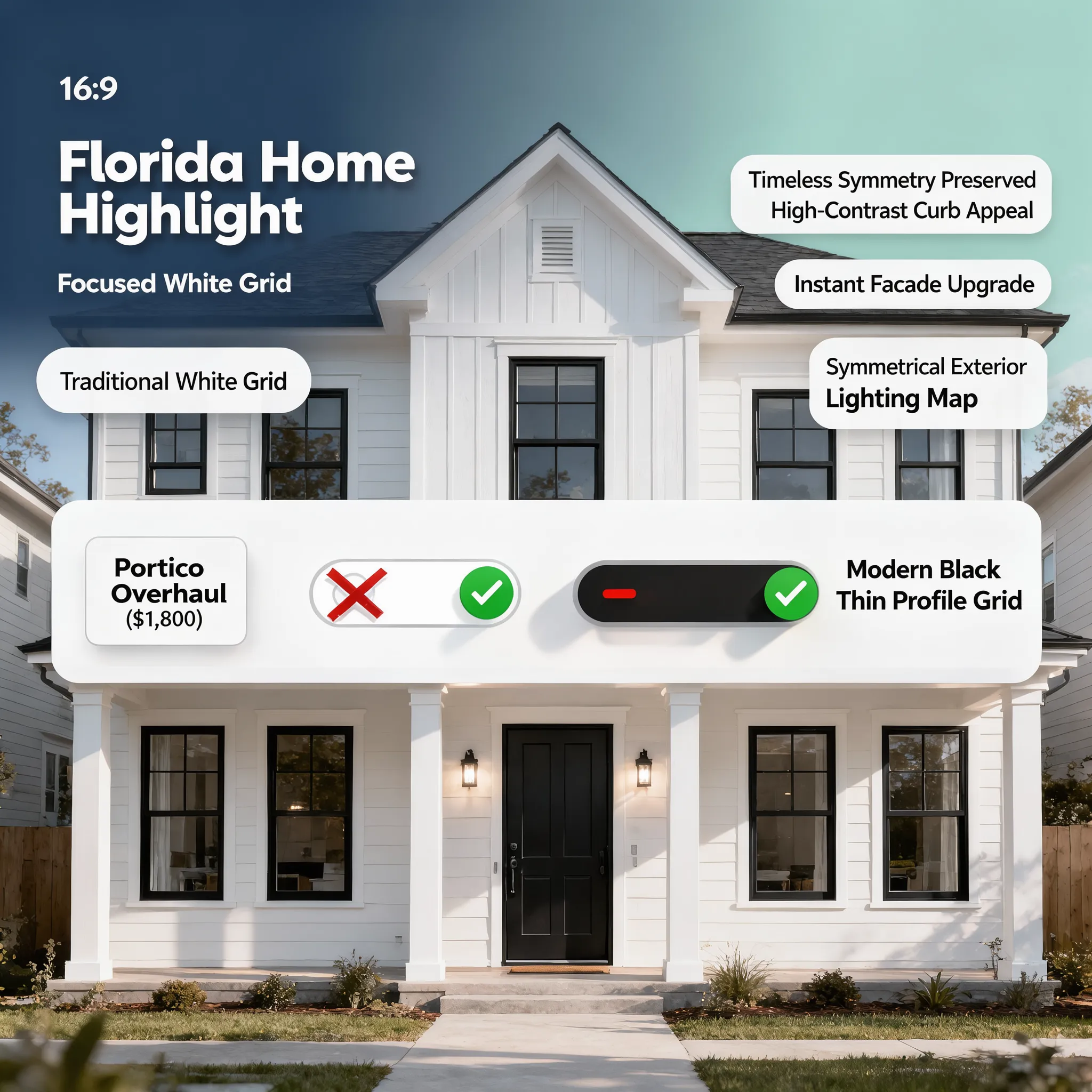
Refresh a Symmetrical Colonial Front Without Making It Look Too Formal
The strict symmetry of a Colonial facade can occasionally feel rigid or sterile if every element looks copy-pasted across the center line.
You can soften that stiffness by introducing organic textures and asymmetrical accents along the lower ground plane while keeping the main house structure symmetrical.
- Layer Asymmetrical Softscapes: Plant sweeping, curved garden beds with varying plant heights rather than trimming boxwoods into identical stiff spheres.
- Offset Your Pathway: Run a wide bluestone or stone paver walkway that curves gently toward the driveway rather than a straight concrete strip.
- Introduce Warm Wood Accents: Use natural white oak or warm cedar for your porch ceiling soffit to soften cold white trim.
┌────────────────────────────────────────────────────────────────────────┐
| UPPER ELEVATION : Strict 1-to-1 window symmetry & balanced dormers    |
| LOWER LANDSCAPE : Organic curving garden beds + warm wood entry details|
└────────────────────────────────────────────────────────────────────────┘
Rethinking your colonial house front elevation preserves structural balance while removing stiff formality. Applying creative colonial home exterior design principles gives your home a welcoming, approachable atmosphere.
Choose Modern Colonial House Colors That Work With Brick and Siding
Selecting paint for a modern colonial house exterior becomes tricky when dealing with existing red, orange, or weathered brown brick.
If you pick a cool, blue-toned stark white paint, your existing red brick chimney or foundation wall will look jarringly orange by comparison.
Testing colonial house exterior colors on large sample boards against your actual brickwork prevents costly repainting mistakes. Choosing grounded modern colonial house colors highlights architectural trim while keeping a colonial brick house exterior looking unified.
Replace Dated Shutters, or Keep Them? Make the Right Call for Your Façade
Undersized plastic shutters bolted flat against vinyl siding are one of the fastest ways to make a Colonial home look cheap.
Shutters were historically designed to close over windows to protect glass from storms. When a 36-inch wide window features 10-inch wide fake plastic shutters, the human eye instantly spots the mismatch.
• Triple or quadruple window sets
• You want a clean modern look
• Shutters match half window width
• Real iron shutter hinges used
Evaluating your colonial house shutters is a major design fork in the road. Upgrading to properly proportioned wood louvered options or removing cheap vinyl pieces entirely gives your colonial exterior ideas clean, intentional lines.
Give the Front Door More Impact Without Overpowering the House
The central entrance is the absolute crown jewel of a Colonial home's front view. If your doorway is painted the same dull shade as your window trim, the whole house loses its focal point.
Your entrance needs to draw the eye the moment someone turns onto your street.
├── 1. EXPAND DOOR SCALE   : Upgrade to a 42-inch door slab or add full-lite sidelights
├── 2. UPGRADE HARDWARE    : Install 18-inch heavy matte black handlesets
├── 3. ADD OVERHEAD CROWN  : Install a crisp portico canopy with thick square columns
└── 4. SCALE UP LIGHTING   : Flank the doorway with 18-to-20-inch tall lantern sconces
Focusing on your colonial house front door creates an unmistakable arrival point. Upgrading a recessed colonial front entrance using high-contrast front door colors gives your home immediate curb appeal.
Update Colonial Windows and Trim Without Losing Their Traditional Proportions
Double-hung windows with divided grids are a foundational element of Colonial architecture. However, old white vinyl windows with yellowed plastic grids inside the glass look dated.
You can update your windows for modern energy performance while preserving iconic historic scale.
Upgrading your colonial house windows relies on crisp detail. Choosing dark bronze or black frames paired with substantial colonial window trim modernizes the facade while maintaining structural harmony across your colonial home exterior.
Mix Brick, Painted Siding, and Stone Without Making the Exterior Look Patchy
Many two-story Colonials feature red brick on the first floor and wood or vinyl siding on the second floor. When these materials are painted clashing colors, the house looks split in half.
To bind different materials into one composition, use unified color tones.
┌────────────────────────────────────────────────────────────────────────┐
| OPTION A (Monochromatic): Paint brick and siding the exact same shade. |
| OPTION B (Grounded Base) : Leave red brick natural; paint upper siding |
|                            a warm greige that matches the brick mortar. |
└────────────────────────────────────────────────────────────────────────┘
Rethinking your colonial house siding prevents visual clutter. Unifying a colonial brick exterior with surrounding walls using proven exterior material combinations creates a cohesive facade.
Make a Colonial House Feel More Welcoming With Better Lighting and Landscaping
A beautiful facade loses its impact after sunset if your walkway sits in dark shadows and your front door is lit by a single 60-watt bulb.
Landscaping and exterior fixtures complete the architectural presentation.
- Oversized Lantern Sconces: Mount 18-inch black gas-style lantern sconces on both sides of the front door frame.
- Low-Voltage Path Lighting: Space warm 2700K LED walkway lights along your front path to guide foot traffic safely.
- Tiered Planting Beds: Use low-growing boxwoods, hydrangeas, and ornamental grasses to frame the foundation without blocking lower window glass.
┌────────────────────────────────────────────────────────────────────────┐
| HARDSCAPE: Broad 48-inch bluestone paver walkway straight to entry    |
| LIGHTING : Dual 18-inch black sconces + 4 warm LED path lights         |
| SOFTSCAPE: Low structural boxwoods paired with soft white hydrangeas   |
└────────────────────────────────────────────────────────────────────────┘
Integrating structured colonial house landscaping links your home to the front yard. Exploring clean colonial front yard ideas and adding warm colonial house exterior lighting gives your property nighttime polish.
Modernize an Older Colonial Exterior in Stages Instead of Remodeling Everything
Overhauling an entire two-story exterior at once can feel overwhelming to manage and stretch your budget thin.
Phasing your exterior updates allows you to make noticeable improvements immediately while spreading costs over time.
Planning a colonial house exterior remodel in logical stages protects your budget. Focusing on high-return projects when updating a colonial house executes a smooth colonial home renovation on your terms.
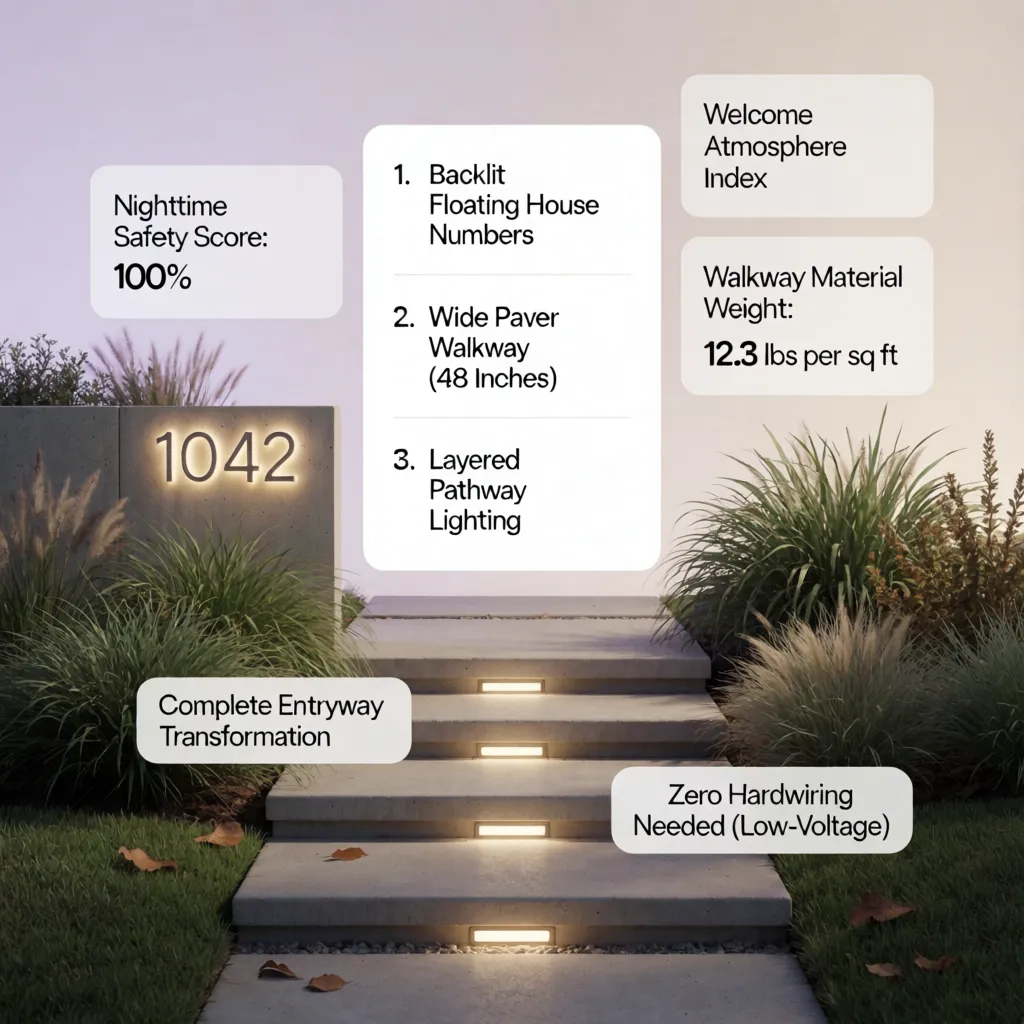
Compare Colonial Exterior Colors and Materials on Your Actual House
Ordering paint or buying custom windows without seeing how those finishes interact with your roof, brick, and trees is an expensive gamble.
Digital 3D tools eliminate guesswork before contractors begin work.
• Hides roofline & tree shadows
• Shows no material interactions
• Swap shutter styles & colors
• Test 5 color schemes in minutes
Using a digital exterior paint visualizer or house exterior visualizer lets you test combinations on screen. Experimenting on DesignHome allows you to visualize exterior house colors, compare dark trim against warm brick, and finalize your choices with confidence.
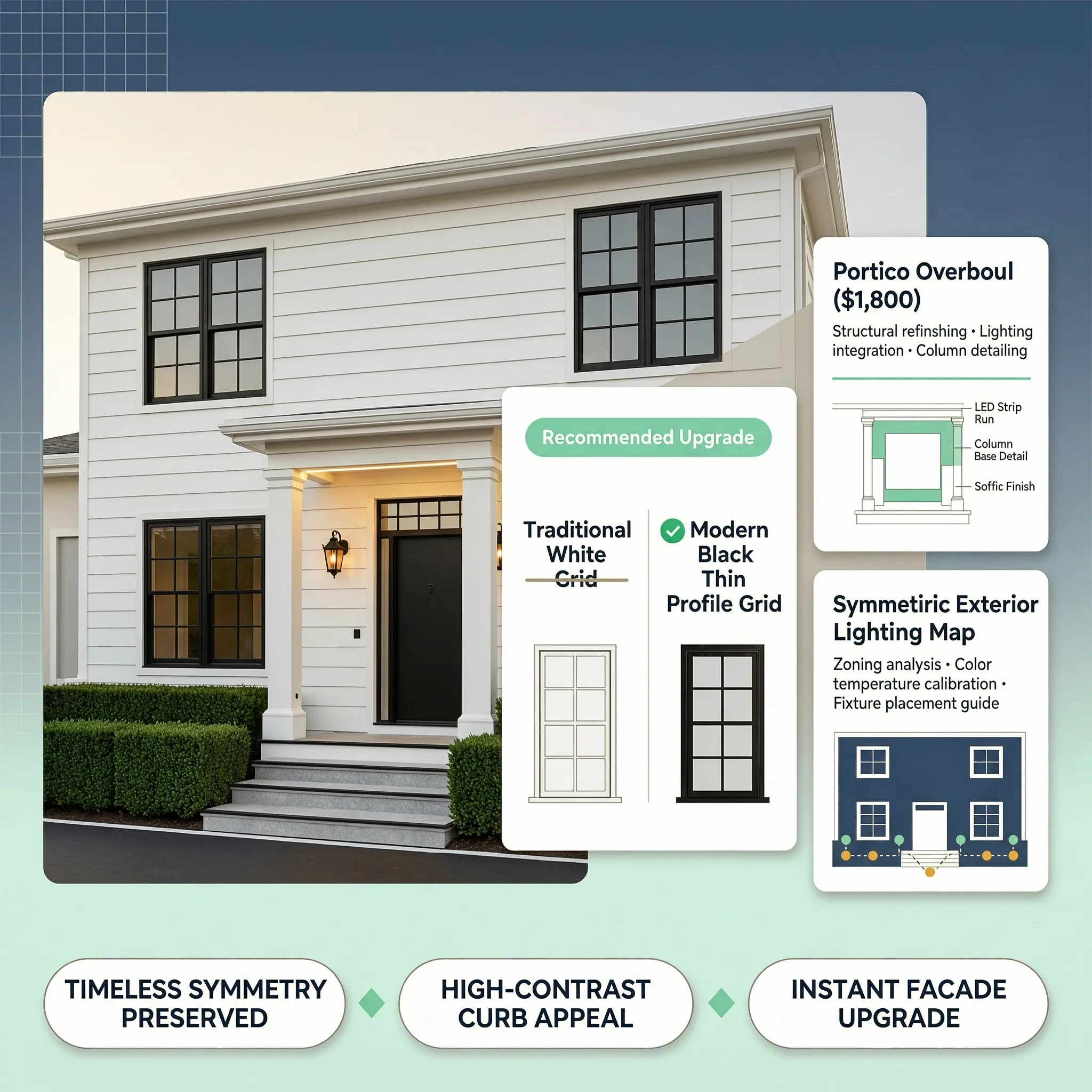
How to Decide Whether Your Colonial Exterior Needs a Refresh or a Bigger Remodel
Deciding between a cosmetic refresh and a structural remodel comes down to assessing the condition of your home's envelope.
├── CHOOSE A REFRESH IF : Siding is sound, window frames are square, and roof is dry
└── CHOOSE A REMODEL IF : Framing shows rot, windows leak air, or siding is buckled
If your home's structure is sound, targeted cosmetic upgrades during a colonial house exterior renovation deliver a fresh look. If structural elements are failing, planning a full colonial house remodel protects your property while executing a total colonial house exterior design transformation.
As you refine your property inside and out, test interior floor plan adjustments with our guide on rearranging problematic or awkward interior floor plans, verify indoor seating scale using our walkthrough on matching seating dimensions to room footprints, and manage your project budget using our strategies for planning home improvements without overspending. If you are working with long living spaces, review our tips on layout options for long narrow spaces, or explore exterior ideas with our guide on modernizing dated split-level exteriors.
To test siding textures, paint colors, and full exterior layouts on screen, map your property today using DesignHome.
Frequently Asked Questions About Modern Colonial House Exterior Ideas
1. How can I update my two-story Colonial's curb appeal without destroying its classic historical charm?
Pulling up to a classic two-story Colonial with faded beige siding, tiny yellowed shutters, and an old brass eagle knocker can make the house feel stuck in another era. Tearing down the front porch or stripping away historical features isn't the answer.
Modernizing a Colonial comes down to refining surface contrast while preserving symmetrical proportions.
Replace outdated vinyl siding with crisp off-white fiber cement, install properly scaled louvered shutters that match window dimensions, and paint the front door a rich, dark tone. Focusing on material quality transforms a dated facade into a modern colonial house exterior, giving your property high-end street presence without erasing its architectural heritage.
2. My Colonial looks stiff and formal from the sidewalk. What are the best ways to make the facade feel warm and inviting?
The strict symmetrical layout of traditional Colonial architecture can sometimes feel rigid or sterile if every element is mirrored perfectly across the front lawn.
You can soften that formality along the ground plane without breaking the house's symmetry.
┌────────────────────────────────────────────────────────────────────────┐
| UPPER ELEVATION : Keep 1-to-1 window symmetry & balanced dormers       |
| LOWER ELEVATION : Curve stone pathways & add organic, layered gardens  |
└────────────────────────────────────────────────────────────────────────┘
Rethinking your colonial house front elevation brings immediate warmth. Designing winding flagstone walkways, layering hydrangeas and ornamental grasses in curving garden beds, and adding natural oak porch soffits softens a colonial home exterior design, creating a welcoming atmosphere.
3. Should I paint over my original Colonial red brick, or keep it natural and update the surrounding siding?
Standing on your front lawn staring at 40-year-old red brick leaves many homeowners torn between painting everything stark white or leaving the masonry completely untouched out of fear of making an unfixable mistake.
You do not need to paint over solid brick to achieve a fresh look.
If you keep your red or orange brick unpainted along the first floor, choose an upper siding color that pulls directly from the brick's mortar joints—like a soft alabaster or warm greige. Unifying your colonial brick house exterior with surrounding walls creates a cohesive colonial house exterior design, giving your home a custom appearance while preserving low-maintenance masonry.
4. How do I pick exterior paint colors for a Colonial that won't look stark or wash out in full sunlight?
Selecting paint for a massive two-story facade can be intimidating. Choose an icy, cool white and your house looks like a commercial office building; pick a muddy tan and you are back in 1990.
The key to a timeless palette is using warm, organic undertones:
- Warm Alabaster: Soft off-whites reflect bright sunlight without blinding the neighborhood.
- Charcoal & Bronze Trim: Dark gutters and window casings frame the building's geometry.
- Rich Accent Doors: Deep forest green, navy blue, or natural oak stains add warmth to the central entry.
Testing colonial house exterior colors on large sample boards across morning and afternoon light prevents repainting regret. Selecting grounded modern colonial house colors ensures your modern colonial homes look polished in every season.
5. My shutters look tiny and cheap. Should I replace them with real wooden shutters or remove them entirely?
Undersized plastic shutters screwed flat against vinyl siding are one of the fastest ways to make a grand Colonial home look cheap and dated.
Historical shutters were designed to close fully over window glass to protect against storms.
• Double or triple window groups
• You prefer a sleek modern look
• Shutter width equals half window
• Real iron mounting hardware used
Rethinking your colonial house shutters resets the front facade's proportions. Upgrading to authentic wooden louvered options or removing plastic shutter panels entirely gives your colonial exterior ideas clean, intentional lines.
6. How do I make my central Colonial front door look dramatic without overwhelming the portico?
The central doorway is the primary anchor of every Colonial home. If your front entry is painted the exact same flat white as your corner trim, the whole house loses its focal point.
Your entrance should draw the eye the second someone turns into your driveway.
Upgrade to an oversized 42-inch natural wood door or a dark iron unit with full-height sidelights. Flank the frame with 18-inch matte black lantern sconces and mount clean house numbers directly onto surrounding trim. Elevating your colonial house front door creates an undeniable arrival point, turning a plain doorway into a grand colonial front entrance.
7. What window replacements work best on a Colonial home to maintain historic grid proportions?
Double-hung multi-pane windows are essential to Colonial architecture. However, yellowed vinyl windows with fake plastic grids trapped between glass panes drag down your home's exterior quality.
You can modernize window performance while honoring historic geometry.
When upgrading colonial house windows, select simulated divided-lite glass featuring dark bronze or black frames. Wrapping openings in substantial 4-inch colonial window trim modernizes the entire surface, preserving traditional proportions while giving your colonial home exterior sharp architectural definition.
8. How do I combine red brick on the first floor and wood siding on the second floor without splitting the house in half?
Two-story Colonials frequently feature brick on the lower floor and horizontal lap siding on the upper floor. When painted contrasting colors, the house looks sliced down the middle.
To bind different materials into one unified composition, use cohesive color values.
If you leave the lower brick unpainted, select a siding color for the second story that matches the warm undertones of the brick's mortar. Combining a natural colonial brick exterior with updated colonial house siding prevents visual clutter, allowing varied exterior material combinations to read as a single composition.
9. What outdoor lighting and landscaping updates make a Colonial home look welcoming at night?
A grand two-story facade loses its visual impact after sunset if your entry path sits in dark shadows and your front door relies on a single tiny coach light.
Outdoor fixtures and softscapes complete the architectural presentation.
- Oversized Lantern Sconces: Mount matching 18-to-20-inch black gas-style lanterns on both sides of the front door.
- Warm Path Lighting: Position low-voltage 2700K LED walkway lights along your front path to guide steps safely.
- Layered Planting Beds: Use low boxwood hedges, hydrangeas, and ornamental grasses to frame foundation walls.
Integrating structured colonial house landscaping links your building directly to the lawn. Applying smart colonial front yard ideas and adding warm colonial house exterior lighting gives your facade nighttime polish.
10. Can I update my Colonial house in phases, or do I need to do a full exterior overhaul all at once?
Tackling a full two-story exterior renovation all at once can feel overwhelming to manage and stretch your budget thin.
Phasing your upgrades allows you to make high-impact improvements immediately while spreading costs over time.
Planning a colonial house exterior remodel in logical steps protects your budget. Focusing on high-return projects when updating a colonial house executes a smooth colonial home renovation on your terms.
11. How can I see paint colors and shutter options on my actual Colonial house before spending money on materials?
Ordering thousands of dollars worth of custom windows, shutters, or siding paint without seeing how those finishes interact with your roof and brick is a risky financial gamble.
Digital visualizers eliminate guesswork before contractors begin work.
Using a digital exterior paint visualizer or house exterior visualizer lets you test material combinations on screen in minutes. Visualizing your project beforehand on DesignHome allows you to visualize exterior house colors, compare dark trim against red brick, and finalize your material decisions with total confidence.
12. How do I know whether my Colonial facade needs a quick cosmetic refresh or a full structural remodel?
Deciding between a surface refresh and a complete renovation comes down to assessing the physical condition of your home's envelope.
├── CHOOSE A REFRESH IF : Siding is sound, window frames are square, and roof is dry
└── CHOOSE A REMODEL IF : Framing shows rot, windows leak air, or siding is buckled
If your home's structure is healthy, targeted cosmetic updates during a colonial house exterior renovation deliver a fresh look. If structural elements are failing, planning a full colonial house remodel protects your property while executing a total colonial house exterior design transformation.


