

Decorating a space on a strict budget usually brings up a major wave of anxiety. You stare at empty rooms, compare retail price tags, and wonder how anyone pulls off a high-end look without taking out a second mortgage.
Here is the brutal reality:
Most people burn through their money on the wrong items. They buy cheap accent tables that fall apart in six months, stock up on random clearance knick-knacks, and rush into buying oversized furniture that chokes the room. Before they know it, the bank account is empty, and the house still feels like a disorganized collection of random purchases.
┌─────────────────────────────────────────┬─────────────────────────────────────────┐
| THE SINKHOLE APPROACH                   | THE VALUE-FIRST APPROACH                |
├─────────────────────────────────────────┼─────────────────────────────────────────┤
| • Spreading money equally everywhere    | • Investing 60% into high-touch anchors |
| • Guessing dimensions off store shelves | • Mapping layout scale before buying    |
| • Chasing low-quality trend decor       | • Transforming spaces with paint & light|
| • Buying full sets from one showroom    | • Mixing high-impact textures & thrift  |
└─────────────────────────────────────────┴─────────────────────────────────────────┘
Carrying out home design on a budget isn't about compromising on style or settling for a cheap-looking home. It comes down to knowing exactly where to spend every dollar for maximum impact—and where to hold back.
With the right strategy, budget home design gives you total control over your spending while producing a room that feels intentional, grounded, and expensive.
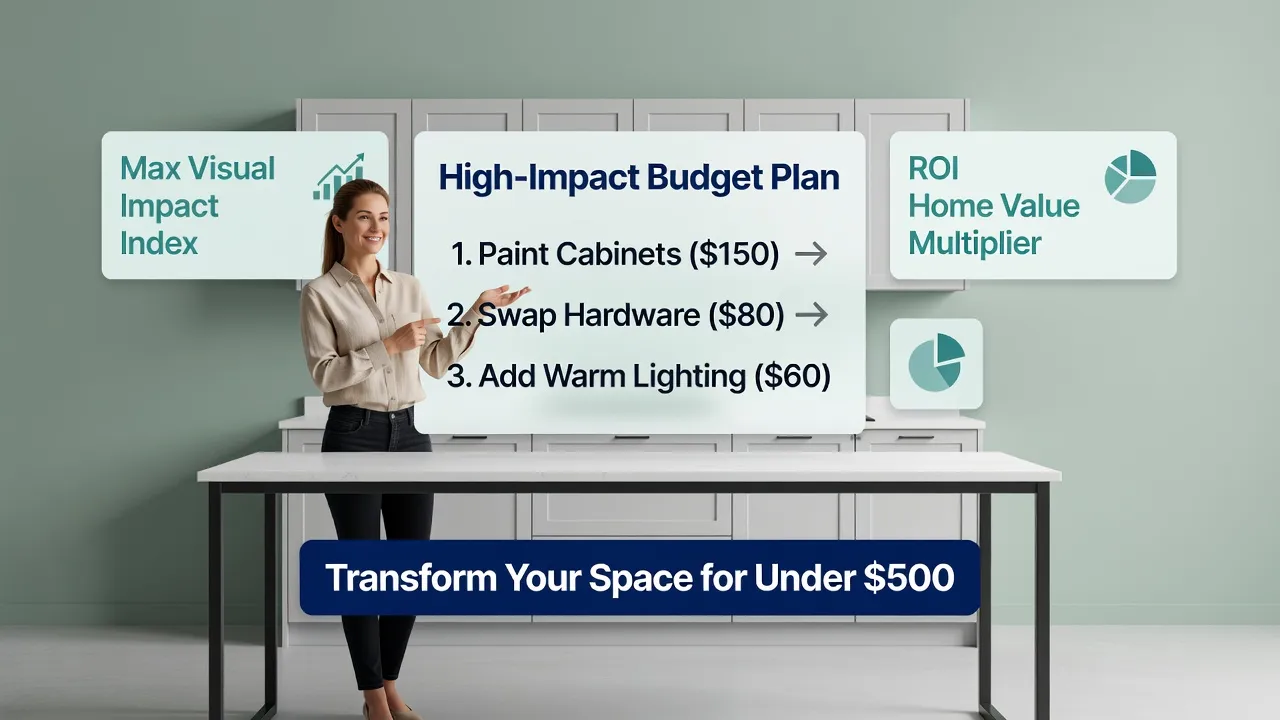
Decide What Deserves the Biggest Share of Your Budget
Spreading your money evenly across every piece in a room guarantees one result: a space full of mediocre items that don't last.
To get the highest return on your home design budget, you need to split your spending into three clear tiers based on daily utility and long-term durability.
│
├── [ 60% ] HIGH-IMPACT ANCHORS  (Sofa, Mattress, Dining Table, Hard Flooring)
├── [ 30% ] MID-TIER ELEMENTS   (Lighting Fixtures, Area Rugs, Storage Units)
└── [ 10% ] LOW-COST ACCENTS    (Throw Pillows, Wall Art, Vases, Table Decor)
High-Impact Anchors (60%): Put the bulk of your funds into items you sit on, sleep on, or use every single day. A sturdy sofa with high-density cushions will serve you for a decade, whereas a cheap couch will sag within months.
Mid-Tier Structural Elements (30%): Allocate moderate funds to items that frame the room—like wool-blend area rugs, overhead lighting fixtures, and solid window treatments.
Low-Cost Accents (10%): Keep decorative accessories lean. These are the easiest pieces to swap out or source inexpensively down the road.
Setting these priorities early grounds your overall affordable home design plan. You stop overspending on decorative accessories and protect the core pieces that make daily life comfortable.
Start With the Layout Before Spending a Dollar on Decor
The most expensive mistake you can make when attempting home interior design on a budget is buying furniture before mapping your floor space.
Think about it:
A $1,200 sofa bought on final sale is zero bargain if it blocks your main doorway or forces you to walk around it sideways.
─────────────────────────────────────────────────────────────────────────
• Main Walking Paths     │ Maintain 36 to 48 inches of open space
• Coffee Table Clearance │ Leave 14 to 18 inches from the sofa seat
• Dining Chair Pullout   │ Allow 36 inches from table edge to nearest wall
• TV Viewing Distance    │ Set seating at 1.5x to 2.5x the screen diagonal
─────────────────────────────────────────────────────────────────────────
Fixing your home layout cost-free requires a simple measuring tape and a pencil. Establishing a functional furniture layout upfront keeps you from wasting cash on items that overcrowd your rooms, saving your budget for pieces that actually fit your space.
Make an Expensive-Looking Home With Simple Materials
A room looks high-end because of balance, proportion, and visual consistency—not because every piece came with a four-figure price tag.
You can pull off inexpensive home design that looks remarkably custom by leveraging three basic visual principles:
┌────────────────────────────────────────────────────────────────────────┐
| [1] MONOCHROMATIC BASE  : Paint trim and walls the same color to extend |
|                           perceived ceiling height.                    |
| [2] OVERSIZED RUGS      : Ensure all front legs rest on the rug to     |
|                           anchor the seating arrangement.              |
| [3] FLOOR-TO-CEILING    : Hang curtain rods right at the ceiling line  |
|                           to make short windows feel grand.            |
└────────────────────────────────────────────────────────────────────────┘
Focusing on these simple adjustments delivers an expensive-looking home without pushing you over budget. Clean lines and proportion do the heavy lifting that expensive labels cannot.
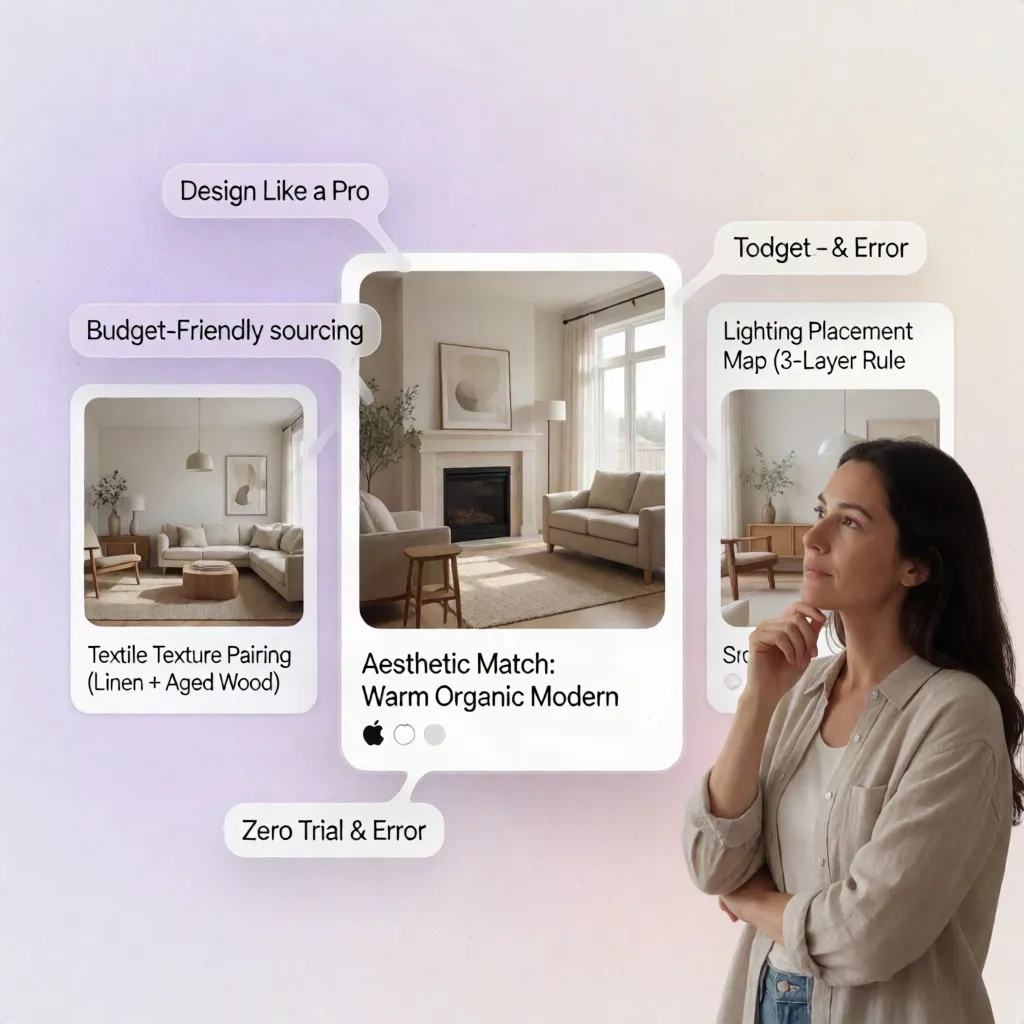
Spend on the Pieces You Touch and Use Every Day
When executing budget interior design, prioritize physical comfort over pure decoration every single time.
Guests rarely notice if a side table costs $30 or $300. But everyone instantly notices a rock-hard mattress, a squeaky chair, or a sagging sofa cushion.
• Main bed mattress & pillows
• Dining room chairs
• Main kitchen hardware/handles
• Picture frames & wall art
• Table lamps & floor lamps
• Decorative bowls & tray displays
Investing in sturdy budget furniture and durable affordable furniture for high-touch areas ensures your daily comfort while keeping decorative costs minimal.
Save on Decor Without Making Your Home Look Cheap
A common fear when looking for cheap home decor ideas is ending up with a space that looks flimsy or staged.
The trick? Avoid buying mass-produced plastic knick-knacks in bulk just to fill empty shelf space.
├── Swap Plastic for Natural Materials  --> Choose stoneware, wood, and glass over acrylic
├── Buy Oversized Thrifted Frames       --> Insert custom personal photos into vintage frames
├── Group Small Objects in Threes       --> Place 3 varied heights on a tray to reduce clutter
└── Use Organic Elements                --> Bring in branches, dried flora, or house plants
Integrating these affordable home decor principles keeps your shelves looking curated. Sourcing home decor on a budget using natural materials allows you to execute smart budget decorating that feels authentic and intentional.
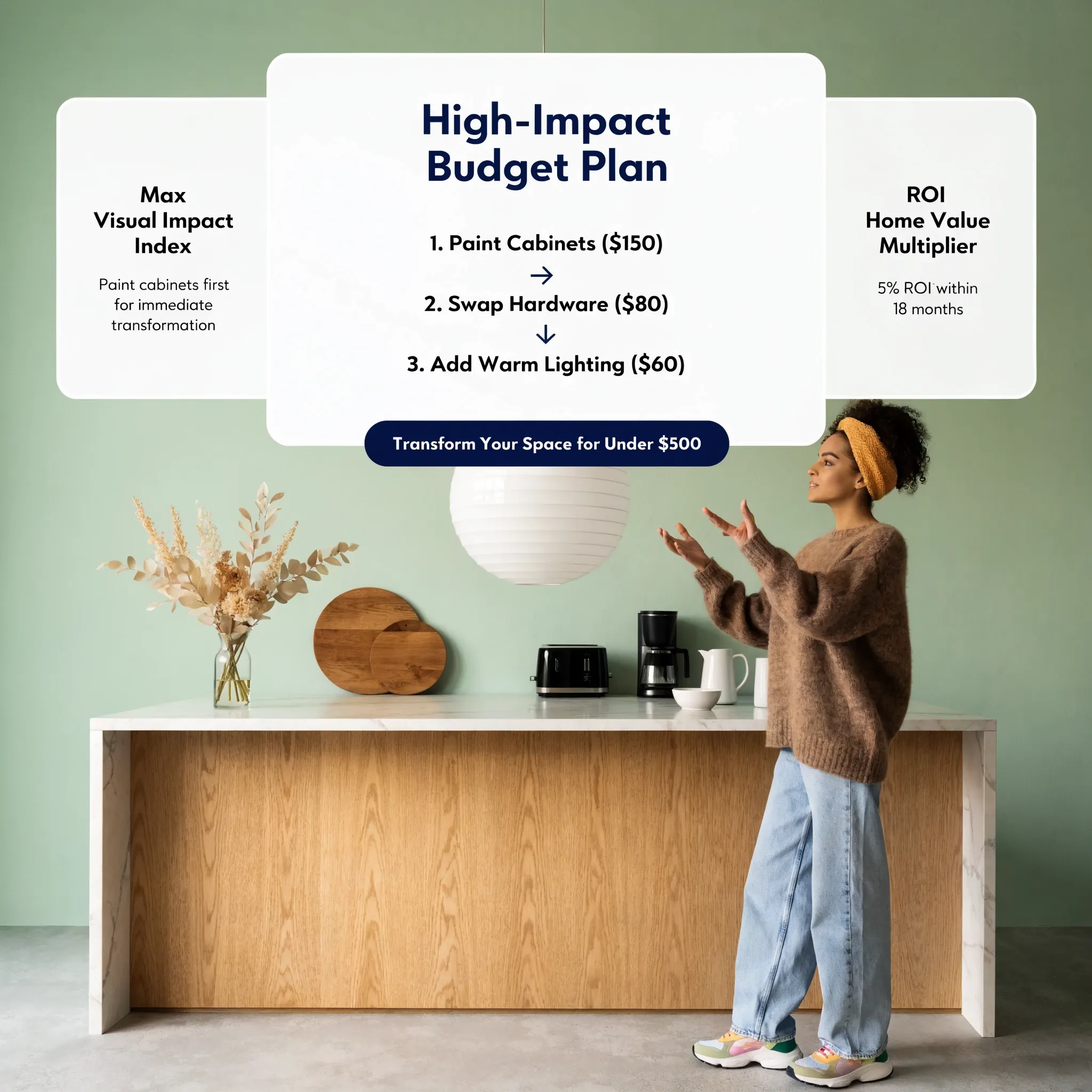
Use Paint, Color, and Lighting to Change the Room for Less
If you want a dramatic transformation on a tight budget, skip the structural remodels and open a can of paint.
Paint remains the single highest-impact tool in affordable interior design. A $50 gallon of paint can brighten a dim hallway, warm up a cold living room, or make a low-ceilinged room feel tall and airy.
┌────────────────────────────────────────────────────────────────────────┐
|  STRATEGY A: THE ACCENT ALCOVE                                         |
|  Paint an recessed nook or entryway in a deep, dark tone to add depth.|
├────────────────────────────────────────────────────────────────────────┤
|  STRATEGY B: LAYERED WARM LIGHTING                                     |
|  Swap harsh overhead bulbs for 2700K warm LED bulbs in floor lamps.    |
├────────────────────────────────────────────────────────────────────────┤
|  STRATEGY C: PAINTED CABINETRY                                         |
|  Update dated wooden kitchen or bathroom cabinets with a satin finish. |
└────────────────────────────────────────────────────────────────────────┘
Planning a quick budget home makeover around paint and lighting lets you decorate your home on a budget with speed and total visual impact.
Reuse What You Own Before You Buy Something New
Before opening a shopping app or browsing retail websites, take an inventory of what you already have sitting in closets, corners, or other rooms.
Most homeowners sit on unused design assets simply because they are used to seeing them in one specific spot.
"Reorganizing what you already own costs exactly zero dollars, yet it completely resets how a room feels."
Applying these budget home design ideas opens up fresh possibilities across your space. Testing home design ideas on a budget using existing items keeps cash in your pocket while clearing out storage space.
Make Small Rooms Look Better Without Making Them Cost More
Designing compact rooms comes with double the pressure: you are dealing with limited floor space and a strict spending limit.
The good news? Small spaces require less furniture and fewer materials, making them naturally more economical to transform.
• Heavy, dark, light-blocking drapes
• Skirted sofas resting on the floor
• Dark, high-contrast border trims
• Sheer floor-to-ceiling linen panels
• Legged furniture raised off the floor
• Tone-on-tone walls and trim colors
Executing small home design on a budget relies on visual continuity. Keeping furniture legs raised and color tones unified creates an open, flowing space without requiring expensive structural changes.
Avoid the Budget Traps That Quietly Make a Home More Expensive
Money rarely disappears in one big, obvious purchase. It leaks out slowly through small, impulse buys that don't fit together.
├── [1] "CLEARANCE" IMPULSE BUYS : Buying an item just because it is discounted
├── [2] FAST-TREND ACCESSORIES   : Micro-trends that look dated within a year
├── [3] WRONG-SCALE FURNITURE    : Buying without measuring wall clearances first
├── [4] CHEAP TEXTILES           : Polyester rugs that shed, stain, and flatten
└── [5] INCOMPLETE PURCHASES     : Buying a table without checking chair heights
Recognizing these traps protects your overall wallet. Staying disciplined keeps your budget intact for high-quality core pieces that stand the test of time.
See the Room Before You Buy the Pieces
Here is where the traditional design process breaks down:
People spend hours calculating prices on spreadsheets, taking complex design software courses, or paying consultants expensive hourly fees just to see if a sofa fits.
You don't need a degree in CAD software or a massive consulting budget to test your room ideas.
• Buying paint cans to test walls
• Risking costly return shipping
• Swapping color palettes on screen
• Rearranging furniture instantly
Using smart digital tools like the 3D room visualizer on DesignHome completely changes how you plan your budget. You can visualize home design layouts directly on screen, test floor finishes, and check furniture proportions before spending a single dollar.
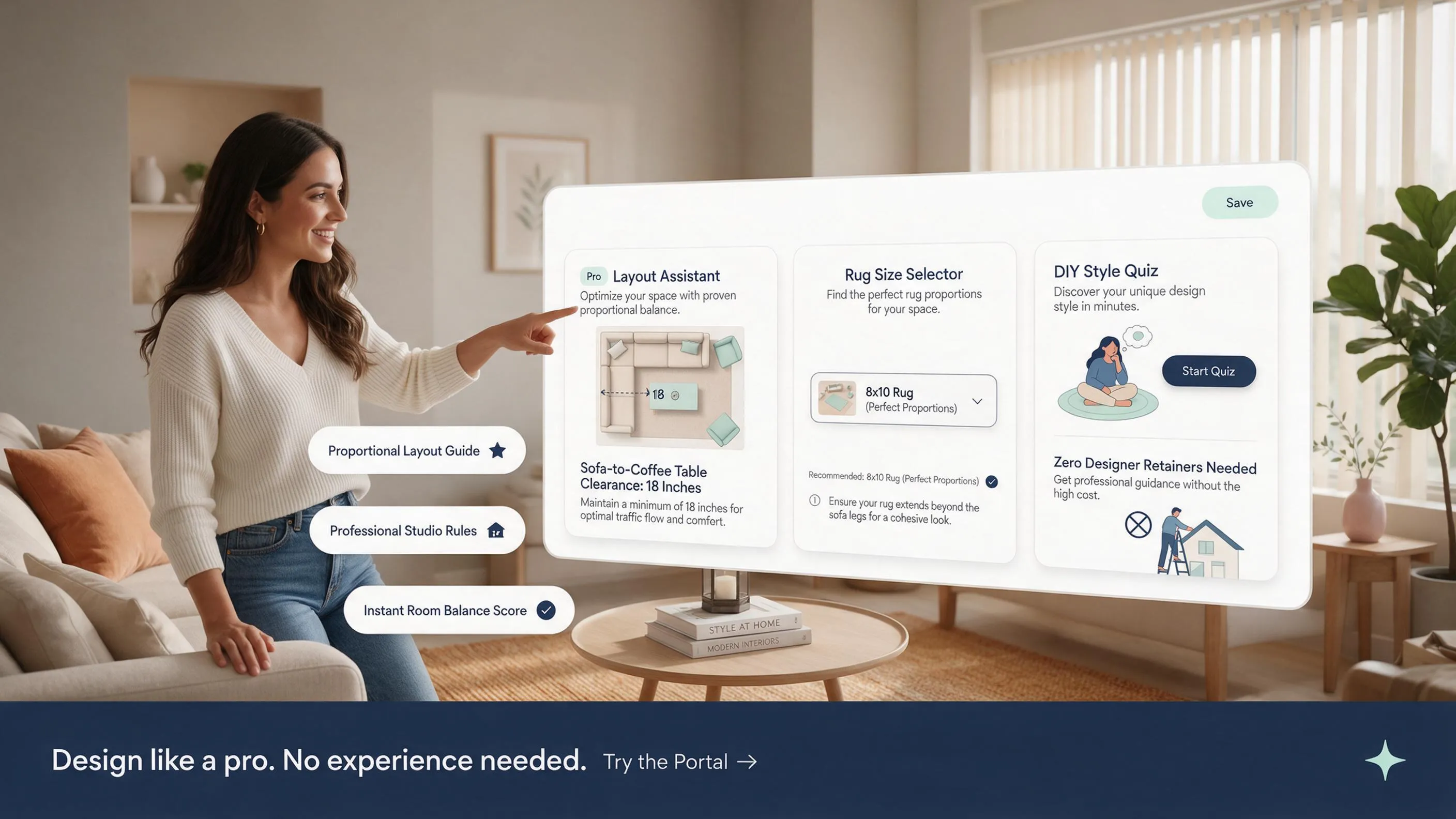
Turn Your Budget Into a Home Design Plan You Can Actually Follow
Transforming your home on a budget isn't about making a hundred hasty decisions at once. It comes down to following a steady, systematic plan that keeps your spending under control.
[ PHASE 01: MEASURE & PLAN ]  ──> Draft room layout & set maximum spending caps
             │
             ▼
[ PHASE 02: TEST IN 3D ]      ──> Preview furniture scale on DesignHome
             │
             ▼
[ PHASE 03: CORE ANCHORS ]    ──> Buy high-touch sofa, bed, and dining pieces
             │
             ▼
[ PHASE 04: PAINT & LIGHT ]   ──> Apply paint coats & layer warm light fixtures
             │
             ▼
[ PHASE 05: ACCENT LAYERS ]   ──> Add thrifted decor, rugs, and personal art
Following this structured home design plan gives you a clear path from empty space to a complete, comfortable home.
Ready to build your space without overspending? Lay out your room dimensions on DesignHome, test your favorite furniture arrangements in 3D, and execute your vision with total confidence.
Frequently Asked Questions About Home Design on a Budget
I have a tight budget to redesign my living space, but store price tags are intimidating. Where should my money actually go first so I don't waste it?
When working with a limited home design budget, the biggest mistake is spreading your funds paper-thin across dozens of small items. To pull off effective home design on a budget, split your spending strategically: put 60% into high-touch anchor pieces like a sturdy sofa or mattress that withstands daily use, 30% into structural frame elements like an area rug or warm lighting, and keep 10% for flexible accent pieces. Securing your core furniture first prevents budget leaks and ensures your home remains physically comfortable for years.
How do some people make their homes look custom and expensive without spending thousands of dollars on high-end showrooms?
A room looks high-end because of proportion and visual balance, not luxury labels. You can execute affordable home design that feels elevated by leveraging a few basic visual adjustments. Paint your wall trim and baseboards the exact same tone as your walls to create the illusion of higher ceilings. Hang curtain rods right against the ceiling line so windows feel grand, and ensure your area rug is large enough for all front furniture legs to rest on top. These simple, inexpensive home design choices create a cohesive, custom look without straining your wallet.
I want to decorate my room, but I can't afford pricey gallery art or designer accessories. How do I fill empty shelves without making my space look cheap?
Filling shelves with cheap, mass-produced plastic trinkets just to eliminate empty space creates visual clutter. To master budget decorating with style, hunt for cheap home decor ideas that rely on natural textures and personal items. Group objects in odd numbers—like three ceramic vases of varying heights on a wooden tray—and insert personal photographs into oversized thrifted frames with wide white matting. Bringing in organic elements like dried branches or stoneware gives you affordable home decor that looks curated rather than bought in a rush.
I keep buying small decor pieces on sale, but my room still feels unfinished and my bank account is empty. What am I doing wrong?
You are likely falling into the clearance trap. Buying small, discounted knick-knacks because they seem cheap creates a fragmented room full of visual noise while quietly draining your cash. To decorate your home on a budget successfully, stop buying individual accessories on impulse. Pause all accent shopping, gather your remaining funds, and save toward a single, high-impact item—like a structured armchair or an oversized floor lamp. Focusing on larger anchor choices yields a grounded home decor on a budget strategy that actually looks finished.
Can I completely transform the vibe of a gloomy room over a single weekend without buying new furniture?
You don't need a massive structural remodel or new furniture sets to pull off a dramatic budget home makeover. A single $50 can of paint remains the most powerful tool in affordable interior design. Painting an accent alcove in a deep tone instantly adds architectural depth, while replacing cold overhead white bulbs with warm 2700K LEDs eliminates harsh shadows. Updating cabinet handles with sleek hardware and painting tired wooden surfaces completely resets a room's atmosphere in 48 hours for minimal cost.
Should I buy a cheap $300 couch to save money now, or is it better to stretch my budget for something sturdier?
A cheap, low-density sofa will sag, squeak, and lose its shape within six months, forcing you to spend money replacing it far sooner than you planned. In budget interior design, always prioritize daily comfort and physical durability for high-touch items. Spend more on pieces your body rests on every day—like your primary sofa, mattress, and dining chairs—and save money on visual-only items like side tables, picture frames, and table lamps. Smart home interior design on a budget protects your comfort where it matters most.
What if I literally have zero extra money to buy new decor right now? How can I refresh my layout for free?
Refreshing your home doesn't require spending cash. Reorganizing what you already own costs nothing while completely resetting how a space feels. Move an underutilized armchair from a bedroom into a living room corner to create a fresh reading nook, or swap wall art between your hallway and main seating area. Sanding down a scratched wooden table or reframing old family photos into a gallery wall are instant home design ideas on a budget that bring fresh energy using items you already own.
My apartment is small and my budget is tight. How do I make a cramped room feel open without spending a fortune?
Designing a compact room on a tight budget works to your advantage because you need fewer pieces to complete the space. To execute small home design on a budget, focus on visual continuity. Ditch small, scattered throw rugs in favor of one large area rug that unifies the floor. Choose sofas and chairs with raised, exposed legs to let light pass underneath, and hang sheer, ceiling-height window drapes to extend visual height. Keeping wall tones clean and furniture profiles low opens up tight square footage effortlessly.
I found a great deal on a sectional online, but I'm terrified it will end up blocking my living room doorway. How do I know if it will work?
Guessing scale off a computer screen or store floor is the easiest way to make an expensive, non-refundable mistake. Before purchasing any major furniture piece, map out your room's traffic paths using painter's tape on the floor. Ensure you keep at least 36 to 48 inches of open space for main walkways, and leave 14 to 18 inches between your sofa and coffee table. Locking in a clear spatial plan before buying protects your budget home design from costly dimension errors.
My living room feels dark and cold, but hiring an electrician to install new light fixtures is out of my price range. How do I fix this affordably?
Relying on a single overhead ceiling light casts unflattering shadows and makes a room feel flat. You can create rich, layered lighting without paying for electrical work by placing plug-in floor lamps, table lamps, and under-shelf LED strip lights at varying heights across the room. Using warm-toned LED bulbs around 2700K creates an inviting, golden glow that softens corners and turns any basic space into an inviting sanctuary after dark.
How do I stop making expensive trial-and-error mistakes where paint or furniture looks totally wrong once brought home?
Bringing home a rug that clashes with your floor or picking a wall paint shade that turns muddy in direct sun wastes both time and money. Digital visualization eliminates that guesswork entirely. Instead of crossing your fingers, you can use interactive 3D tools like DesignHome to visualize home design layouts directly on screen. Testing furniture scale, swapping wall colors, and viewing complete room arrangements virtually allows you to refine your vision and catch spatial mistakes long before making physical purchases.
I have dozens of budget ideas saved on my phone, but how do I turn all this inspiration into an actual spending plan I can finish?
To move from random inspiration to a completed space, build a structured execution plan. Start by measuring your room and testing layouts in 3D to confirm what actually fits. Next, buy your high-touch anchor furniture pieces, then apply fresh paint and layer warm lighting, and finally bring in thrifted accessories and personal artwork last. Following a step-by-step roadmap keeps your spending under control and transforms your budget home design ideas into a finished home you love.


