

You walk into your small kitchen to prepare a quick meal, open the cabinet for olive oil, and three spices tumble off the top shelf onto the counter.
You sigh, move a pile of mail to clear twelve inches of chopping space, and try to pull a skillet out of a deep drawer—only for its handle to catch on a tangled stack of saucepan lids. By the time you start cooking, your counters are crowded, your stress is high, and a simple weeknight dinner feels like an unnecessary hurdle.
Here is the truth: you do not need extra square footage to build a serene, high-performance kitchen.
A crowded kitchen rarely suffers from a lack of physical building space. It suffers from unassigned storage zones, unorganized flat surfaces, and overlooked vertical real estate. By matching your daily storage to actual human routines, clearing primary prep surfaces, and using every available inch of wall and door space, you can turn even the tightest kitchenette into an efficient culinary hub.
Here is how to execute your small kitchen organization ideas step by step to maximize every single inch.
1. Small Kitchen Organization Ideas That Make Every Inch Count
Before spending money on acrylic bins, wire racks, or shelf inserts, take a step back and change how you evaluate your kitchen's spatial volume.
In a compact footprint, your goal is not simply to hide items behind closed doors. The real objective is establishing intuitive, low-friction systems so every utensil, pan, and pantry item has a dedicated home.
= Daily Friction & Visual Clutter
= Effortless Cooking Workflow
Systematically rank your storage strategy using three core principles:
- 1. Primary Real Estate Allocation: Reserve the most accessible drawers and lower shelves (between waist and eye level) strictly for daily necessities like cutting boards, chef knives, and primary spices.
- 2. Out-of-Sight Staging: Move seasonal roasting pans, holiday platters, and specialty appliances to high upper cabinets or secondary storage locations.
- 3. Zero-Step Accessibility: Arrange your daily cooking tools so retrieving them requires a single motion—no digging past unrelated items.
2. Clear Your Kitchen Counters Without Losing Easy Access to Essentials
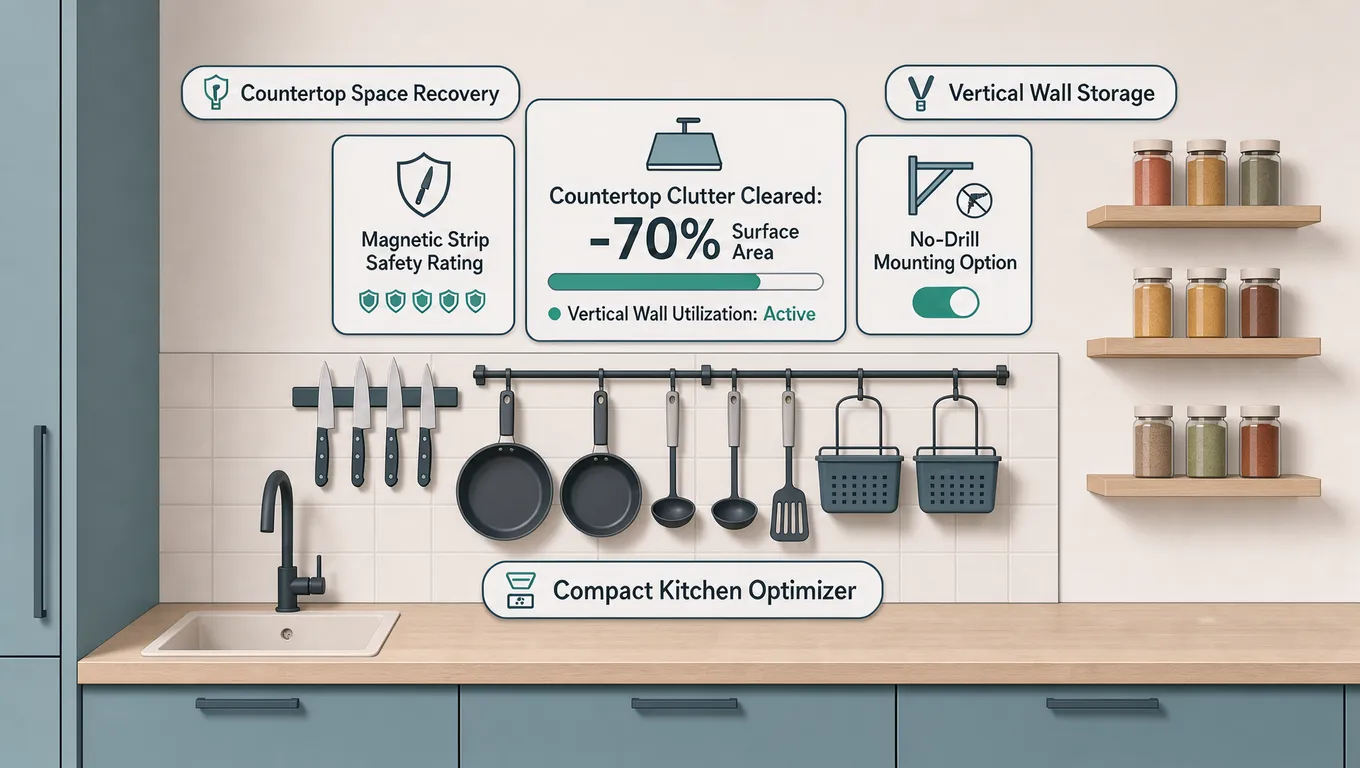
Leaving coffee canisters, knife blocks, spice racks, and toaster ovens resting permanently on your counter destroys your usable chopping area, making a small room feel instantly chaotic.
Executing high-impact small kitchen counter organization relies on clearing flat surfaces while keeping daily tools right where you work.
Follow these counter-clearing rules:
- Protect the Hero Prep Zone: Select the longest continuous counter run between your sink and stove. Keep this specific surface 100% clear of appliances, food items, and loose mail.
- Mount Tools Vertically: Install a sleek magnetic stainless steel strip on the backsplash to hold knives and shears off the counter.
- Tuck Appliances Away: Place toasters and blenders inside an appliance garage or a lower cabinet pull-out shelf, bringing them out only when actively in use.
If you are evaluating open spatial layouts across connected rooms, explore our guide on aligning primary counter landing zones with major appliances.
3. Give Every Cabinet a Job Instead of Stuffing Everything Inside
When cabinets become unstructured dumping grounds for mismatched mugs, plastic containers, and boxed pasta, finding a basic ingredient turns into a frustrating search.
Successful small kitchen cabinet organization requires assigning a single, specific job to every shelf and cupboard.
[ Half-Empty Pasta Boxes ]
[ Loose Tupperware Lids ]
| Upper: Glassware & Everyday |
+--------------------------------+
| Lower: Baking Oils & Seasonings |
+--------------------------------+
Establish clear cabinet zones:
- Zone A (Plates & Glassware): Position everyday dinner plates, cereal bowls, and drinking glasses in the upper cabinet closest to your dishwasher or drying rack for effortless unloading.
- Zone B (Food Prep & Baking): Store mixing bowls, measuring cups, and baking ingredients together directly above or below your main preparation counter.
- Zone C (Pots & Sheet Pans): Reserve deep lower cabinets near the stove for heavy cookware, frying pans, and baking sheets.
4. Use Vertical Kitchen Storage When You Have No More Drawer Space
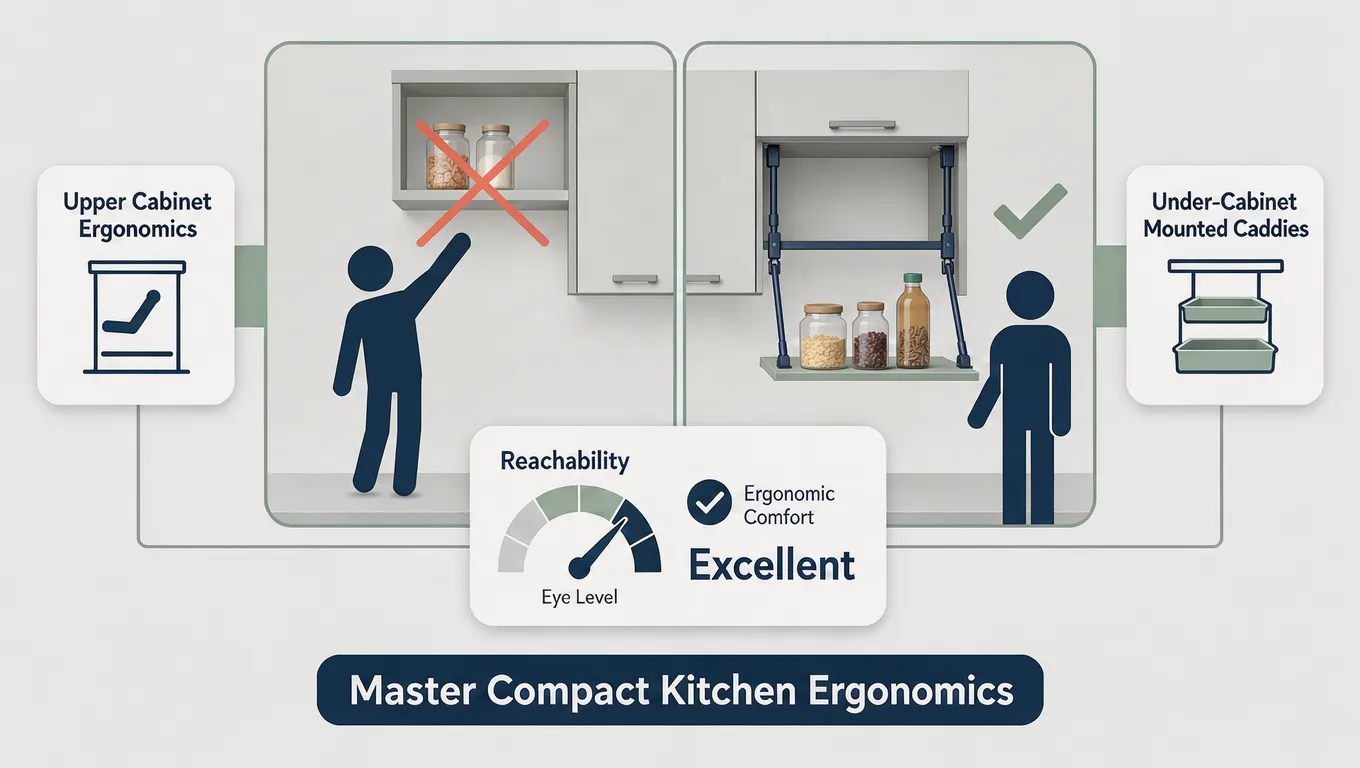
When your drawer space is completely maxed out, stop looking horizontally across your counters. Look up!
Capitalizing on vertical storage for small kitchens turns bare walls, backsplash zones, and cabinet sides into high-utility organization real estate.
[ Bare Vertical Wall Space ]
             |
             +---> Install Industrial Pegboards with Adjustable Metal Hooks
             +---> Mount Floating Solid Wood Shelves for Daily Dishes
             +---> Attach Wall Ledges for Oils, Vinegar & Recipe Cards
Smart vertical storage strategies:
- Install a Backsplash Rail System: Mount a slender metal rail along your backsplash behind the stove. Use S-hooks to hang measuring spoons, ladles, strainers, and pot holders.
- Add Wall-Mounted Pegboards: Hang a sturdy pegboard on an unused accent wall. Paint it to match your wall color and arrange hooks to store cast-iron skillets, colanders, and rolling pins.
- Use Stackable Wire Shelf Risers: Insert wire risers inside tall cabinet shelves to double your vertical stacking capacity for canned goods, mugs, and small bowls.
For technical guidelines on cabinet structural hardware, load-bearing capacities, and wall anchor safety standards, consult the Furniture Industry Research Association (FIRA).
5. Organize Deep Drawers So Pots, Pans, and Lids Stop Piling Up
Deep lower drawers are ideal for heavy cookware, but without internal dividers, they devolve into a noisy, tangled pile of metal pan handles and missing lids.
Executing small kitchen drawer organization is all about shifting from horizontal stacks to clean vertical filing.
Reclaim your deep drawers:
- File Pans Vertically: Place an adjustable wire pan rack inside deep drawers to store skillets upright on their edges rather than nesting them inside one another.
- Organize Lids Separately: Use an expandable lid organizer tray or attach a low-profile tension rod across the front of your drawer to hold pot handles and lids neatly in place.
- Insert Deep Drawer Peg Systems: Place adjustable wooden pegboard inserts inside wide drawers to prevent stacked plates and ceramic bowls from sliding around when opened.
6. Make Under-Sink Storage Work Around Pipes and Cleaning Supplies
The cabinet beneath the kitchen sink is notoriously difficult to organize due to center drain pipes, garbage disposals, and water lines taking up central space.
With targeted small kitchen under-sink organization, you can turn this awkward cabinet into a tidy, safe cleaning hub.
  [ Under-Sink Pipe Obstacle ]
               |
               +---> Expandable Under-Sink Shelf Unit (Adjusts around plumbing)
               +---> Pull-Out Wire Sliding Baskets (Reaches deep corners)
               +---> Door-Mounted Caddy (Holds sponges & dish soaps)
Under-sink organization steps:
- Install an Expandable Under-Sink Organizer: Use a modular shelf unit with removable shelf plates that adjust around vertical drain pipes and garbage disposals.
- Add Sliding Wire Pull-Out Baskets: Mount sliding wire basket drawers to the cabinet floor so dish soaps, sponges, and spray bottles roll out into plain view.
- Use an Interior Door Caddy: Attach a wire basket caddy over the inside of the cabinet door to keep dish scrubbers, rubber gloves, and trash bags within arm's reach.
For official safety guidelines on chemical storage, home electrical permits, and plumbing clearances, consult the International Code Council (ICC).
7. Arrange a Tiny Pantry So You Can See What You Already Have
Have you ever bought a third jar of cumin or another box of penne pasta, only to discover two unopened packages buried in the back of your cupboard?
Mastering small pantry organization reduces food waste and saves money by keeping every ingredient visible.
Pantry organization guidelines:
- Decant Dry Goods into Clear Containers: Transfer flour, sugar, rice, and dry pasta into matching airtight glass or BPA-free plastic canisters. Square or rectangular containers stack efficiently without wasting corner space.
- Use Lazy Susans for Condominium Bottles: Place 10-inch rotating turntables on upper pantry shelves to hold oils, vinegars, and sauce bottles. A quick spin brings items straight to the front.
- Group by Category: Assign dedicated clear bins for specific food groups (e.g., Bin A = Baking Supplies, Bin B = Breakfast Grains, Bin C = Dinner Spices).
8. Use Cabinet Doors, Narrow Gaps, and Awkward Corners Wisely
In a tight kitchen, overlooked dead zones—such as the inside of cabinet doors, narrow gaps between appliances, or deep blind corners—hold massive storage potential.
Applying clever small kitchen storage hacks unlocks hidden capacity across your room.
- Bare Inside Cabinet Door
- Deep Blind Corner Base
- Over-the-Door Cutting Board Rack
- Pull-Out LeMans Corner Shelf System
Capitalize on dead zones:
- Build a Slim Rolling Cart: Slide a 6-inch-wide rolling pantry cart between your refrigerator and adjacent wall to hold canned goods, spices, and bottled drinks.
- Install Blind Corner Pull-Outs: Replace dark corner cabinets with a LeMans pull-out shelf system that glides out of the cabinet completely when opened.
- Mount Inside-Door Racks: Attach lightweight wire racks to the inside of lower cabinet doors to hold wooden cutting boards, aluminum foil rolls, and plastic wrap boxes.
9. Group Everyday Cooking Items Where You Actually Use Them
Walking across the kitchen to grab an oven mitt, turning around for olive oil, and searching another drawer for a wooden spoon breaks up your cooking momentum.
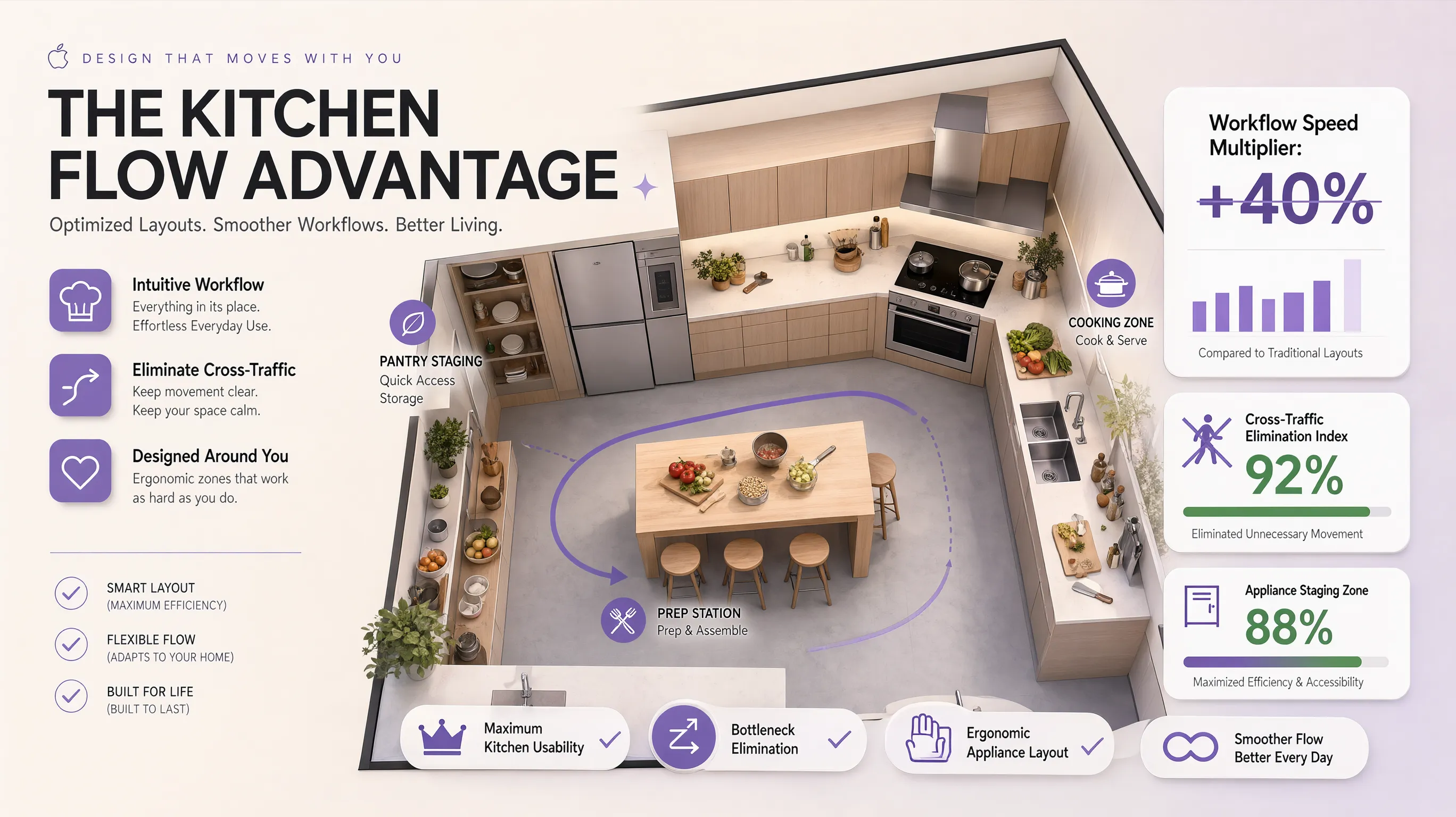
Streamlining your workflow relies on point-of-use organization: storing tools at the exact station where they are needed.
[ Cooking Station: Range / Cooktop ]
                 |
                 +---> Top Drawer: Spatulas, Tongs, Wooden Spoons
                 +---> Counter Tray: Salt, Black Pepper, Olive Oil, Garlic
                 +---> Lower Drawer: Pots, Pans, Lids & Pot Holders
Align storage with daily tasks:
- The Stovetop Zone: Keep cooking oils, sea salt, pepper grinders, and spatulas right beside your stove.
- The Prep Zone: Store cutting boards, chef knives, trash bins, and measuring spoons directly at your main preparation counter.
- The Beverage Zone: Group coffee beans, mugs, tea bags, and spoons at a dedicated coffee bar station away from the main cooking area.
If you are rearranging your floor plan to optimize daily workflow, explore our comprehensive guide on optimizing daily cooking workflow with smarter layouts.
10. Create More Room in a Small Kitchen by Reducing Duplicate and Rarely Used Items
Before buying new storage containers or wire organizers, audit your belongings to eliminate unnecessary clutter.
Executing a thorough pass to declutter a small kitchen creates instant spatial breathing room without spending a single dollar.
Run a 3-step declutter pass:
- Purge Mismatched Containers: Toss worn plastic containers that lack matching lids, and stick to a single nestable set.
- Eliminate Single-Use Gadgets: Replace specialized tools (like garlic peelers, apple slicers, and egg separators) with a quality chef knife and basic kitchen tools.
- Donate Duplicate Cookware: If you only use two primary frying pans, donate extra worn non-stick pans that take up drawer space.
11. Choose Small Kitchen Organizers That Fit Your Actual Cabinets
Buying organizers based on online photos without measuring your interior drawer depths and cabinet heights leads to products that don't fit, jammed doors, and wasted money.
Selecting effective small kitchen organizers requires accurate spatial measurements.
  [ Step 1: Measure Interior Cabinet Height, Width & Clear Depth ]
                                 |
  [ Step 2: Subtract Hinges, Shelf Pegs & Door Clearance Gaps ]
                                 |
  [ Step 3: Match Organizer Dimensions to Real Usable Space ]
                                 |
  [ Step 4: Purchase Scaled Bins & Racks with Complete Fit Confidence ]
Pre-purchase measurement checklist:
- Measure Internal Clearances: Measure the inside width, height, and depth of cabinets. Subtract 1 inch to account for door hinges and shelf support pegs.
- Check Drawer Depth Ratings: Standard kitchen drawers measure 3 to 4 inches deep internally. Verify that spice inserts and cutlery trays sit below the top drawer frame.
- Prioritize Clear Acrylic or Natural Wood: Choose clear acrylic bins for pantries to keep food visible, or warm bamboo organizers for drawers to create a high-end, clean aesthetic.
For official technical specifications on residential lighting standards, cabinet safety, and electrical permit guidelines, consult the Illuminating Engineering Society (IES).
12. Build a Small Kitchen Organization System You Can Keep Up With
A one-time weekend cleanup won't keep your home neat if your storage system requires too many steps to maintain.
Creating a sustainable small kitchen organization system comes down to building simple, repeatable habits that fit your family's daily life.
  [ Daily Habit: 3-Minute Nightly Counter Clear ]
                         |
  [ Weekly Habit: 5-Minute Pre-Grocery Pantry Audit ]
                         |
  [ Seasonal Habit: 15-Minute Drawer & Cabinet Edit ]
Build lasting tidiness:
- Enforce the "One-In, One-Out" Rule: When you buy a new appliance, mug, or pan, donate an old one to maintain balanced storage capacity.
- Perform a 3-Minute Evening Reset: Right before bed, wipe down counters, return spices to drawers, and clear the main prep surface so you wake up to a clean room.
- Label Bins Clearly: Use simple printed labels on pantry bins so family members know exactly where ingredients belong.
Craft Your Ideal Smart Kitchen Setup Effortlessly
When we set out to build or improve our home, we all want a smart, productive, and beautiful kitchen that makes daily cooking a joy. Trying to figure out spatial layouts, test cabinet organizers, or visualize custom storage configurations on your own can feel overwhelming. Hiring traditional interior designers or architects costs a fortune, and basic software tools can be frustrating to navigate.
With DesignHome, you don't need to spend thousands on design fees or struggle with steep technical learning curves. You can simply upload a picture or floor plan of your room to test layout ideas, experiment with vertical storage configurations, check appliance clearances, and instantly organize a better, high-performance kitchen tailored to your exact space.
Eliminate spatial guesswork—visualize, refine, and bring your complete small kitchen design vision to life with total confidence using DesignHome today!
External Resources & Industry Standards
To explore deeper technical insights into home space planning, trade safety, and building codes, consult these authoritative industry resources:
- National Kitchen & Bath Association (NKBA) – Official guidelines for kitchen planning standards, ergonomic work triangle rules, and spatial clearances.
- International Code Council (ICC) – Residential building codes, electrical permit guidelines, and plumbing installation safety standards.
- Furniture Industry Research Association (FIRA) – Comprehensive standards for cabinet durability, drawer load testing, and hardware safety.
- Illuminating Engineering Society (IES) – Residential lighting standards, bulb warmth ratings, and task lighting guidelines.
Frequently Asked Questions About Small Kitchen Organization
How do I organize a very small kitchen with little counter space?
Focus on clearing your primary 36-inch prep counter. Mount knives on a wall-mounted magnetic strip, hang paper towels under upper cabinets, place spices in an angled drawer insert, and use an over-the-sink cutting board to expand chopping space.
What is the best way to organize deep kitchen drawers for pots and pans?
File cookware vertically using adjustable wire pan racks rather than nesting skillets inside one another. Use an expandable lid rack or attach a low-profile tension rod across the front of the drawer to hold lids upright and organized.
How can I make my small kitchen cabinets hold more items?
Insert stackable wire shelf risers to utilize vertical height, install roll-out drawers inside lower cabinets, and attach wire basket caddies to the inside of cabinet doors to hold cutting boards, wraps, and cleaning supplies.
Where should I store everyday spices in a small kitchen?
Store everyday spices in an angled drawer insert located directly beside your cooktop range, or place them on a 10-inch rotating Lazy Susan turntable inside an upper cabinet. Avoid storing spices on open counters directly above the stove, as heat and steam degrade spice flavor.
How do I organize under the sink around awkward plumbing pipes?
Use an expandable under-sink organizer with removable shelf plates that adjust around drain pipes and disposals. Mount sliding wire basket drawers to the cabinet floor, and attach an over-the-door caddy for sponges and dish soaps.
What is the most effective way to declutter a small kitchen quickly?
Run a 3-step audit: purge mismatched plastic containers missing lids, donate duplicate cookware, and eliminate single-use gadgets (like garlic peelers and avocado slicers) in favor of a quality chef knife and basic kitchen tools.


