

You walk into your bedroom on a bright afternoon, yet the room feels cloaked in a heavy, gloomy shadow.
The corners are swallowed by dimness, the walls feel uninviting, and instead of feeling restorative, your sleep space feels heavy and oppressive. Living with poor natural lighting can disrupt your circadian rhythm, leaving you feeling sluggish during the day and tossing restlessly at night.
Turning a gloomy cave into a bright, restorative sanctuary doesn't require knocking down exterior walls or installing expensive floor-to-ceiling glass windows. By mastering reflective surfaces, correcting paint undertones, and optimizing furniture placement, you can master bedroom design with limited natural light effortlessly.
Let's explore how to banish the gloom and elevate your dark bedroom design into an inviting retreat.
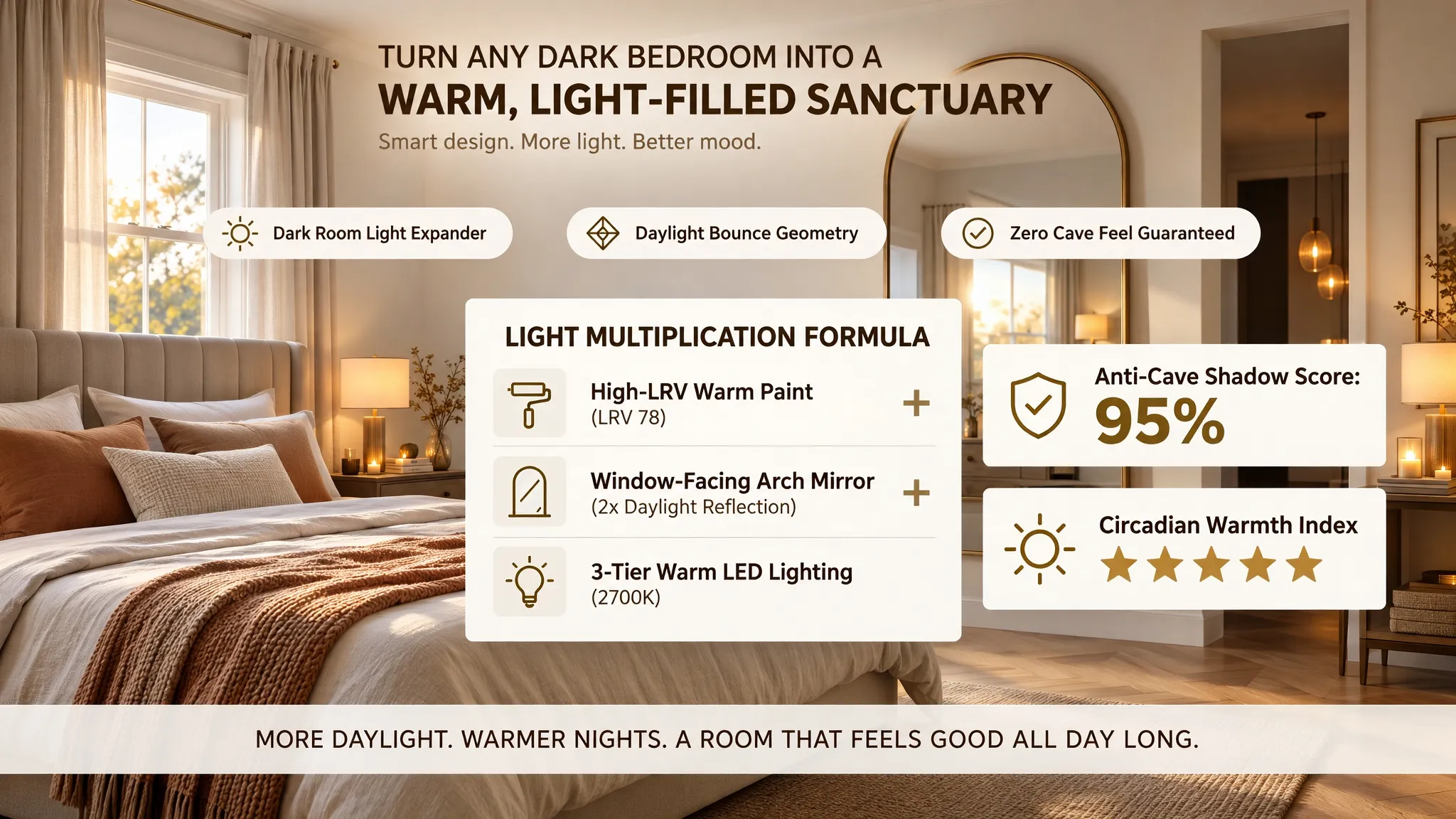
1. Bedroom Design With Limited Natural Light: Make A Dark Room Feel More Inviting
A dim room doesn't have to feel depressing. When sunshine is scarce, your design strategy must shift from merely decorating a space to actively amplifying and distributing every available beam of light.
Instead of fighting your room's orientation, lean into smart spatial planning that captures ambient brightness, creating a cozy, restorative haven that welcomes you to unwind every single night.
2. Find Out What's Making Your Bedroom Feel Darker Than It Is
Before buying fresh paint or new decor, you must diagnose the invisible obstacles sabotaging your room.
Heavy walnut furniture, dark drapery, dusty lampshades, and obstructed windows absorb incoming daylight like sponges. Pinpointing these culprits is the first step toward transforming your space with fresh dark bedroom ideas that eliminate visual heaviness.
- Dark Drapes
- Blocked Windows
- Dusty Lampshades
- Sheer Linens
- Clear Sightlines
- Reflective Surfaces
3. Choose Bedroom Paint Colors That Work in Low Natural Light
A common mistake is painting a dark room stark, unpigmented white. In low natural light, pure white absorbs gray shadows and looks cold, sterile, and lifeless.
Instead, select purposeful bedroom paint colors for low light that capture and refract soft warmth. Look for shades with gentle yellow or amber undertones that radiate a cozy glow even when the sun isn't shining directly through your window.
4. Use Warm Whites and Soft Neutrals Without Making the Room Look Yellow
Navigating warm white bedroom paint requires understanding subtle undertones.
Look for balanced neutrals featuring subtle hints of gray or greige rather than heavy cream bases that turn aggressively yellow under dim incandescent bulbs.
For guidance on selecting complementary tones across connecting spaces, explore our foundational restful primary suite layout strategies.
5. Make the Most of Your Bedroom Window Without Blocking the Daylight
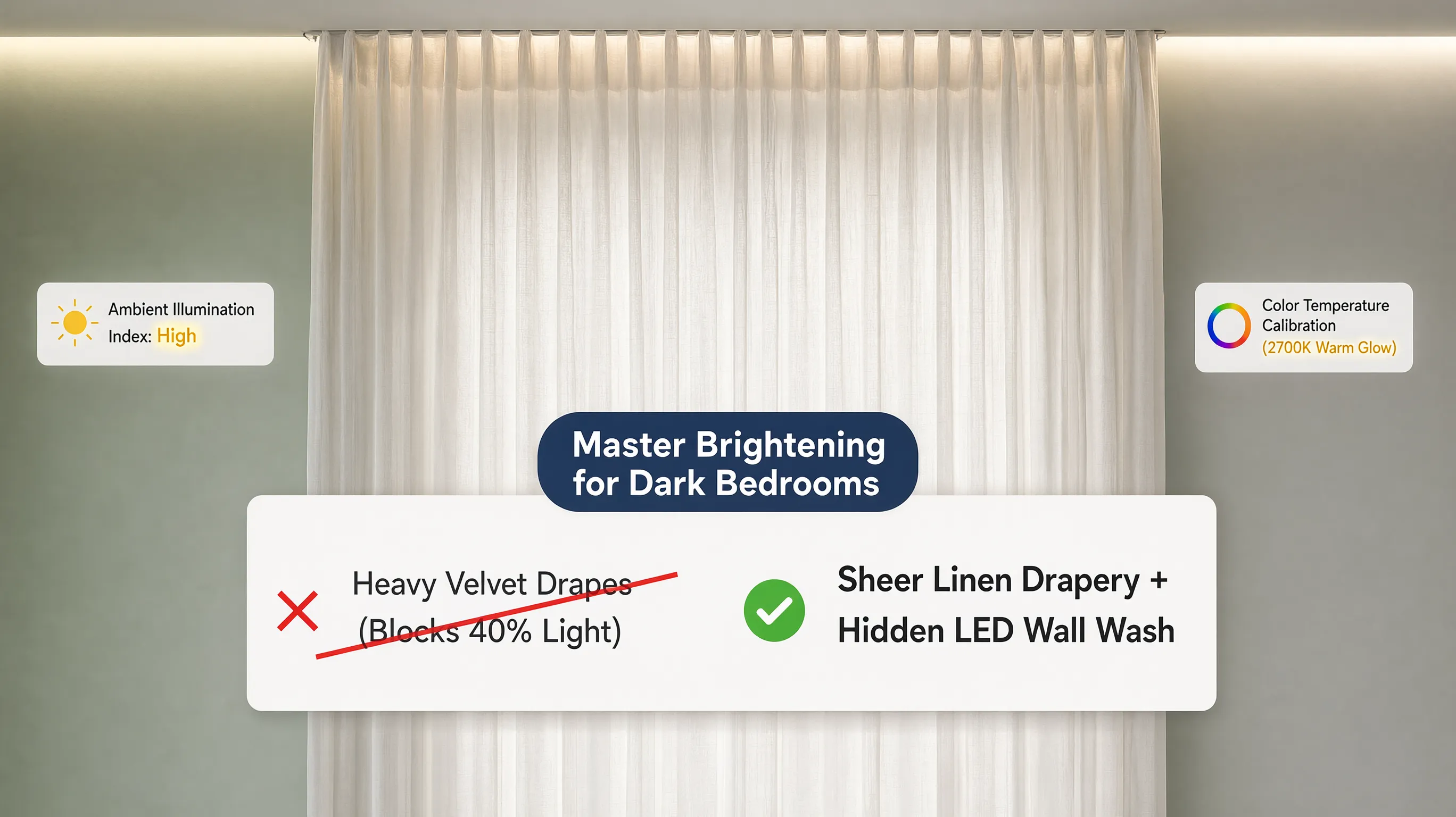
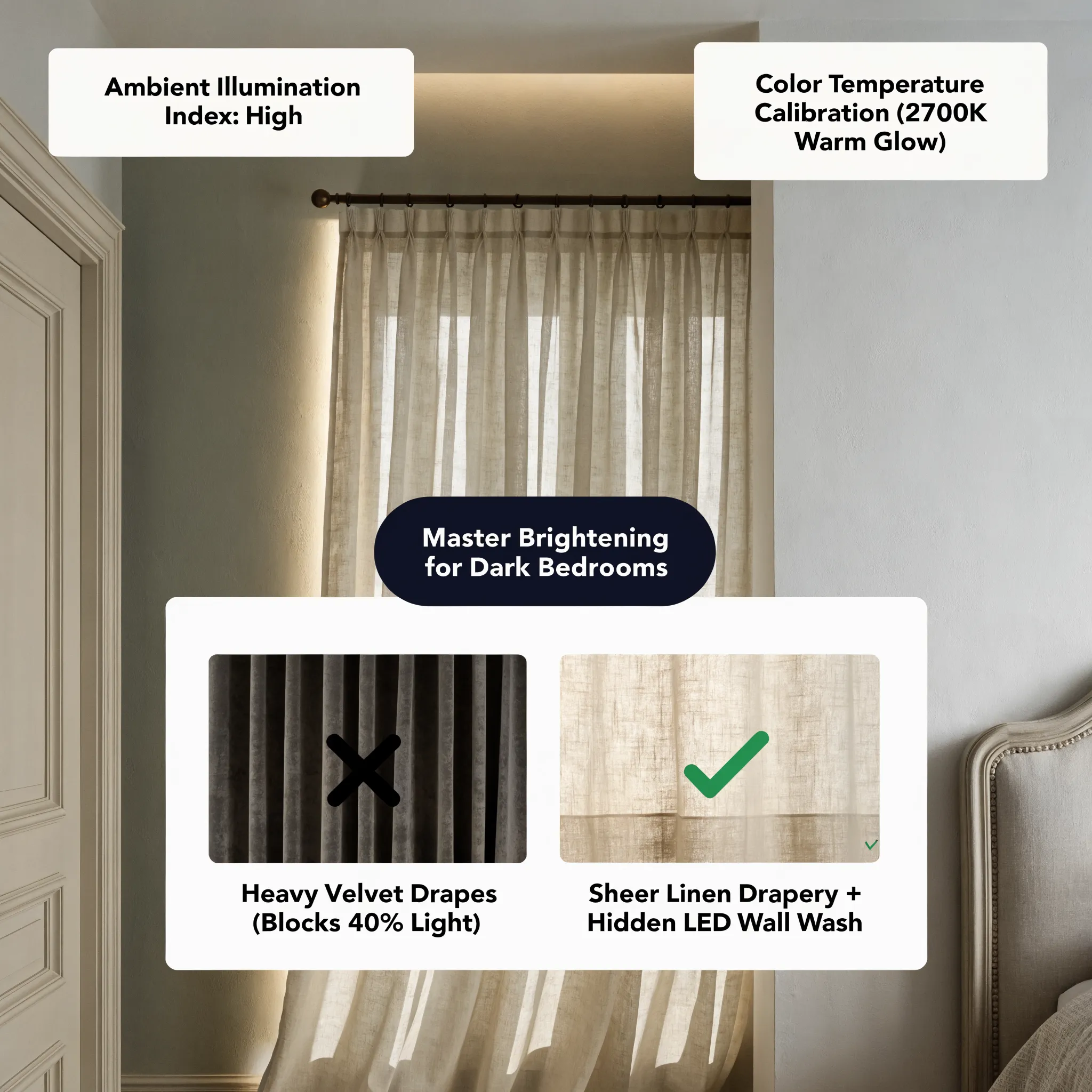
Never let heavy, restrictive drapery rob you of precious daylight.
Implement smart bedroom window ideas like mounting curtain rods 6 inches above the window frame and extending them wide on both sides. This simple adjustment ensures open curtains rest entirely outside the glass, allowing you to maximize natural light in bedroom layouts.
6. Place Mirrors Where They Can Help Spread Light Around the Room
Mirrors act as secondary windows, doubling the visual journey of incoming sunbeams.
Placing large, strategically angled mirrors for dark bedrooms opposite or perpendicular to your window floods shadowed corners with reflected brightness, instantly expanding the room's visual boundaries.
7. Choose Bedroom Furniture That Doesn't Make a Dim Room Feel Heavy
Bulky, skirted furniture pieces swallow floor space and cast heavy shadows that anchor the room in gloom.
Select raised, leggy furniture for small dark bedrooms that allows light to circulate freely beneath your bed and dressers.
To guarantee your pieces fit comfortably without overcrowding traffic routes, consult our detailed sizing furniture to fit your floor plan.
8. Layer Bedroom Lighting So the Room Feels Good After Sunset, Too
When nature fails to provide sunshine, your electrical layout must step in to establish an inviting atmosphere.
Designing robust lighting for dark bedrooms requires combining warm bedside lamps, adjustable wall sconces, and recessed overhead dimmers to eliminate gloomy shadows and support your natural evening wind-down routine.
  [ Overhead Ambient Dimmers ]
               |
               v
  [ Eye-Level Bedside Sconces (2700K Warm LED) ]
               |
               v
  [ Low Accent Floor / Dresser Lamps ]
9. Use Bedding, Rugs, and Curtains to Lift the Whole Bedroom
Soft furnishings can instantly brighten a gloomy floor plan without requiring major construction or repainting.
Layering crisp percale sheets, plush textured throws, and luminous bedding for dark bedrooms adds tactile warmth and light-reflecting layers that elevate the entire room's mood.

10. Keep Bedroom Storage and Surfaces From Swallowing the Light
Surface clutter creates visual drag that traps light in tight spaces.
Maintaining strict dark bedroom organization and keeping flat surfaces clear ensures your room feels open, breathable, and calm.
For step-by-step methods to streamline your belongings, review our comprehensive streamlining surfaces and storage habits blueprint.
11. Can You Use Dark Bedroom Colors When Natural Light Is Limited?
Surprisingly, yes! Instead of fighting a dark room with whites that fall flat, embracing moody dark bedroom color ideas—like deep charcoal, forest green, or rich navy—turns low light into an intentional, cozy, cocoon-like sleep sanctuary.
When lighting is intentionally low, deep colors stop trying to look bright and instead create a dramatic, restorative atmosphere.
12. Test Your Bedroom Colors and Lighting Before Changing the Whole Room
Committing to expensive paint cans and furniture swaps without seeing how they react to your room's specific lighting is an unnecessary gamble.
Using advanced tools to visualize bedroom design and test shades ensures absolute confidence before spending a single dollar.
Effortlessly Craft Your Ideal Natural Light Layout
Why struggle with guesswork, trial-and-error painting, or wondering if your dark bedroom layout will actually feel cozy and inviting?
Designing a low-light retreat that supports deep, wonderful sleep shouldn't be stressful. With DesignHome, you don't need to learn complicated CAD software or hire expensive consultants. You can simply upload a picture or floor plan of your room to test layout ideas, experiment with light-reflecting paint palettes, compare furniture footprints, and preview custom natural light configurations tailored to your exact floor plan.
Eliminate design uncertainty—visualize, refine, and bring your complete serene bedroom vision to life with total confidence so you can enjoy peaceful, restorative sleep every single night.
Frequently Asked Questions About Bedroom Design With Limited Natural Light
1. Will painting my dark bedroom pure white actually make it look brighter?
The short answer is no.
Stark, pure white paint relies on abundant daylight to bounce around. When applied inside a dim room with limited window access, white paint absorbs the surrounding gray shadows, making the space feel cold, clinical, and dingy.
Instead of stark white, opt for warm white bedroom paint or neutral colors for dark bedrooms featuring subtle yellow, greige, or soft peach undertones. These pigments catch and refract ambient artificial light, radiating a soft, inviting warmth even on overcast days.
2. How do I choose the best bedroom paint colors for low light without making the room look yellow?
Look for warm neutrals with balanced greige undertones.
When selecting bedroom paint colors for low light, avoid heavy cream or yellow-based paints, which tend to look sickly under dim incandescent bulbs.
Select balanced, soft greiges or pale warm grays. Test large 12x12-inch paint swatches on vertical walls in your room, observing how the color shifts under morning shadows and evening lamp light before painting the entire room.
3. Can I use dark bedroom color ideas if my room gets almost no sunlight?
Yes, absolutely.
Trying to force a naturally dim room to look bright often leaves it looking flat and uninspired. Embracing rich, moody tones—such as deep charcoal, forest green, warm terracotta, or rich navy—turns low natural light into a design asset.
Deep, saturated shades erase harsh room boundary lines, creating an ultra-cozy, cocoon-like sleep sanctuary that feels intentional, sophisticated, and deeply restorative.
4. Where is the best place to put mirrors in a dark bedroom to maximize light?
Position mirrors perpendicular or directly opposite to your primary window.
To maximize daylight reflection using mirrors for dark bedrooms, hang a large wall mirror or lean a full-length arched floor mirror where it catches direct window light.
The glass acts as a secondary architectural window, duplicating the sunlight and bouncing brightness deep into shadowed corners. Avoid placing mirrors where they reflect visual clutter, like an open closet or unmade bed.
5. What type of curtains should I use for dark bedrooms to stop blocking incoming daylight?
Hang lightweight linen or sheer curtains on rods mounted high and wide.
Heavy, dark drapes hung directly over window frames trap incoming sunlight. To optimize your bedroom window ideas, install curtain rods 4 to 6 inches above the window frame (or directly beneath the ceiling trim) and extend the rod 8 to 12 inches past both sides of the window casing.
This allows your drapes to rest entirely on the wall outside the glass when open, ensuring you maximize natural light in bedroom layouts during the day.
6. What is the best lighting setup for a bedroom with limited natural light after sunset?
Build a 3-tier layered lighting plan featuring warm 2700K LED bulbs.
Relying on a single overhead bulb creates harsh shadows and dim corners. To design effective lighting for dark bedrooms, combine three distinct eye-level layers:
Ambient: Dimmable semi-flush ceiling fixtures or drum pendants.
Task: Adjustable bedside reading sconces or warm nightstand lamps.
Accent: Under-cabinet LED strips, low floor lamps, or illuminated dresser displays.
Always choose warm white LED bulbs rated between 2700K and 3000K (Kelvin) to keep the mood cozy rather than clinical.
7. How can I pick furniture for small dark bedrooms that doesn't make the room feel heavy?
Choose raised, leggy furniture with open-frame silhouettes.
Solid, boxy dressers and skirted bed frames sitting flat on bare floorboards block light circulation, casting long, heavy shadows across your floor plan.
Select mid-century leggy dressers, platform beds with exposed legs, and floating wall-mounted nightstands. Revealing unbroken floor space beneath your furniture allows light to flow freely across the room, making a dim space feel significantly lighter and airier.
8. What bedding colors and textiles brighten a dim bedroom without buying new furniture?
Layer crisp, light-reflecting fabrics with subtle tactile depth.
To lift a dark room using soft furnishings, pick bedding for dark bedrooms in crisp off-white, light greige, or soft sage shades.
Opt for light-diffusing natural fibers—like 100% long-staple cotton percale or washed French flax linen. Layering a light duvet with a textured waffle-weave throw blanket adds cozy depth that catches ambient lamp light effortlessly.
9. Why does my dark bedroom still feel gloomy even after I turn on all the lights?
You are likely dealing with high contrast and visual clutter traps.
In low-light rooms, flat surfaces crowded with clutter create complex shadow grids that your brain interprets as visual noise and gloominess.
Enforce strict room organization by clearing dresser tops, hiding tangled electronic cords inside cable boxes, and keeping nightstands clean. Eliminating visual drag allows soft light to reflect evenly across smooth surfaces, creating an uncluttered, peaceful atmosphere.
10. How can I preview how paint colors and lighting will look in my dark room before buying anything?
Use digital room visualizers to test light bounce and color flow.
Guessing how a paint shade or furniture layout will look inside a dim bedroom often leads to costly returns and trade frustration.
Using advanced software to visualize bedroom design allows you to test different light paint palettes, experiment with mirror placements, and preview furniture arrangements virtually. This ensures you execute your low-light makeover with total design confidence before spending a single dollar.


