

You pull into your driveway after a long day, hit your headlights, and watch your home's facade fade into pitch-black shadows.
Your front entry looks dark and unwelcoming, guests fumble blindly across uneven walkway steps, and your gorgeous architectural stonework disappears the moment the sun goes down. You step out of your car, shine your phone flashlight toward the lock, and ask yourself: Why does a home that looks so beautiful by day feel cold, hidden, and unsafe by night?
Here is the undeniable truth of exterior design: learning how to update house exterior lighting isn't about slapping up a few harsh floodlights—it is about layering warm illumination to highlight architecture, guide movement, and protect your home.
An outdoor lighting layout fails when outdated yellow lanterns cast dark shadows across entryways, when glaring unshielded bulbs blind arriving visitors, and when dark side yards invite security risks. By auditing your existing fixtures, positioning low-glare LED accents, layering warm pathway lights, and coordinating your fixture styles, you can build a resort-quality nighttime facade that dramatically elevates curb appeal and security. For a deeper approach to boosting your home's exterior presence, see our curb appeal tactics that elevate your home's street presence without structural demolition.
Whether you are upgrading a classic porch or planning a full landscape overhaul, here is how to plan, layer, and execute your exterior lighting step by step.
1. Update House Exterior Lighting to Give Your Home a Better Nighttime Look
Before buying new fixtures or pulling wire through your garden beds, step back and evaluate how your property reads from the street after dark.
Most outdoor setups fail because homeowners treat lighting as an afterthought, installing isolated fixtures rather than building a cohesive facade plan.
Pitch-Black Walks
Hidden Steps
= Cold & Hazardous
Low-Glare Path Lights
Uplit Facade
= Resort-Grade Appeal
To execute high-impact exterior lighting ideas and complete a flawless exterior lighting upgrade, anchor your spatial transformation around three core rules:
- Establish Visual Balance Across Levels: Layer lighting at three distinct heights—low ground level (pathways), eye level (door sconces), and upper rooflines (soffit downlights).
- Eliminate Unshielded Bulb Glare: Choose fixtures with concealed LED light engines or frosted diffusers so light washes softly across surfaces without blinding visitors.
- Harvest Architectural Contrast: Use targeted uplighting on stone textures and pillars while leaving negative space dark to create rich dimension.
For a broader approach to transforming your home's exterior, explore our complete exterior redesign framework for elevating curb appeal.
2. Check Your Existing Outdoor Lights Before Replacing Them
Before spending money on new hardware, audit your current outdoor fixtures to determine what can be upgraded, repositioned, or completely replaced.
Executing smart replace outdoor light fixtures projects starts with a systematic diagnostic of your home's existing electrical points.
Follow this 3-step diagnostic to plan your house exterior lighting design:
- Test Electrical Junction Boxes: Inspect wall-mounted junction boxes for rust, moisture intrusion, and degraded wiring insulation before mounting new fixtures.
- Audit Fixture Proportions: Measure your front door height. Standard porch sconces often look tiny and out of scale; your door sconces should measure approximately 1/4 to 1/3 the height of your door.
- Identify Dark Safety Hazards: Walk your driveway and walkways at night to identify unlit steps, dark side gates, and hidden garage corners.
If your existing fixtures look outdated beyond repair, read our modernization playbook for refreshing tired exterior hardware.
3. Upgrade Your Front Door Lighting to Create a More Welcoming Entrance
Your front door is the focal point of your home's exterior. A single dim bulb forces guests to search for lock cylinders in the dark and lowers curb appeal.
Elevating your front door exterior lighting and executing creative front porch lighting ideas relies on flanking your entrance with warm, proportional entrance wall lights.
- Harsh shadows over lockset
- Dark, intimidating approach
- Concealed down-light beam spreading to steps
- Warm, inviting glow illuminating entry deck
Selection rules for entrance lighting:
- Flank the Door Frame: Mount twin wall sconces on both sides of the front door at eye level (roughly 60 to 66 inches off the porch floorboards).
- Scale Up Fixture Size: Choose sconces that make a bold statement. For an 8-foot door, select sconces measuring 18 to 24 inches in vertical height.
- Add an Overhead Pendant for Deep Porches: If your front porch features a tall covered ceiling, suspend a wet-rated outdoor pendant centered directly over the entry door.
For complementary entryway upgrades, see our front door styling guide for creating a more welcoming entrance and our entryway improvement tactics for elevating first impressions.
4. Replace Outdated Exterior Wall Lights With Better Fixtures
Corroded, dated brass fixtures immediately drag down your home's exterior visual value, no matter how fresh your wall paint is.
Updating to modern exterior wall lights and selecting high-grade outdoor wall light fixtures or exterior lanterns refines your home's architectural lines.
Selection guidelines for wall fixtures:
- Select Dark-Sky Compliant Hardware: Choose downward-directed cylinder sconces that channel light straight toward floor surfaces, preventing light pollution into neighbor windows.
- Match Metal Finishes to Hardware: Coordinate fixture metal finishes (matte black, brushed bronze, or solid brass) with your door handles, gutters, and house numbers.
- Use Tempered Glass Lenses: Ensure glass panels are constructed from thick, clear tempered glass that resists cracking during extreme winter freeze cycles.
For matching fixture finishes to your exterior materials, see our exterior material selection guide for coordinating architectural hardware.
5. Add Pathway Lighting for Safer Movement Around Your Home
Stumbling along a dark walkway is a severe liability for guests and a daily frustration for your family.
Integrating outdoor pathway lighting, garden path lights, and driveway lighting ensures smooth, safe navigation across your property.
  [ PATHWAY RULE 1: Stagger Fixtures 6 to 8 Feet Apart on Alternate Sides ]
                                      |
  [ PATHWAY RULE 2: Keep Light Heads Below 14 Inches to Hide Bulbs         ]
                                      |
  [ PATHWAY RULE 3: Cast Beams Downward Directly onto Walkway Surfaces    ]
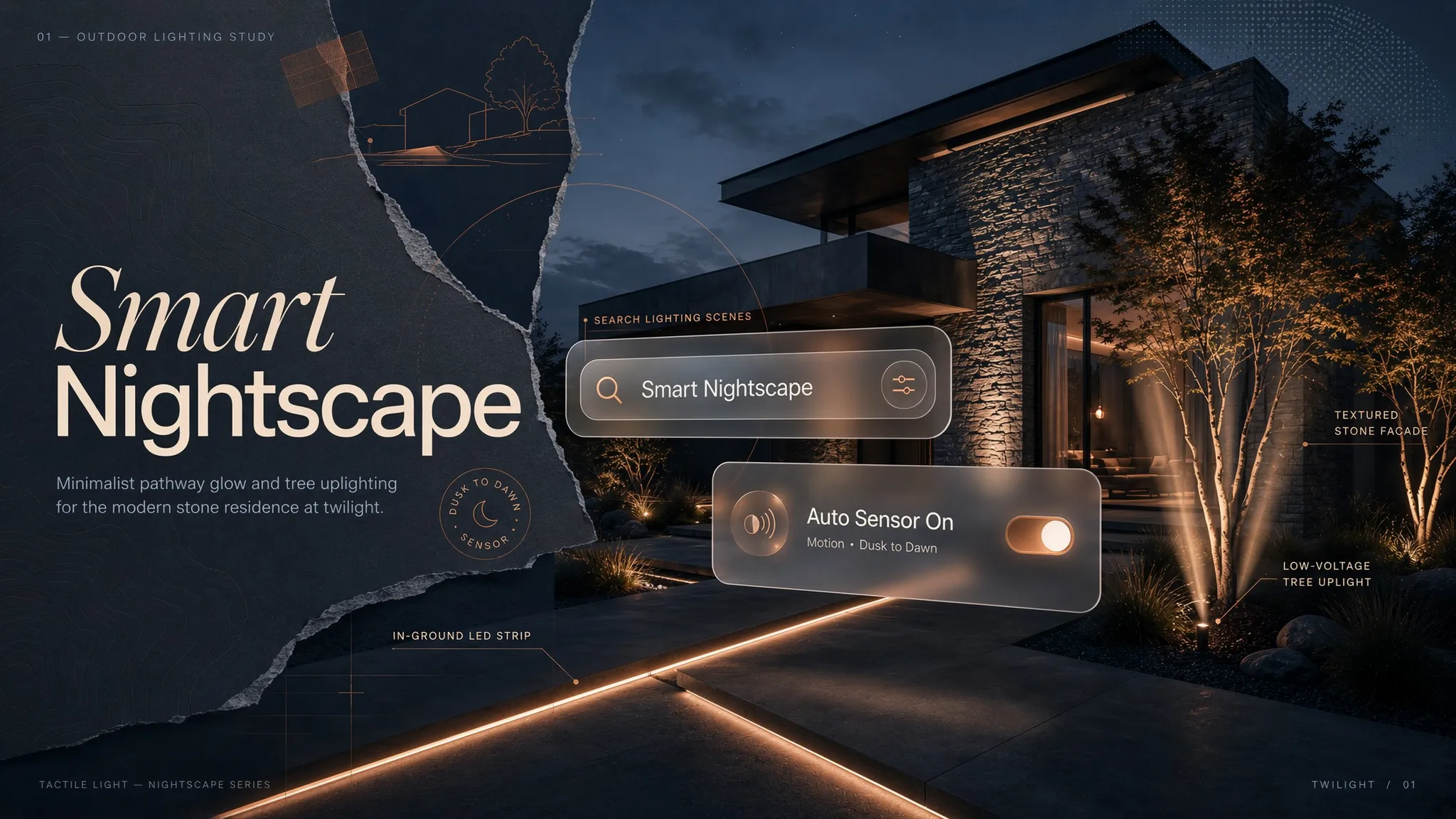
Pathway layout rules:
- Stagger Fixtures Along Borders: Avoid placing path lights in straight, parallel lines like an airport runway. Stagger fixtures on alternating sides of the walkway every 6 to 8 feet.
- Cast Light Downward: Choose top-shielded mushroom cap or hat-style path lights that direct light straight onto flagstones without shining into walking eyes.
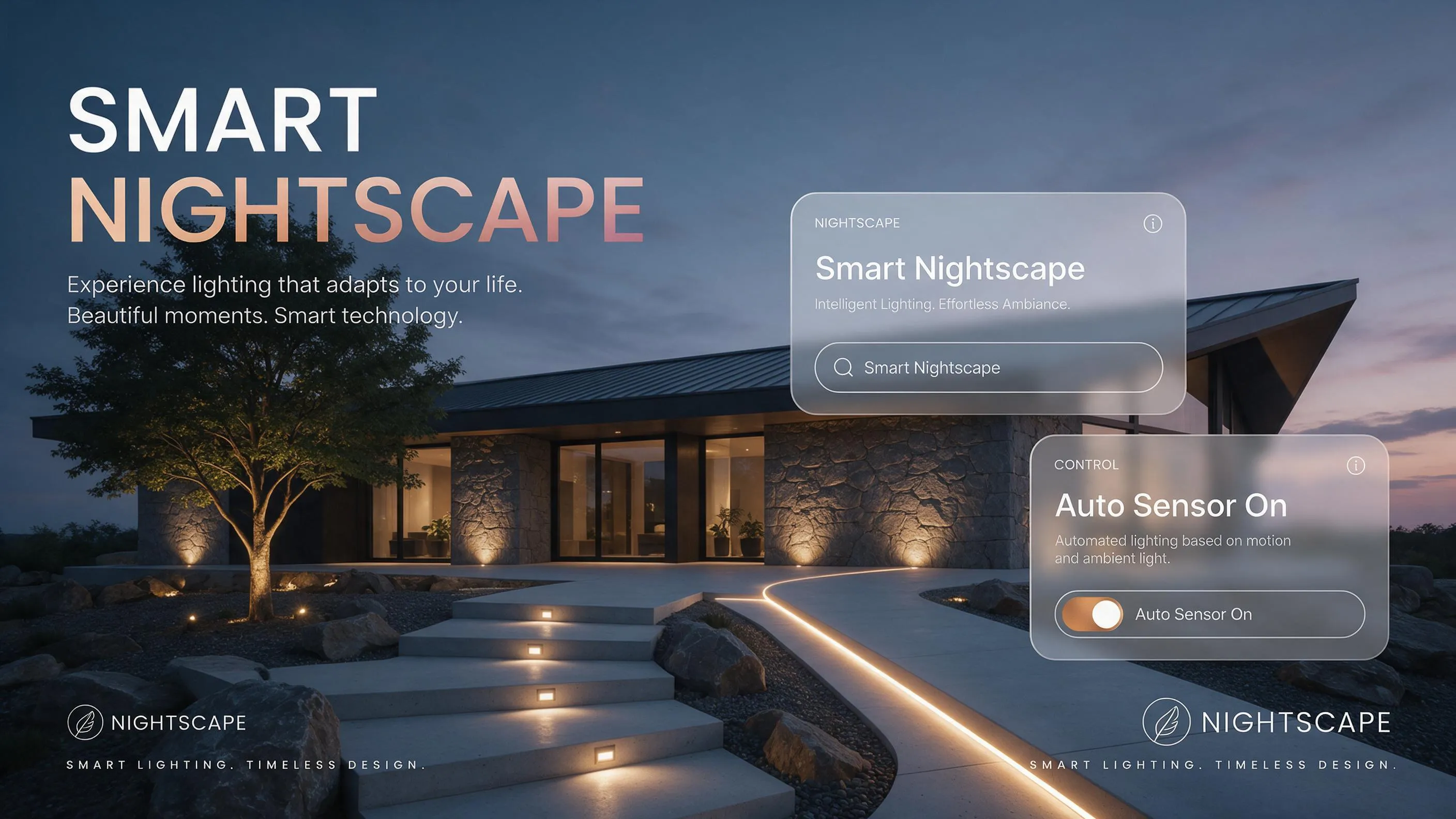
- Illuminate Vertical Step Risers: Install recessed LED step lights into riser boards or stone retaining walls to highlight elevation changes clearly.
6. Highlight Your Home's Exterior Features With Accent Lighting
If your home features rich stone cladding, rustic brickwork, or tall architectural columns, letting those details fade into night shadows is a missed design opportunity.
Executing architectural exterior lighting and house facade lighting with targeted exterior accent lighting creates dramatic depth and curb appeal.
Accent lighting execution rules:
- Position Spotlights Near Bases: Place low-voltage brass spotlights 6 to 12 inches away from textured wall bases, angling the beam straight up to graze the stone.
- Use 12-to-24-Degree Narrow Beams: Select narrow beam reflectors to wash vertical columns cleanly without spilling light through bedroom windows.
- Wash Roof Gables with Soffit Lights: Mount low-profile exterior recessed spotlights into upper roof overhangs to softly illuminate upper architectural gables.
For adding character through exterior features, read our architectural detailing guide for adding character to your home's facade. For making your exterior look more premium, see our premium exterior upgrade tactics for elevating perceived value.
7. Improve Garden and Landscape Lighting Without Overdoing It
Over-illuminating your yard turns a peaceful sanctuary into a blinding sports stadium, washing out the natural beauty of your plants.
Mastering garden lighting ideas, landscape lighting for homes, and outdoor garden spotlights relies on subtle, selective illumination.
- Harsh white 5000K light quality
- Destroys garden depth
- Soft 2700K warm glow through foliage
- Creates deep shadow silhouettes & layers
Landscape lighting guidelines:
- Highlight Focal Trees: Position low-voltage uplights at the base of mature trees (like Japanese maples or white birches) to illuminate foliage patterns from below.
- Use Silhouette Lighting Behind Shrubs: Place well-lights behind low garden plants, casting light against back privacy walls to create dramatic plant silhouettes.
- Keep Wattages Low: Use low-voltage 2-to-4-watt LED brass fixtures for landscape beds; subtle light goes a long way in dark yards.
8. Add Security Lighting Around Entrances, Garages, and Dark Corners
A complete exterior plan must protect your property by eliminating blind spots around vulnerable access doors and dark driveways.
Selecting modern outdoor security lighting, motion sensor exterior lights, and home security floodlights keeps your home safe without looking industrial.
Security lighting rules:
- Choose Dual-Brightness Smart Sensors: Select motion fixtures that operate at a soft 20% ambient glow at dusk, instantly ramping to 100% brightness when motion is detected.
- Position Sensors 8 to 10 Feet High: Mount security floodlights high enough on wall studs to prevent tampering, angling sensors toward primary approach paths.
- Select 3000K Warm Security LEDs: Avoid harsh blue 5000K stadium bulbs. A 3000K warm white LED provides high clarity for security cameras without blinding your family.
9. Choose Exterior Light Fixtures That Match Your House Style
Installing ultra-modern geometric sconces on a rustic craftsman bungalow creates a jarring visual clash that ruins curb appeal.
Selecting from curated exterior lighting fixtures ensures your modern outdoor lighting or traditional exterior lights match your home's architectural DNA.
Fixture selection tactics:
- Harmonize Hardware Finishes: Match metal fixture finishes across all outdoor zones—front entry, garage doors, side walkways, and back patio walls.
- Respect Architectural Scale: Larger, grander homes require massive 24-inch sconces; smaller cottage structures suit 12-to-14-inch fixture frames.
- Choose Solid Cast Brass or Aluminum: Invest in solid cast brass or heavy powder-coated aluminum housing that won't rust or pit in salt air.
For style-specific exterior guidance, read our modern ranch house exterior guide for matching fixtures to architectural DNA. For making your front look better, see our front facade improvement tactics for elevating street-facing appeal.
10. Choose the Right Outdoor Light Color and Brightness
The difference between a cozy resort atmosphere and a cold commercial parking lot comes down to color temperature and lumen output.
Controlling outdoor light color temperature, exterior lighting brightness, and choosing warm white outdoor lights creates inviting visual warmth.
  [ COLD COMMERCIAL LIGHT: 5000K Daylight ] ===> Harsh Blue Tint + Uninviting = Avoid Completely
                                                       |
  [ RESORT QUALITY LIGHT: 2700K Warm White] ===> Soft Golden Glow + Inviting  = Select Across Facade
Light quality guidelines:
- Lock in 2700K Warm Color Temperature: Use 2700K LED bulbs across your entire exterior facade. Warm 2700K light enhances natural wood, brick, and stone tones.
- Keep Lumen Output Proportional: Use 200 to 400 lumens for entrance sconces, 100 to 200 lumens for path lights, and 400 to 700 lumens for tree uplighting.
- Specify High-CRI (90+) LEDs: Select LED fixtures with a High Color Rendering Index (CRI 90+) so your landscaping greens and stone colors look vivid at night.
For technical metrics on light pollution, beam spread, and dark-sky regulations, consult the Illuminating Engineering Society (IES).
11. Switch to Energy-Efficient Outdoor Lighting and Weather-Resistant Fixtures
Leaving exterior lights powered for 10 to 12 hours every night can drive up electricity bills if using outdated incandescent or halogen bulbs.
Upgrading to energy efficient outdoor lighting, LED exterior lights, and weatherproof outdoor lighting delivers long-term durability and low operating costs.
Efficiency and weatherproofing rules:
- Specify 12V Low-Voltage Systems: Use a 12V low-voltage transformer for garden and path lighting. Low-voltage systems are safe to install, consume 80% less energy, and simplify wiring.
- Install Astronomical Timers & Photocells: Connect your exterior transformer to a smart photocell timer that automatically adjusts on/off cycles based on seasonal sunrise and sunset times.
- Verify Wet-Location Certifications: Always ensure fixtures installed outside covered overhangs carry an official UL Wet Location or IP65 weatherproofing badge.
For official electrical code access, waterproof sealing standards, and safety regulations, consult the International Code Council (ICC).
12. Plan Your Exterior Lighting Layout Before Buying New Fixtures
Ready to transform your dark house into a warm, resort-style flagship home that stands out on your street every evening?
Before ordering wall sconces, digging transformer trenches, or mounting fixtures, bring all your entryways, walkways, architectural accents, and security zones together into a clear house exterior lighting plan, outdoor lighting layout, and exterior lighting design. To preview everything before committing, read our digital preview workflow for testing exterior lighting before buying fixtures.
  [ Step 1: Audit Facade Architecture & Measure Front Door Sconce Scale ]
                                 |
  [ Step 2: Establish 2700K Warm LED Standards Across All Outdoor Zones ]
                                 |
  [ Step 3: Layer Staggered Path Lights & Recessed Step Lighting ]
                                 |
  [ Step 4: Position 12V Brass Spotlights for Tree & Stone Uplighting ]
                                 |
  [ Step 5: Execute Exterior Lighting Plan with Total Confidence ]
The Ultimate Exterior Lighting Sign-Off Checklist:
- [ ] Validate Sconce Proportions: Confirm door sconces measure 1/4 to 1/3 the height of your front entry door.
- [ ] Lock in Color Temperatures: Standardize all exterior LED bulbs to 2700K warm white.
- [ ] Stagger Walkway Fixtures: Space low-voltage path lights 6 to 8 feet apart on alternating sides.
- [ ] Verify Wet-Location Ratings: Ensure all exposed wall and ground fixtures carry UL Wet Location or IP65 ratings.
- [ ] Incorporate Smart Timers: Connect your lighting transformer to a photocell or astronomical seasonal timer.
- [ ] Eliminate Glare: Shield all spotlight bulbs to ensure beams bounce off walls and trees without blinding neighbors.
Step Into Your Flagship Nighttime Sanctuary Today
You deserve a home that welcomes you with warmth, elegance, and safety every single evening. Upgrading your house exterior lighting doesn't require complex electrical guesswork or sacrificing your home's natural beauty.
By focusing on proportional entry sconces, staggered low-voltage path lights, targeted architectural uplighting, and warm 2700K LED color temperatures, you can eliminate dark hazards and create a breathtaking nighttime facade.
What specific exterior lighting challenges are you currently facing on your property? How can DesignHome help you design the ultimate outdoor lighting layout for your home today?
Frequently Asked Questions About Updating House Exterior Lighting
My house looks amazing during the day, but turns into a dark, creepy silhouette at night. How do I fix this wihout making it look like an airport runway?
Here is the blunt truth: you don't need to blast your property with blinding floodlights to get incredible nighttime curb appeal—you just need strategic visual layering. When an exterior relies on a single overhead bulb, your facade reads as flat, dark, and uninviting. Flanking your main entryway with proportional warm sconces while placing targeted uplights along textured stone pillars creates a resort-grade lighting suite. Taking control of your spatial layout allows you to update house exterior lighting effortlessly, turning a shadowy property into a warm, flagship facade that elevates both curb appeal and home security.
Why do my new outdoor wall lights make my front entrance look cheap and out of scale?
Size mismatches are the number one mistake homeowners make when selecting new wall hardware. When sconces are too small, they look like an afterthought floating on a massive wall. The golden proportion fix: Select door sconces that measure approximately 1/4 to 1/3 the total height of your front entry door. For a grand 8-foot entryway, install bold 18-to-24-inch vertical sconce fixtures. Mount sconces precisely at eye level—roughly 60 to 66 inches off the porch floorboards—to anchor the entry frame.
How do I light up my dark garden walkway so guests don't trip, without blinding them as they walk up?
Blinding your visitors with exposed, unshielded light bulbs ruins your home's welcoming atmosphere and creates harsh visual glare. The secret is staggering downward-focused fixtures: Avoid installing path lights in straight, parallel lines like an airport strip; stagger fixtures on alternating sides of the walkway every 6 to 8 feet. Choose top-shielded mushroom cap or hat-style fixtures that channel beams straight down onto flagstones. Keep fixture posts low—under 14 inches—so the light source stays completely hidden from walking sightlines while executing your outdoor pathway lighting.
Will adding bright exterior accent lights drive up my monthly electric bill?
Not if you upgrade your hardware to high-efficiency, low-voltage LED architecture. Ancient halogen floodlights burn massive wattage and generate intense heat, draining your energy budget. Switching to a 12-volt low-voltage system paired with modern LED exterior lights cuts your outdoor energy use by up to 80%. Connecting your transformer to a smart astronomical timer ensures your lights turn on automatically at dusk and turn off at dawn, keeping operating costs remarkably low year-round.
What is the secret to highlighting rich stone facade textures and tall architectural columns at night?
If your home features rustic brickwork, timber beams, or stone cladding, letting those textures fade into night shadows is a massive design waste. The answer is structural grazing: Position low-voltage brass spotlights 6 inches away from the base of textured wall surfaces, angling the beam straight up. Use narrow 12-to-24-degree beam reflectors for vertical columns to wash the material cleanly without spilling into bedroom windows. Mount low-profile recessed downlights into upper soffit overhangs to cast a continuous downward glow across your entire architectural exterior lighting plan.
How do I choose security lights that deter intruders without making my house look like a commercial prison?
Protecting your family shouldn't mean sacrificing your home's refined aesthetic for industrial glare. Integrate dual-brightness smart security fixtures: Select motion sensors that operate at a soft 20% warm ambient glow at dusk, ramping smoothly to 100% output only when movement is detected. Mount motion sensor exterior lights 8 to 10 feet high on wall studs to prevent physical tampering while angling detection zones toward side gates. Stick strictly to warm 3000K LED sensors so security cameras get crystal-clear footage without blinding your neighbors.
What light bulb color temperature should I buy so my home looks warm and inviting instead of cold and clinical?
Color temperature makes or breaks your exterior design. Cold 5000K daylight bulbs cast a harsh, blue commercial tint that makes brick and wood look washed out. Lock in a uniform 2700K warm white outdoor lights standard across your entire property: Warm 2700K illumination enhances natural brick, stone, and wood tones, giving your home a luxurious resort feel. Ensure all fixtures feature a High Color Rendering Index (CRI 90+) so your garden greenery looks rich and vivid after dark. Keep color temperatures consistent across porch sconces, path lights, and tree uplights to maintain complete design harmony.
How can I make sure my new outdoor sconces won't rust, crack, or yellow after one winter season?
Cheap plastic or thin sheet-metal light fixtures deteriorate rapidly under constant UV exposure, rain, and winter freeze cycles. Invest in weather-resistant exterior hardware: Choose heavy solid cast brass or high-grade powder-coated aluminum housing that resists rust and salt-air corrosion. Verify that fixtures installed on open, un-covered exterior walls carry an official UL Wet Location or IP65 weatherproofing rating. Select thick, clear tempered glass panels that won't yellow or shatter during extreme temperature swings.
How do I light up my garden trees and landscaping features without making my yard look overdone?
Over-illuminating your garden swallows negative space, turning a peaceful sanctuary into a blinding sports arena. Master landscape uplighting with selective placement: Focus uplights on 2 or 3 focal specimen trees—like Japanese maples or white birches—rather than every single shrub. Place low-voltage well-lights behind low garden plants to project dramatic plant silhouettes against rear privacy walls. Use low-wattage 2-to-4-watt LED brass spotlights to keep illumination soft, layered, and sophisticated across your landscape lighting for homes.
My garage doors dominate the front of my house. How do I light them up so they look architectural rather than industrial?
Garage doors swallow massive visual real estate along your driveway. Leaving them pitch-black creates an unbalanced facade, while mounting a single floodlight looks harsh. Sconce framing tactics: Flank your garage bay with matching wall sconces mounted on outer pier walls to define the driveway width clearly. For double-wide garage doors, install an overhead gooseneck barn light centered above the door frame to wash the panel downward. Coordinate garage hardware finishes—such as matte black or oil-rubbed bronze—with your front door handle and house numbers.
How do I stop my exterior lights from shining directly into my neighbors' windows or triggering light pollution?
Unshielded light bulbs spilling onto adjacent properties create neighborhood friction and violate local dark-sky regulations. Enforce Dark-Sky compliant design: Select downlight cylinder sconces or fully hooded lanterns that direct 100% of the light beam downward toward ground surfaces. Angle garden spotlights away from property lines, aiming beams inward toward your own architectural focal points. Use lower-lumen bulbs (100 to 200 lumens for pathways) to keep light contained strictly where you need it.
How can I preview different exterior lighting layouts, sconce sizes, and beam angles on my house before buying hardware?
Stop guessing fixture proportions, worrying about dark safety spots, and wondering how warm uplighting will look against your stone cladding. You can visualize your home's complete nighttime appearance in rich 3D before drilling a single hole or laying a foot of wire. With DesignHome Synthesis AI, you can instantly stream your house exterior or floor plan into a dynamic canvas, test custom sconce scales beside your front entry, experiment with low-voltage path light placements, and perfect your house exterior lighting plan to create a breathtaking nighttime sanctuary you will love coming home to every evening.
update-house-exterior-lighting


