

You step into your living room at the end of a long, hectic day, looking to truly unwind. You sit down, kick up your feet, and immediately face a massive, lifeless black rectangle mounted on the wall.
Even when turned off, a television naturally dominates the room. It dictates where your couch goes, where you look, and how your family spends its evenings. Before you know it, what could be a cozy haven for reading, conversation, or listening to music turns into a passive scrolling and streaming hub.
Removing the TV—or designing a dedicated screen-free sitting room from scratch—is one of the most liberating home updates you can make.
Without a screen hijacking your layout, your walls open up, face-to-face conversation flows naturally, and the entire room feels larger, quieter, and infinitely more intentional. Here is how to create a rich, inviting living room design without a TV that turns everyday moments into restorative daily habits.
1. Decide What You Want Your Living Room to Be Used For Instead
Before moving a single piece of furniture or browsing online for new decor, ask yourself one crucial question:
What do you actually want to do in this space once the screen is gone?
Without a television pulling every chair toward one wall, an open living space can quickly feel directionless if you don't assign it a clear, compelling purpose.
| Your Primary Routine | Essential Furniture Layout Focus |
|---|---|
| Deep Socializing | Inward-facing sofas, circular coffee tables, low armchairs |
| Solo Reading & Quiet Time | Deep accent chairs, tall bookcase walls, warm floor lamps |
| Music & Record Listening | Console table setup, acoustic rugs, plush lounge chairs |
| Family Board Game Nights | Central game table, floor poufs, perimeter bench seating |
Assigning clear routine-based goals prevents your room from feeling like a sterile waiting room. Focus on your household's real passion:
- The Social Hub: Arrange seating in a tight, face-to-face circle anchored by a central table for drinks and appetizers.
- The Literary Sanctuary: Frame the room with floor-to-ceiling bookshelves, deep velvet lounge chairs, and dedicated reading lamps.
- The Creative Music Lounge: Center the layout around a vinyl record player console, acoustic-dampening wall panels, and plush floor cushions.
Aligning your furniture arrangement with daily habits ensures the room gets used every single day rather than sitting empty.
2. Choose a Focal Point That Gives the Room a Purpose
The main reason a screen-free space feels empty at first is simple: your eyes are trained to look for a central anchor point.
When you remove the screen, you must give the room a striking new architectural anchor so the space feels visually complete.
[ Sofa ] =====> [ Large Gallery Canvas ]
[ Sofa ] =====> [ Floor-to-Ceiling Library ]
Select a captivating living room without TV focal point:
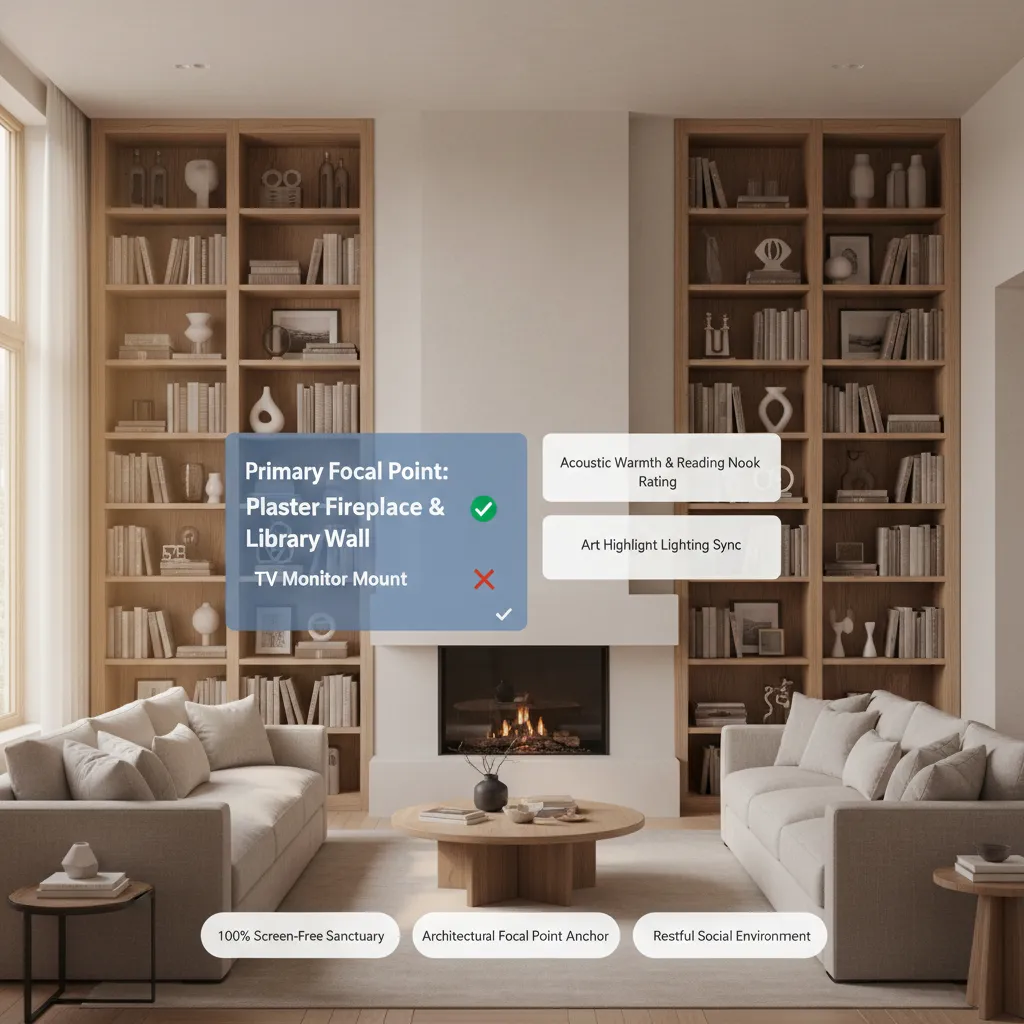
- Architectural Fireplaces: If you have a fireplace, let it shine. Frame the hearth with warm tile, a natural stone mantel, or custom woodwork.
- Large-Scale Oversized Fine Art: Hang a vibrant, oversized canvas art piece on the main wall to add immediate color, texture, and emotional depth.
- Floor-to-Ceiling Bookcase Walls: Install a full wall of built-in shelving packed with books, ceramic pottery, and framed family photos to create a rich visual background.
- Picture Windows: Position your main seating to overlook a lush garden view, patio greenery, or a city skyline.
If you are coordinating new wall decor with surrounding architectural entryways, review our guide on ideas for connecting indoor and outdoor spaces to draw natural light straight into your primary seating area.
3. Arrange Your Sofa and Chairs for Real Conversation
In a traditional media room, chairs are lined up side-by-side facing forward. In a screen-free space, your goal is completely opposite: drawing eyes inward to foster fluid, effortless eye contact.
Designing a practical living room layout without a TV comes down to creating balanced, conversational seating circles.
Try these three conversation-first configurations:
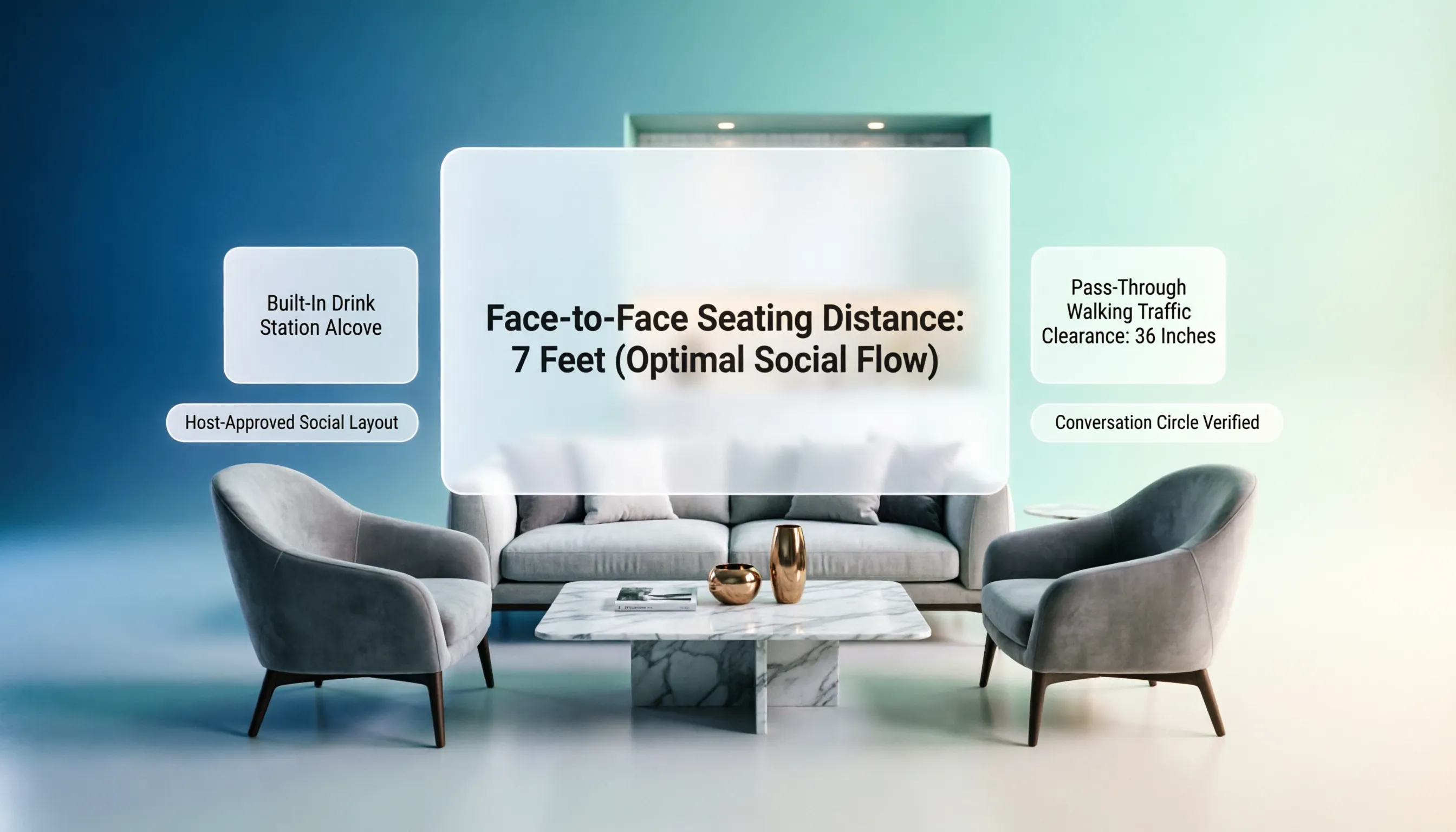
- The Facing Sofas Setup: Place two identical three-seater sofas directly opposite each other across a wide coffee table. This setup creates instant symmetry and makes hosting completely natural.
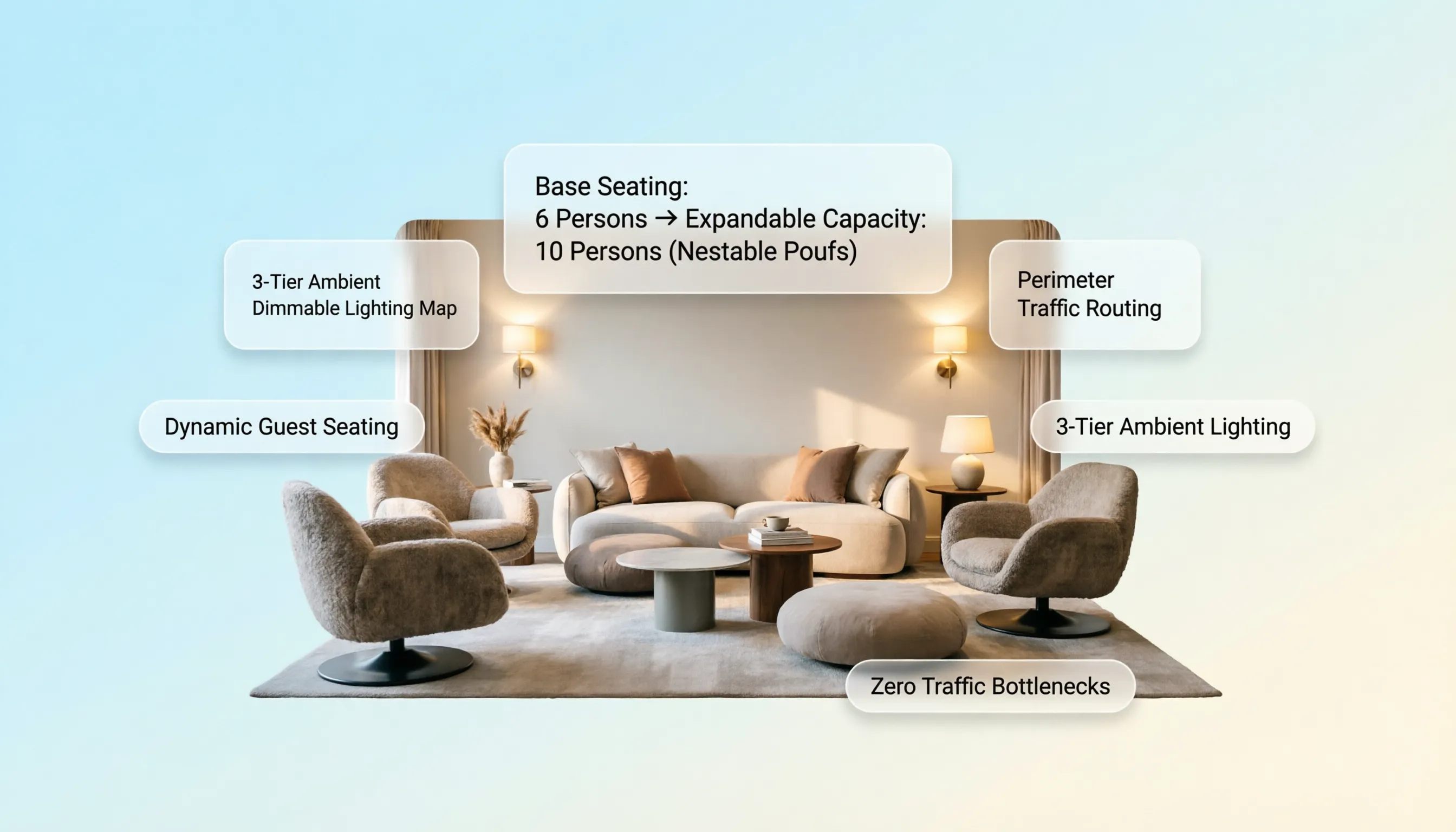
- Sofa Plus Swivel Armchairs: Pair a low-profile main sofa with two swivel accent chairs. Swivel bases allow guests to turn effortlessly toward the fireplace, a window, or the sofa without shifting their chair.
- The L-Shaped Corner Arrangement: Combine a sofa with a perpendicular loveseat or chaise to create an enclosed, intimate corner nook that feels cozy for small family gatherings.
Unsure if two sofas will fit inside your space? Instead of measuring floorboards with tape, upload your room layout to DesignHome to test furniture footprints, check conversation clearances, and preview complete seating arrangements before buying a single piece.
4. Choose a Sofa and Accent Chairs That Work Together
When a television isn't distracting the eye, your furniture silhouette, upholstery texture, and wood finishes take center stage.
Buying matching "living room sets" where the couch, loveseat, and recliner are covered in identical fabric makes a space look like a generic furniture showroom. Mixing complementary textures creates a curated, high-end feel.
| Main Element | Recommended Material | Design Effect |
|---|---|---|
| Primary Sofa | Neutral Performance | Grounded, durable visual anchor |
| Pair of Accent Chairs | Cognac Top-Grain Leather | Warm contrast & rich patina |
| Floor Pouf / Ottoman | Bouclé or Woven Wool | Soft, inviting tactile touch |
Follow these styling rules to match furniture with total confidence:
- Vary the Fabric Textures: Pair a smooth, tight-weave linen or performance fabric sofa with rich leather or nubby bouclé accent chairs.
- Match Seat Heights: Ensure all seat cushions sit at roughly the same height (typically 17 to 19 inches off the floor). Sitting significantly lower or higher than the person across from you feels physically awkward.
- Keep Proportions Scaled: Avoid pairing a massive, deep-pillow sectional with tiny, delicate metal chairs. Keep arm heights and frame weights balanced across the room.
To review official furniture construction guidelines, frame testing standards, and upholstery safety metrics, check out the American Home Furnishings Alliance (AHFA).
5. Create a Reading Corner Without Losing the Shared Seating Area
One of the greatest luxuries of a screen-free space is carving out a dedicated reading sanctuary where you can escape with a good book.
You don't need a massive footprint to build a cozy reading corner—you just need a smart arrangement in an underutilized corner.
How to assemble a dedicated reading nook:
- Select the Right Chair: Look for a deep-seated armchair with padded armrests and a tall back that supports your head during long reading sessions.
- Add Focused Task Lighting: Position a warm, height-adjustable floor lamp directly behind or beside the chair shoulder so light shines onto your pages without casting glare.
- Include a Small Side Surface: Place a narrow side table within arm's reach to hold a cup of coffee, reading glasses, and a bookmark.
If you are shopping for a comfortable, supportive reading chair, explore options to buy reading chair for living room spaces to match your personal style and physical comfort needs.
6. Use Bookshelves to Give the Room Character and Storage
Books bring soul, warmth, and sound-absorbing quiet to a living room. A room lined with books feels lived-in, intellectual, and deeply comforting.
Selecting the right bookcase for living room spaces depends on your wall dimensions and overall storage goals.
- Fits small budget & apartments
- Flexible placement
- Adds permanent property value
- Maximize vertical wall height
Choose the right storage solution:
- Built-In Shelving Walls: Floor-to-ceiling built-ins painted the same color as your wall trim create a custom, high-end architectural library.
- Open Metal & Wood Etageres: Open-backed shelving units let wall color show through, keeping small or narrow rooms feeling open and airy.
- Modular Book Storage: Stackable wooden cubes let you expand your storage over time as your book collection grows.
To browse timeless shelf arrangements and learn how to style decorative objects alongside your books, check out resources from the American Society of Interior Designers (ASID).
If you are ready to add vertical storage to your space, browse styles to buy living room bookcase units that fit your layout.
7. Make a Fireplace, Artwork, or Window the Main Feature
If you are wondering what to put on a living room wall instead of a TV, move beyond generic mass-produced canvas prints and consider structural wall features that demand attention.
Your main wall should tell a story about who lives in the home while adding texture and visual depth.
| Alternative Wall Feature | Design Execution Tips |
|---|---|
| Fireplace Hearth | Lime-wash brick, add an oak mantel, display stone art |
| Statement Gallery Wall | Mix framed family heirlooms, oil paintings, sketches |
| Decorative Wall Tapestry | Hang woven textiles to absorb sound & add cozy warmth |
| Sculptural Wall Sconces | Flank large mirrors with brass ambient light fixtures |
- Hang a Large Decorative Mirror: A large arch or grid-style floor mirror reflects natural daylight into shadowed corners, instantly making a small room feel twice as wide.
- Build a Textured Wood Accent Wall: Install vertical wood slats or classic board-and-batten millwork across the wall to add architectural texture without clutter.
- Curate an Eclectic Gallery Wall: Group black-and-white photography, vintage maps, and oil sketches inside matching frames to turn your main wall into an engaging art gallery.
8. Make a Small Living Room Without a TV Feel Complete
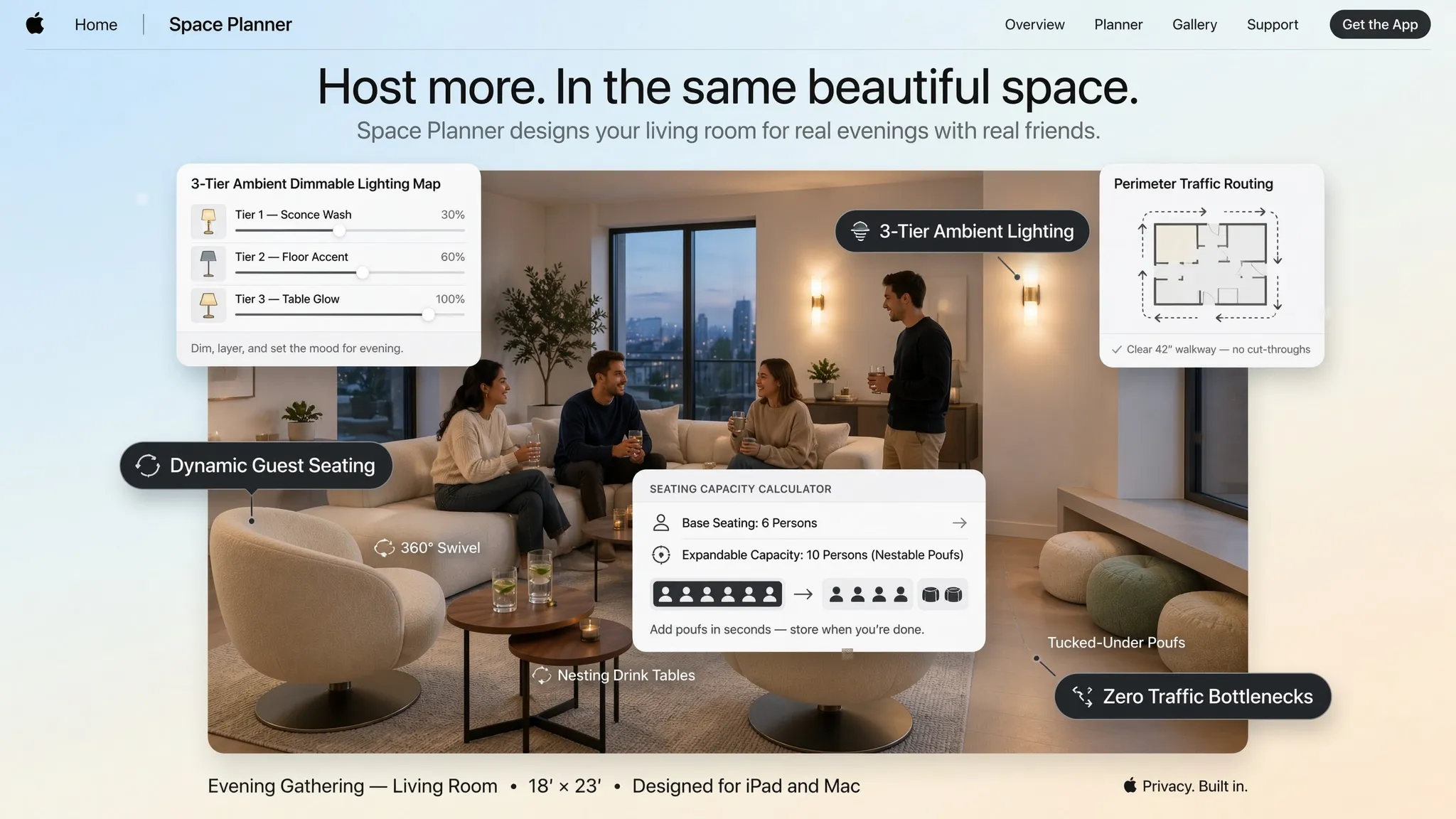
Designing a small living room without TV constraints is actually much easier than working with a big screen. Without having to push all your seating 8 feet away from a media console, you can use every inch of your floor plan efficiently.
The trick to decorating a compact, screen-free room is picking multi-functional furniture and prioritizing vertical space.
[ Deep Solid Coffee Table ]
[ Floor Lamp + Base ]
[ Nesting Glass Tables ]
[ Wall-Mounted Swing Sconces ]
Maximizing a compact footprint:
- Opt for Leggy Furniture: Pick couches and armchairs with elevated legs to keep floor lines visible underneath.
- Use Nesting Coffee Tables: Swap out a heavy coffee table for round nesting tables that expand when guests arrive and tuck away during quiet afternoons.
- Utilize Wall-Mounted Sconces: Mount reading lamps directly onto the wall to clear up precious floor space around side tables.
If you are decorating a tight layout, check out our guide on ways to make a small patio feel bigger for spatial principles that translate smoothly into indoor floor plans.
9. Choose Lighting for Reading, Conversation, and Relaxation
Nothing flattens a cozy, screen-free room faster than harsh overhead light fixtures.
Without the light cast from a television screen, you need a layered lighting plan that allows you to easily control brightness and mood across different activities.
Build a balanced 3-tier lighting scheme:
- Task Lighting for Reading: Position a height-adjustable floor lamp fitted with a warm bulb beside your primary reading armchair. If you are upgrading your setup, choose to buy floor lamp for reading fixtures that feature swivel heads for flexible light direction.
- Warm Ambient Table Lamps: Place a pair of matching ceramic lamps on sideboards or console tables to cast an inviting eye-level glow. Look to buy living room side table setups with built-in lower shelves to hide lamp cords.
- Dimmable Ambient Overheads: Equip central ceiling lights with warm LED dimmers so you can lower the room's brightness for cozy evening conversations.
For detailed guidelines on selecting bulb temperatures and residential lighting design standards, consult the Illuminating Engineering Society (IES).
10. Use a Coffee Table and Side Tables That Suit the Way You Live
In a TV-free living room, your coffee table isn't just a place to set remotes—it serves as the functional center of the entire room. It holds books, beverage trays, board games, and decorative flower displays.
Choose table dimensions that fit your seating circle smoothly:
- Size Matters: Select a coffee table for conversation area setups that measures roughly two-thirds the length of your main sofa.
- Check Height Requirements: Ensure the table top sits at the exact same height as your sofa seat cushions, or up to 2 inches lower.
- Round Tables for Easy Flow: Round or oval coffee tables work exceptionally well in face-to-face seating setups because they lack sharp corners, making it easy for guests to navigate around the room.
11. Choose Colors, Rugs, and Textures That Make the Room Feel Inviting
Without a digital screen to focus on, tactile textures and cohesive color palettes bring your living room to life.
Rich rugs, soft wool throws, and layered window drapery absorb sound, soften hard architectural lines, and make your space feel warm and grounded.
| Design Layer | Recommended Material Choices | Practical Function |
|---|---|---|
| Large Area Rug | Natural Wool or Jute Blend | Anchors seating & damps sound |
| Window Treatments | Floor-to-Ceiling Linen Drapes | Blocks drafts & diffuses sun |
| Accent Pillows & Throws | Velvet, Alpaca, or Chunky Knit | Adds tactile comfort |
Create a cohesive color scheme:
- Anchor with a High-Quality Rug: Choose a large area rug that accommodates all front legs of your sofa and accent chairs. An undersized rug makes the room look fragmented.
- Hang Linen Drapes High: Mount curtain rods 4 to 6 inches above window frames and let drapes extend all the way to the floor to add height and elegance.
- Mix Warm Warm Tones: Pair earthy neutrals—like warm taupe, terracotta, sage green, or creamy ivory—to create a relaxing, nature-inspired palette.
If you are planning a full home paint and fabric overhaul, read our guide on connecting paint palettes across adjoining rooms to ensure a smooth visual flow through open doorways.
12. Create a Music, Games, or Hobby Area Instead of a Media Zone
Removing a television opens up valuable square footage for creative hobbies you actually enjoy.
Transforming a former media wall into a dedicated vinyl record listening station or board game corner turns passive screen time into active family fun.
Fun hobby station ideas:
- The Vinyl Record Lounge: Place a low wooden credenza stocked with your favorite vinyl records, a high-quality turntable, and bookshelf speakers.
- The Game & Puzzle Table: Set up a small round game table paired with four comfortable dining chairs in a corner for afternoon chess matches, cards, or puzzles.
- The Crafting & Drawing Nook: Position an antique wooden desk near a sunlit window to store sketchbooks, journals, and art supplies.
13. Make the Room Work for Guests as Well as Quiet Evenings
A great living room should shift effortlessly from a quiet, solitary reading space on Tuesday afternoon to a vibrant, open guest lounge on Saturday night.
Achieving this versatility comes down to flexible, moveable accent furniture.
[ Ottoman used as footrest ]
[ Side table set for coffee ]
[ Ottoman pulled out as seat ]
[ Nesting tables split for drinks ]
Incorporating flexible elements:
- Swivel Armchairs: Swivel chairs adjust position in seconds, turning to face a single host or pivoting to join a full circle of guests. If you are shopping for stylish seating, look to buy accent chairs for living room spaces that incorporate hidden 360-degree swivel bases.
- Moveable Storage Ottomans: Use plush ottomans that function as comfortable footrests during quiet evenings and shift into extra guest seats when hosting.
- Drink Perches Everywhere: Ensure every seat has access to a small side table or C-table so guests never have to hold drinks in their laps.
14. Avoid the Design Mistakes That Make a TV-Free Room Feel Empty
When homeowners remove a television, they often feel something is missing and rush out to buy random decor to fill the empty space. This usually leads to a cluttered, disconnected layout.
Steer clear of these common screen-free layout pitfalls:
| Common Design Mistake | The Practical Design Fix |
|---|---|
| Pushing all furniture against walls | Pull seating inward into a cozy rug circle |
| Using one tiny overhead light fixture | Add 3 layers of floor, table, and sconce lights |
| Hanging tiny artwork on big walls | Scale art to fill 60–75% of available wall space |
| Buying undersized area rugs | Ensure all front furniture legs rest on the rug |
Avoid these common mistakes:
- Floating Furniture Syndrome: Avoid pushing your sofas and chairs flat against walls. Pulling furniture inward toward the center of the room creates a much cozier, intimate layout.
- Ignoring Wall Scale: Hanging a tiny 8x10 photo on a massive blank wall makes the room feel stark and unfinished. Choose large-scale art or grouped gallery frames that fill 60% to 75% of the wall's open area.
- Lack of Ambient Lighting: Relying solely on a bright ceiling light leaves corners dark and cold. Spread warm table lamps and floor lamps throughout the room to eliminate heavy shadows.
15. Choose the Furniture Worth Buying—and What You Can Keep
You don't need to throw out every piece of furniture you own to design an elegant screen-free living room.
Focus your budget on high-impact pieces that improve seating comfort and storage, while keeping versatile staples you already own.
- Solid wood side tables & coffee tables
- Table lamps & decorative accessories
- Floor-to-ceiling library bookcase wall
- Large-scale central area rug
Smart investment priorities:
- Invest 40% in Quality Seating: Allocate the largest portion of your budget to a deep, comfortable sofa or a supportive reading armchair that will last for years.
- Invest 30% in Storage & Shelving: Invest in solid wood bookcases or custom built-ins to store books, games, and audio equipment neatly.
- Invest 30% in Rugs & Lighting: Spend on a large wool area rug and high-CRI floor lamps that establish cozy warmth across the room.
For broader advice on budgeting home furniture and working with interior contractors, explore our guide on how to compare home renovation quotes.
16. Plan Your TV-Free Living Room Before Moving or Buying Furniture
Trying out layout ideas by lugging heavy sofas and solid oak bookcases around your room is exhausting and can easily scratch your hardwood floors.
Taking time to measure your space, map out traffic routes, and test furniture footprints on paper—or digitally—saves time, energy, and money.
Follow this step-by-step layout planning sequence:
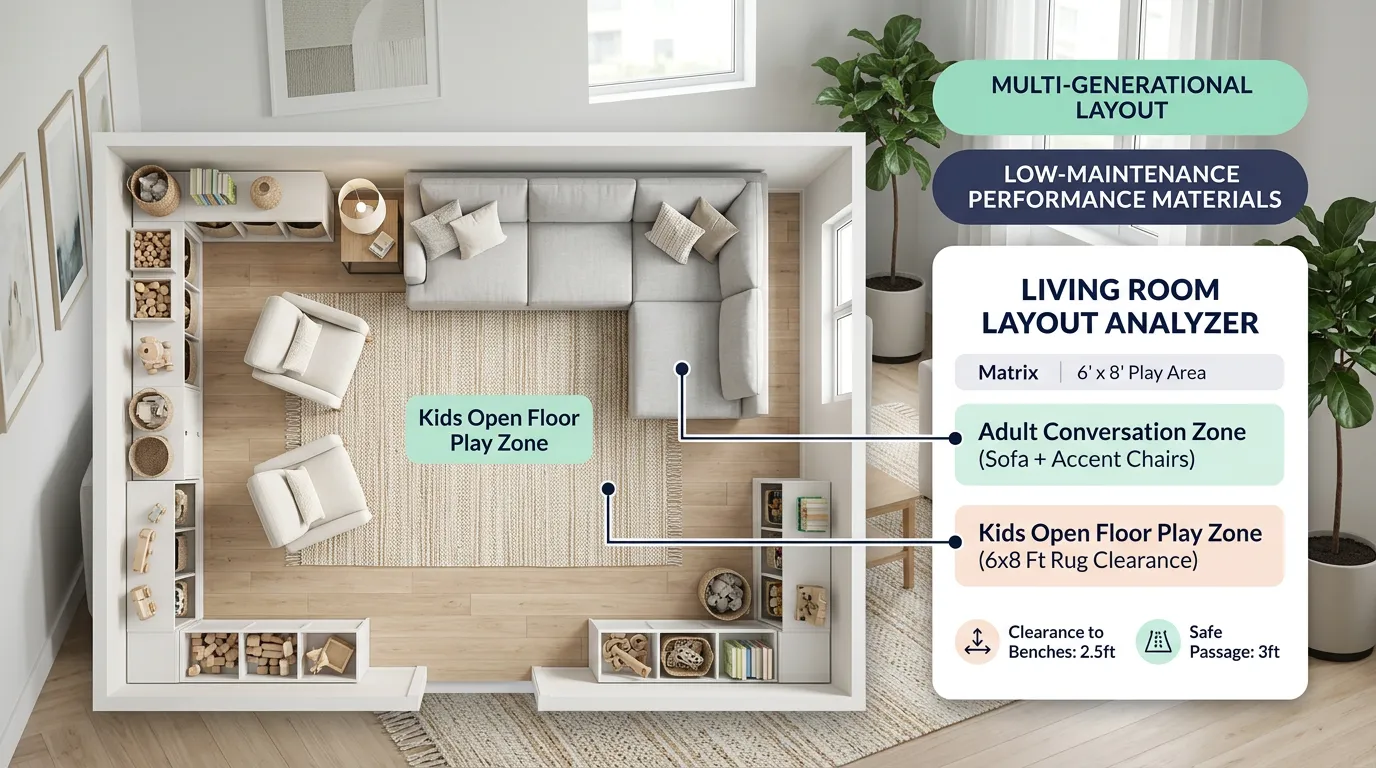
- Measure Room Dimensions Accurately: Measure total wall lengths, window placements, and doorway clearance gaps before shopping for new furniture.
- Establish Walking Paths: Ensure main pathways between doorways measure at least 30 to 36 inches wide so traffic moves naturally without hitting table edges.
- Test Seating Clearances: Keep facing seats between 4 and 8 feet apart, and leave 14 to 18 inches between sofa cushions and coffee tables.
- Visualize Before You Buy: Use digital design tools to test seating arrangements, compare bookcase heights, and map out your room in realistic detail.
Transform Your Living Space Layout Today
Ready to stop letting a television screen dictate your home layout and build a living room that truly reflects your lifestyle?
With DesignHome, you can instantly test screen-free living room layouts, map out conversation circles, and visualize complete furniture arrangements. Test built-in library wall placements, try out facing sofa setups, and craft an elegant, screen-free sanctuary with complete design confidence.
External Resources & Industry Standards
To explore deeper insights into architectural standards, home lighting, and sustainable furniture choices, consult these valuable industry guides:
- American Society of Interior Designers (ASID) – Professional guidelines for residential space planning and furniture layouts.
- Illuminating Engineering Society (IES) – Residential lighting standards, color rendering indices, and task lighting guidelines.
- American Home Furnishings Alliance (AHFA) – Safety standards, frame durability ratings, and sustainable furniture construction.
- Sustainable Furnishings Council (SFC) – Information on eco-friendly, low-VOC furniture fabrics and non-toxic wood finishes.
- Paint Quality Institute – Expert advice on matching wall paint finishes with natural room lighting.
- National Association of Home Builders (NAHB) – Structural renovation guides for built-in wall shelving and fireplace mantels.
- International Code Council (ICC) – Residential building codes for electrical wiring, wall sconces, and interior structural updates.
- U.S. Green Building Council (USGBC) – Energy-efficient LED lighting, natural ventilation, and sustainable indoor materials.
- Forest Stewardship Council (FSC) – Standard certification for responsibly sourced solid wood bookcases and furniture frames.
- U.S. Department of Energy – Efficient Home Lighting – Comprehensive guide to energy-saving LED bulbs, Kelvin ratings, and residential light output.
Frequently Asked Questions About Living Room Design Without a TV
What should replace the TV as the main focal point in a living room?
A fireplace hearth, a large-scale piece of artwork, floor-to-ceiling built-in bookcases, or a large picture window with a garden view make fantastic focal points. Choose an anchor that reflects your personal hobbies and gives the room a sense of warmth and visual balance.
How do I arrange furniture in a living room without a TV?
Arrange your seating in a circular or face-to-face setup oriented around your new focal point. Place two sofas facing each other, or pair a main couch with two angled accent armchairs across a central coffee table, keeping seats between 4 and 8 feet apart for easy conversation.
Will a room without a TV feel strange to visiting guests?
Not at all. When seating is arranged facing inward with convenient side tables, warm eye-level lighting, and background music, guests naturally engage in lively conversation. A screen-free space encourages connection, making your home feel instantly warm, welcoming, and relaxed.
How can I make a small TV-free living room feel larger?
Use leggy, open-base furniture that exposes the floor, hang a large decorative mirror to reflect natural light, and choose nesting coffee tables that can be tucked away when not in use. Mounting reading sconces directly onto walls also frees up precious floor space.
How do I incorporate music or audio equipment into a TV-free room?
Use a stylish wooden console table or low sideboard to store a vinyl record player, audio receiver, and record albums. Group books and record sleeves alongside small potted plants and framed photos to turn your audio gear into a decorative feature.
What is the best lighting setup for a reading nook in a living room?
Pair a height-adjustable floor lamp or wall-mounted swing-arm sconce fitted with a warm white LED bulb (2700K to 3000K) directly beside or behind your reading chair. Position the light source over your shoulder to illuminate pages without casting glare.
How can I test my screen-free furniture layout before buying new items?
Using DesignHome, you can upload your room's measurements, test facing sofa arrangements, map out walking traffic paths, and preview full furniture layouts in realistic detail before buying a single piece.
What kind of coffee table works best in a conversation-focused layout?
Round or oval coffee tables work best because they lack sharp corners, making it easy for guests to move around the seating circle. Ensure the table measures about two-thirds the length of your sofa and sits at the same height as your seat cushions.
How do I keep a TV-free living room from feeling dark and gloomy at night?
Layer your lighting across three distinct levels: ambient overhead dimmers, eye-level table lamps on sideboards, and dedicated task floor lamps next to seating. Avoid relying on a single overhead bulb, which creates harsh, flat shadows.
Can I still use my living room for family game nights without a TV?
Absolutely. Set up a central round game table with four comfortable chairs, or clear a large coffee table and place plush floor poufs and woven cushions around it so everyone can gather comfortably for board games and puzzles.


