

You walk through your front door after a long workday, looking forward to a moment of peace. Instead, you step straight onto a plastic toy block, trip over a stray throw blanket, and navigate a maze of scattered shoes.
Your living room should be the warm, welcoming heart of your home—a place where your family gathers to unwind, laugh, and connect. But when the space isn't planned for real daily routines, it quickly devolves into a chaotic drop zone of clutter, awkward seating, and constant maintenance.
You don't have to choose between a stylish, elegant living room and a practical, family-friendly space.
By designing around your household's real habits, choosing durable materials, and creating flexible zones, you can build a home that handles active kids, pet spills, and quiet adult relaxation with equal grace. Here is how to create a living room design for family life that feels open, organized, and effortlessly cozy every single day.
1. Start With How Your Family Actually Uses the Living Room
Before shopping for new furniture or flipping through design magazines, stop and take an honest look at your family's daily habits.
A living room built for a family with toddlers playing on the floor requires a completely different floor plan than a home with teenagers hosting friends for movie nights.
Identify your main daily routines to set your layout priorities:
- Active Floor Play: Prioritize soft, low-pile rugs and open central floor space over heavy, sharp-edged furniture.
- Media & Entertainment: Focus your layout around comfortable, high-capacity seating with unobstructed sightlines to your TV or fireplace.
- Multi-Tasking Spaces: Create secondary zones, such as a compact corner desk for homework or a quiet reading nook for parents.
Aligning your room setup with how your family actually lives prevents daily friction and keeps every square foot working hard.
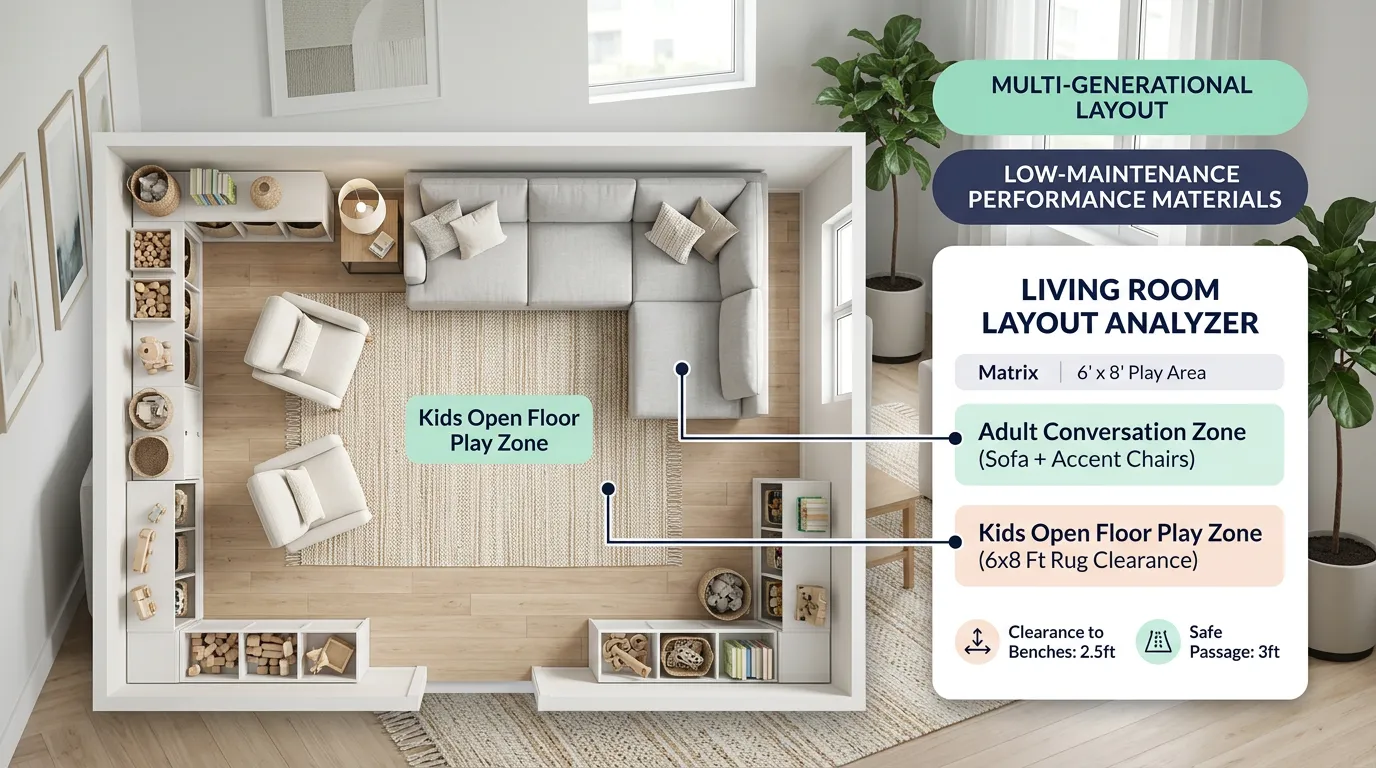
2. Arrange the Seating So Everyone Can Join In
Nothing feels more isolating than a living room layout where half the family is squeezed onto a single couch while others are left perched on uncomfortable dining chairs across the room.
Creating an inviting family living room seating ideas setup comes down to building a natural, inclusive conversation circle.
Try these family-friendly seating arrangements:
- The Deep L-Sectional: Position a large L-shaped sectional in a main corner to maximize seating capacity for family movie nights.
- Facing Sofas with a Plush Ottoman: Place two sofas opposite each other across a wide upholstered ottoman. This setup encourages face-to-face conversation while providing a safe, foot-resting surface.
- Swivel Accent Armchairs: Pair your main sofa with two swivel armchairs. Swivel chairs allow family members to turn effortlessly from watching TV to joining a conversation.
Unsure if a large sectional will fit your space? Instead of guessing with a tape measure, upload your room layout to DesignHome to test furniture footprints, map walking clearances, and preview complete seating setups before buying.

3. Make Space for Play Without Giving Up an Adult Living Room
One of the biggest hurdles in living room design for families with kids is stopping toys from taking over the entire house.
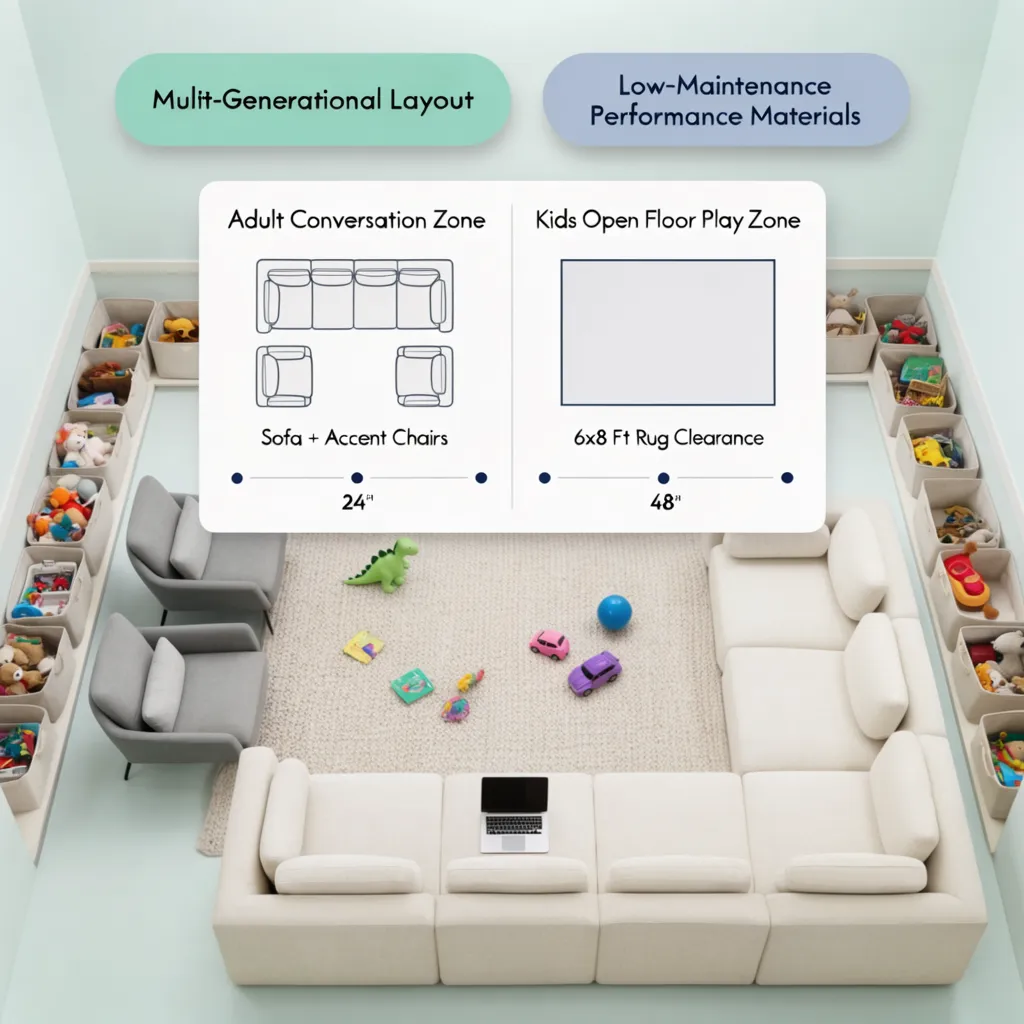
You don't need to surrender your home aesthetic to plastic toys. The trick is creating a dedicated, semi-enclosed play corner that can be cleaned up in under two minutes when company arrives.
| Dedicated Play Area Features | Quick Evening Transformation |
|---|---|
| Low-profile cubby storage shelves | Slide fabric bins into cubbies |
| Washable floor play mat | Roll up or tuck under main sofa |
| Round wooden activity table | Clear surface for board games/drinks |
Design a subtle, integrated play zone:
- Use Corner Alcoves: Place a low wooden activity table and small chairs in an underutilized corner away from primary walking paths.
- Incorporate Fabric Storage Bins: Assign one fabric bin per toy category (blocks, dolls, vehicles). Kids can easily dump toys back into bins when playtime is over.
- Add a Low-Profile Screen: Use a short open bookcase or a decorative folding screen to subtly separate the play zone from your main adult seating area.
4. Find Storage That Makes Everyday Tidying Easier
If putting away toys, books, and board games feels like a complex chore, clutter will inevitably pile up across your floorboards.
Effective living room organization for families relies on point-of-use storage—placing storage containers directly where items are used.
Smart family living room storage ideas to implement:
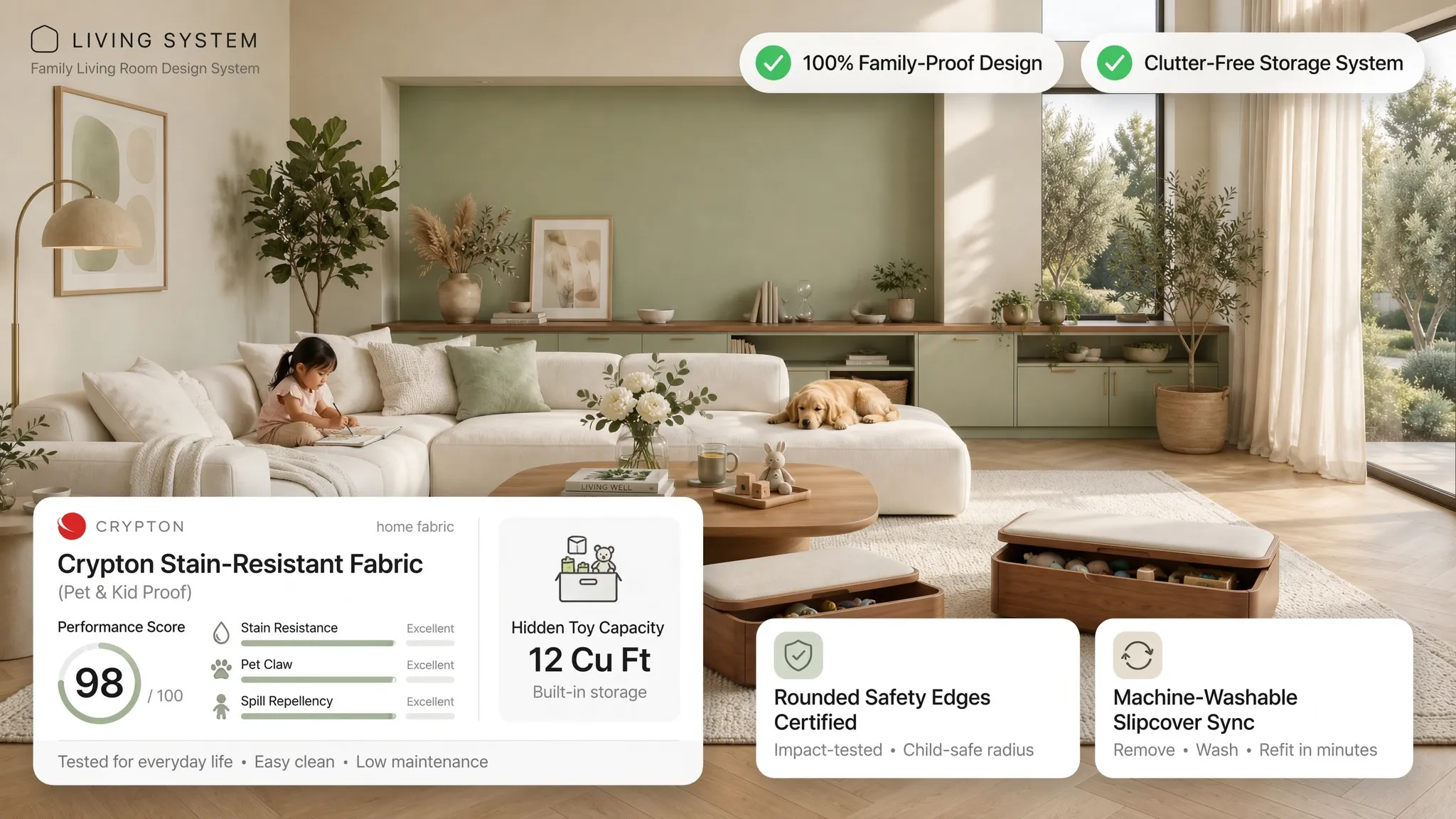
- Lift-Top Storage Ottomans: Swap out traditional wooden coffee tables for large, upholstered lift-top ottomans to hide extra blankets, pillows, and board games inside.
- Built-In Bench Seating: Install window benches with deep drawers underneath to store heavy toys out of sight.
- Closed Lower Cabinetry: Choose media consoles with solid wood doors on the bottom to conceal messy wires, video game controllers, and clutter.
5. Choose Furniture That Fits Your Family Now—and Later
Buying delicate, single-purpose furniture when your children are young often leads to premature wear, damage, and costly replacements.
Investing in adaptable family-friendly living room furniture ensures your layout evolves gracefully as your children grow from toddlers into teenagers.
| Child's Age Group | Primary Furniture Need | Adaptable Long-Term Feature |
|---|---|---|
| Toddlers (Ages 0–4) | Low edges & soft mats | Modular ottomans & round tables |
| School-Age (Ages 5–12) | Open floor space & games | Convertible sofa beds & storage |
| Teenagers (Ages 13+) | High seating capacity | Deep sectionals & swivel chairs |
Look for these flexible furniture traits:
- Modular Sectionals: Modular sofas allow you to rearrange individual seating blocks or add new sections as your family grows.
- Nesting Tables: Round nesting tables can be expanded during family game nights and stacked away to open up floor space for active play.
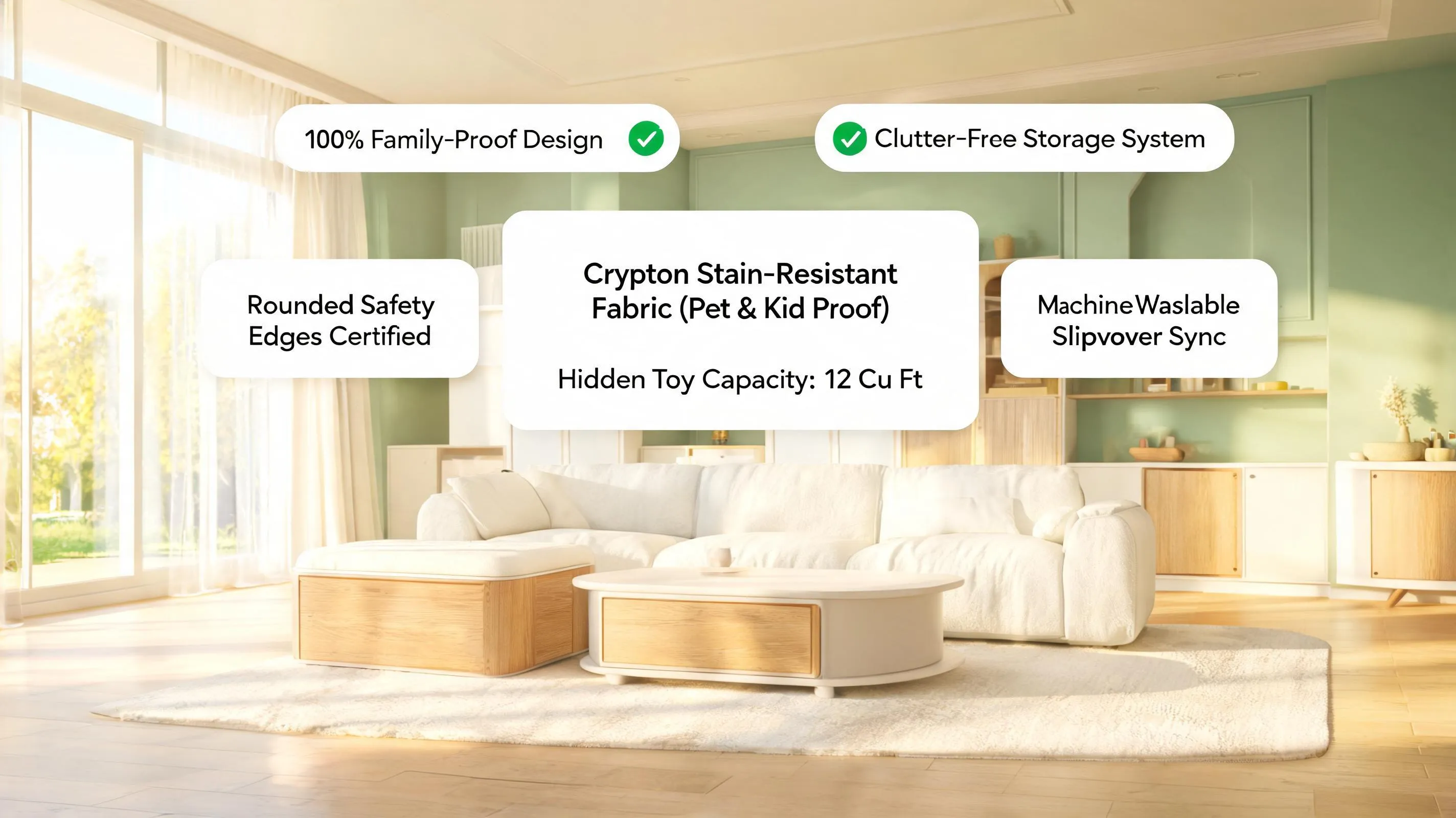
- Removable Slipcovers: Choose sofas with fully removable, machine-washable slipcovers so you can easily handle accidental spills or update colors down the road.
To review official furniture construction guidelines, frame testing standards, and upholstery safety metrics, check out the American Home Furnishings Alliance (AHFA).
6. Choose Fabrics and Finishes That Can Handle Real Life
You shouldn't have to panic every time someone drinks juice or eats a snack on the couch.
Selecting durable, stain-resistant materials allows your family to relax completely without worrying about permanent damage.
Raw, Unsealed Light Oak
High-Gloss Polished Lacquer
Distressed Top-Grain Leather
Quartz & Natural Honed Stone
Choose durable living room furniture for families:
- Performance Upholstery Fabrics: Look for Crypton, Revolution, or solution-dyed acrylic fabrics. Liquid sits on the surface of these performance weaves rather than soaking in, allowing easy cleanup with mild soap and water.
- Distressed Top-Grain Leather: Leather wipes clean instantly and develops a rich character over time. Pre-distressed finishes naturally hide minor scuffs and scratches from pets and toys.
- Stain-Resistant Area Rugs: Choose washable rugs or high-traffic synthetic blends (like polypropylene) with subtle patterns that naturally camouflage daily wear.
For professional upholstery testing standards, fabric durability ratings, and care guides, visit the Furniture Industry Research Association (FIRA).
7. Keep the Room Comfortable and Safe for Different Ages
Creating a safe, comfortable environment for every generation—from energetic toddlers to visiting grandparents—requires thoughtful spatial planning.
Minimizing physical hazards ensures everyone moves around the room with total ease.
Essential safety and comfort checks:
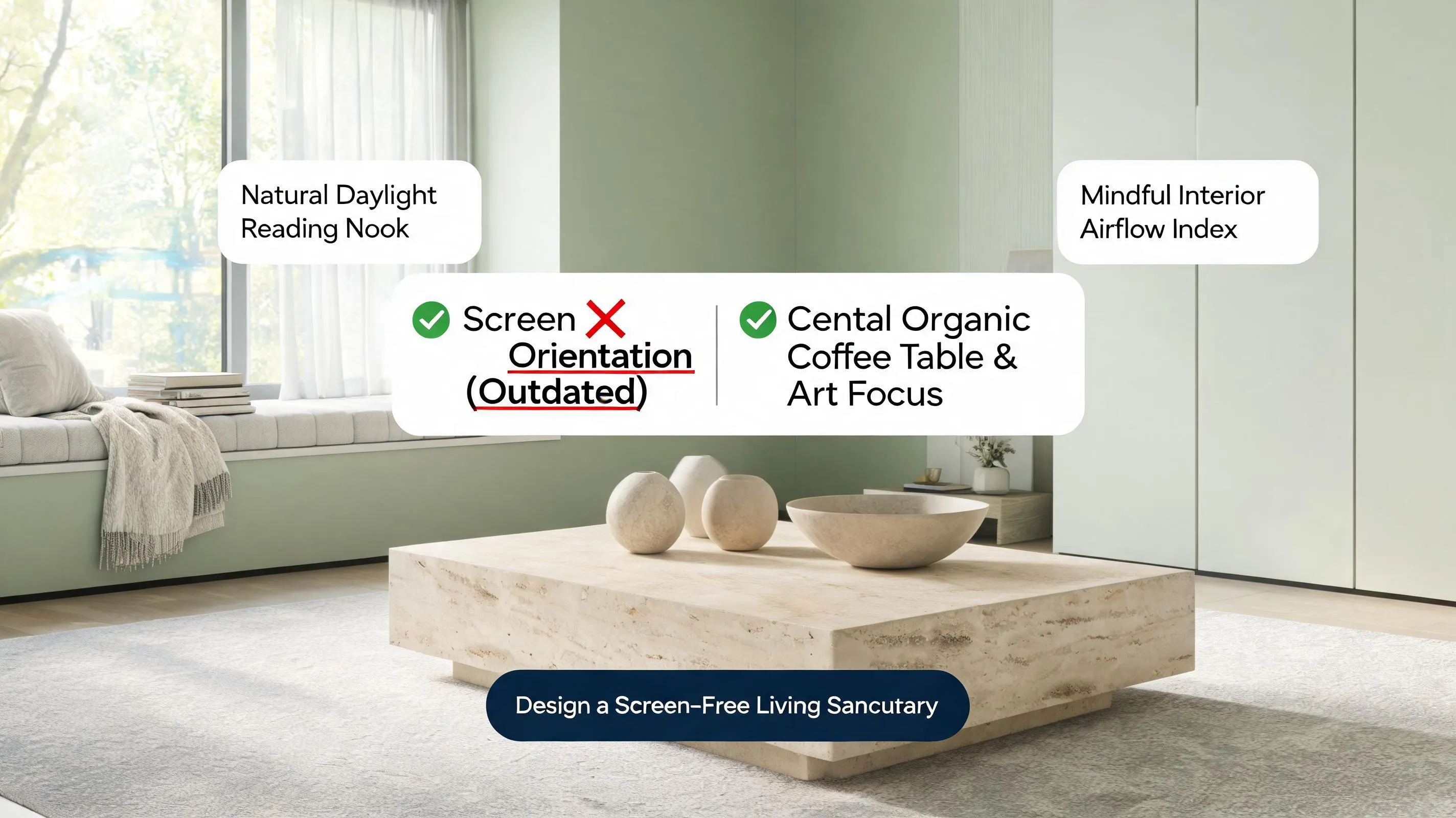
- Round Table Edges: Choose round or oval coffee tables to eliminate sharp corners at eye level for young children.
- Anchor Heavy Furniture: Secure tall bookcases, dressers, and media consoles directly to wall studs using heavy-duty anti-tip furniture straps.
- Maintain Clear Walking Routes: Ensure primary pathways between doorways and seating remain at least 36 inches wide, keeping floor lines free of tripping hazards.
If you are navigating a compact layout, explore our guide on ways to make a small patio feel bigger for spatial principles that translate smoothly into indoor floor plans.
8. Create a Living Room That Works for TV, Conversation, and Quiet Time
In a busy home, the living room often needs to accommodate multiple competing activities at once. Someone might want to watch a movie while someone else reads or finishes homework.
A smart living room layout for everyday living balances media viewing with quiet zones.
(Warm Floor Lamp + Table)
(Low Storage + Play Mat)
How to balance competing activities:
- Zone with Lighting: Use independent lighting circuits. Turn off main overhead lights and keep a warm floor lamp lit in the reading corner so someone can read quietly while others watch TV.
- Position Seating Intentionally: Angle secondary armchairs slightly away from the main TV screen toward a window view or fireplace to encourage quiet conversation.
- Incorporate Wireless Headphones: Connect bluetooth headphones to your primary media setup so adults can watch movies without disturbing sleeping children in nearby rooms.
9. Make a Small Family Living Room Feel Less Crowded
Designing a small family living room ideas setup can feel like a puzzle. Adding enough seating for four or five people in a compact space can quickly make the room feel cramped.
The secret to maximizing a small footprint is freeing up floor visibility and selecting raised, multi-functional furniture.
[ Solid Wooden Coffee Table ]
[ Bulky Armchairs ]
[ Lift-Top Storage Ottoman ]
[ Open Metal-Frame Chairs ]
Maximizing a compact family room:
- Choose Raised, Leggy Furniture: Select sofas and chairs with exposed legs. Seeing floor space extend underneath furniture visually opens up the entire room.
- Use Vertical Wall Space: Mount bookshelves, floating media units, and wall sconces directly onto walls to clear up precious floor space.
- Opt for Light Wall Colors: Pair soft neutrals with warm lighting to bounce daylight across the room.
If you are picking paint shades for smaller spaces, read our guide on how paint colors make small rooms feel larger to pair lighting tests with space-saving color choices.
10. Make an Open-Plan Living Room Work for the Whole Household
Open-plan living is fantastic for keeping an eye on kids while cooking dinner, but without clear boundaries, your living room, kitchen, and dining space can quickly blend into one chaotic mess.
Creating a functional open-plan family living room ideas layout relies on defining visual zones without building solid walls.
Define distinct activity zones:
- Anchor with Large Area Rugs: Place a large area rug under your living room seating group to visually separate the lounge area from the adjacent kitchen or dining space.
- Use the Sofa as a Divider: Position the back of your main sofa toward the kitchen or dining area to form a clean, natural boundary between zones.
- Coordinate Lighting: Hang distinct pendant lights over the dining table and kitchen island while using warm floor lamps in the living area to give each zone its own character.
If your open space connects directly to an outdoor deck or patio, explore our guide on connecting indoor and outdoor living spaces to create a smooth, natural flow across your entryways.
11. Add Colors, Lighting, and Personal Details That Feel Like Home
A family-friendly space should never look like a sterile, soul-less showroom. Layering personal artwork, family photographs, and tactile textiles turns a practical room into a warm, inviting sanctuary.
Selecting creative cozy family living room ideas brings warmth and character into your layout.
| Design Layer | Recommended Element Choices | Practical Purpose |
|---|---|---|
| Gallery Wall | Framed family photos & kid art | Personal identity |
| Layered Textiles | Wool throw blankets & velvet pillows | Tactile comfort & warmth |
| Warm Ambient Lighting | 2700K LED bulbs in table lamps | Cozy evening atmosphere |
Bring your space to life:
- Display Framed Gallery Walls: Group matching black-and-white frames containing family travel photos, child artwork, and heirlooms across a main accent wall.
- Layer Warm Lighting: Avoid using single overhead ceiling lights. Place warm table lamps (2700K Kelvin rating) on sideboards to create a soft, welcoming glow.
- Mix Natural Wood Tones: Combine natural oak, walnut, and woven basket textures to add organic warmth that naturally hides daily wear.
For official guidance on selecting home lighting standards, color rendering indices, and energy efficiency, consult the Illuminating Engineering Society (IES).
12. Plan a Living Room That Can Change as Your Family Grows
Your home should adapt smoothly as your routines shift over the years. Designing for long-term flexibility saves you from embarking on expensive, full-scale renovations every time your family enters a new stage of life.
Maintain long-term flexibility:
- Keep Architectural Built-Ins Neutral: Choose classic white, warm cream, or natural wood finishes for permanent cabinetry, shelves, and fireplace mantels so they match any future design changes.
- Swap Decor Over Time: Upgrade affordable accessories—like throw pillows, area rugs, and wall art—to refresh the room's style without replacing foundational seating.
- Maintain Multi-Functional Layouts: Ensure your floor plan can accommodate changing furniture pieces, such as swapping a toy storage bench for a music console or desk later on.
If you are coordinating broader home renovations alongside your living room plans, review our guide on how to compare home renovation quotes to keep project spending on track.
13. Use This Family Living Room Planning Checklist Before You Rearrange
Don't rush out to buy furniture without a clear, step-by-step strategy.
Follow this comprehensive planning checklist to make sure your new living room layout is clean, comfortable, and completely ready for family life.
The Ultimate Family Living Room Checklist:
- [ ] Measure Space Accurately: Record wall lengths, window placements, and door clearance gaps before shopping.
- [ ] Clear Walking Corridors: Ensure main walking paths between doorways and seating measure at least 36 inches wide.
- [ ] Select Safe Furniture Shapes: Choose round or oval coffee tables to eliminate sharp corners at toddler eye level.
- [ ] Pick Performance Fabrics: Select stain-resistant performance upholstery or top-grain leather that wipes clean easily.
- [ ] Anchor Heavy Items: Secure tall bookcases, dressers, and media consoles directly to wall studs using anti-tip straps.
- [ ] Install Point-of-Use Storage: Place storage ottomans, toy bins, and closed cabinets right where clutter originates.
- [ ] Layer Warm Lighting: Place table and floor lamps fitted with warm white LED bulbs (2700K) across the room.
Transform Your Family Living Space Today
Ready to stop struggling with living room clutter and build a space that truly works for your whole family?
With DesignHome, you can instantly test flexible furniture layouts, map out walking traffic paths, and preview complete interior designs. Test sectional placements, compare storage furniture configurations, and craft a beautiful, family-friendly living room with total design confidence.
External Resources & Industry Standards
To explore deeper insights into home safety, architectural standards, and sustainable furniture choices, consult these authoritative industry resources:
- American Society of Interior Designers (ASID) – Professional guidelines for residential space planning and family-friendly layouts.
- Illuminating Engineering Society (IES) – Residential lighting standards, color rendering indices, and ambient lighting guidelines.
- American Home Furnishings Alliance (AHFA) – Safety standards, furniture anti-tip guidelines, and frame durability ratings.
- Furniture Industry Research Association (FIRA) – Comprehensive upholstery durability testing, rub-count metrics, and fabric safety standards.
- U.S. Consumer Product Safety Commission (CPSC) – Official safety standards for child-proofing, furniture stability, and home safety.
- Sustainable Furnishings Council (SFC) – Information on non-toxic, low-VOC furniture fabrics, natural woods, and eco-friendly finishes.
- Paint Quality Institute – Expert advice on picking durable, washable paint finishes for high-traffic family walls.
- National Association of Home Builders (NAHB) – Structural remodeling guidelines for open-plan living and custom built-in cabinetry.
- U.S. Green Building Council (USGBC) – Guidelines for healthy indoor air quality, non-toxic materials, and sustainable home design.
- U.S. Department of Energy – Home Lighting Guide – Comprehensive standards for energy-efficient LED bulbs and Kelvin warmth ratings.
Frequently Asked Questions About Family Living Room Design
What is the most durable sofa fabric for a family with young kids and pets?
Performance fabrics like Crypton, Revolution, or solution-dyed acrylics are the most durable options. These treated fibers repel liquid spills, resist staining, and withstand heavy rub-counts without pilling. Top-grain leather is another fantastic choice because it wipes clean instantly with a damp cloth and develops a rich character over time.
How can I stop toys from taking over my main living room?
Implement point-of-use storage solutions like lift-top ottomans, low cubby shelves with fabric bins, and closed media cabinetry. Establish a designated play corner in an underutilized area of the room, and enforce a simple "one-bin" cleanup routine before evening relaxation time.
What coffee table shape is safest for a living room with toddlers?
Round or oval coffee tables with soft, rounded edges are the safest choice. They eliminate sharp corners at toddler eye level, reduce bumping hazards, and allow smooth walking traffic around your main seating circle. Upholstered storage ottomans also work exceptionally well as safe, soft coffee table alternatives.
How do I arrange furniture in a small family living room without making it feel crowded?
Choose raised, leggy sofas and chairs that reveal floor space underneath, use vertical wall-mounted shelving, and pick multi-functional furniture like storage ottomans or nesting tables. Keep primary walking paths at least 30 to 36 inches wide so traffic moves naturally without hitting furniture edges.
What wall paint finish is easiest to clean in a high-traffic family living room?
An eggshell or satin paint finish is best for high-traffic family walls. These finishes offer a soft, subtle sheen that repels fingerprints and scuffs, allowing you to wipe off dirt and crayon marks with a damp cloth without stripping away the paint layer.
How do I make an open-plan family living room feel cozy instead of cold and cavernous?
Anchor your seating zone with a large area rug, position the back of your main sofa toward the kitchen to define a natural boundary, and layer eye-level warm lighting using floor and table lamps. Adding soft textiles like throw blankets, floor drapes, and wood accents also absorbs sound and dampens echoes.
How can I test my family living room layout before moving heavy furniture?
Using DesignHome, you can upload your room's measurements, test different sofa and sectional arrangements, map out walking traffic paths, and preview full interior designs in realistic detail before purchasing or moving a single piece of furniture.
What lighting color temperature works best for a cozy family living room?
Warm white lighting rated between 2700K and 3000K (Kelvin) creates a comfortable, welcoming atmosphere for family relaxation. Avoid cool daylight bulbs (4000K+), which can feel sterile and harsh. Use dimmable table lamps and floor lamps to adjust brightness for evening movie nights.
How do I child-proof heavy living room furniture and electronics?
Anchor tall bookcases, dressers, and media consoles directly to wall studs using heavy-duty anti-tip furniture straps. Mount flat-screen televisions directly onto wall studs, conceal electrical cords inside wall channels, and use outlet covers on all unused lower wall plugs.
How can I design a family living room that easily adapts as my kids grow up?
Choose modular sectionals that can be reconfigured over time, select neutral finishes for permanent built-in cabinetry, and use adaptable storage pieces that shift from toy bins in early childhood to game, book, or audio storage during teen years.


