

You sit down at your desk with your morning coffee, ready to dive into a high-priority project, but within thirty seconds, your frustration mounts.
Your laptop screen is partially blocked by a haphazard pile of loose receipts, three tangled charging cables are wrestling across your mousepad, and an empty notebook rests precariously on top of an unplugged hard drive. You shuffle paperwork around just to find a single pen that actually works, only to realize your working area has shrunk to a tiny 12-inch square. You lean back in your chair, look at the surrounding chaos, and ask yourself: How do I build a clean, high-performance workspace where everything has a dedicated place and stays organized for good?
Here is the liberating truth about professional space planning: mastering home office storage ideas isn't about buying dozens of cheap plastic bins—it is about establishing an intuitive point-of-use storage ecosystem that works with your daily workflow.
Workspaces deteriorate into visual noise when daily supplies lack rigid physical boundaries, when heavy equipment steals flat desktop real estate, and when cables trail across floorboards. By auditing your daily essentials, capitalizing on vertical wall space, and utilizing concealed equipment bays, you can build an executive-level workstation that drives focus during business hours and restores total peace of mind when your shift ends. For a deeper look at building a workspace foundation, see our home office design framework for productivity and visual harmony.
Whether you are configuring a tight apartment nook or organizing a dedicated home library, here is how to plan, zone, and execute a brilliant storage layout step by step.
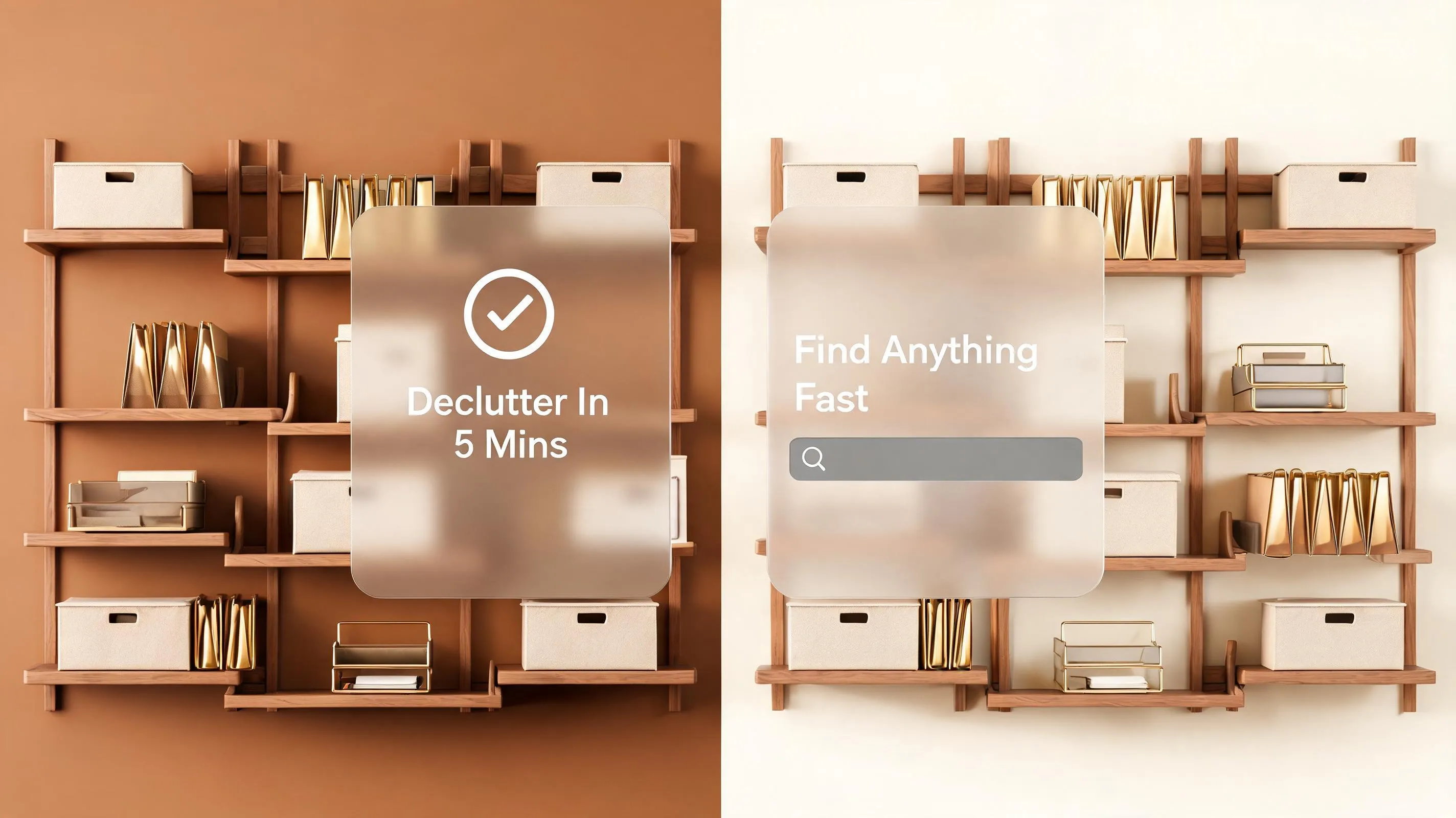
1. Home Office Storage Ideas That Keep Your Workspace Organized
Before purchasing new filing cabinets or mounting shelves, step back and examine how physical clutter accumulates across your desk during a typical workweek.
Most office setups fail because homeowners treat storage as an afterthought, throwing items into deep, unorganized drawers where they disappear into dark corners.
Paper Stacks
Loose Stationery
= Work Frustration
Vertical Wall Shelves
Hidden Trays
= High-Flow Focus
To execute high-impact home office storage ideas, anchor your project around three foundational rules:
- Enforce the 18-Inch Reach Zone: Keep high-frequency daily items (pens, active notebooks, lip balm) within an easy 18-inch arm span of your primary seating position.
- Clear the Desk Deck Surface: Reserve 90% of your primary desk surface strictly for your active computer setup, keyboard, and coffee mug.
- Establish Point-of-Use Storage: Store tools precisely where you use them—chargers near power strips, paper near printers, and reference files inside file drawers.
Explore our comprehensive layout strategies for integrating functional workstations into relaxing bedroom spaces without sacrificing visual harmony.
2. Sort Your Office Essentials Before Choosing Storage Furniture
The fastest way to waste money on furniture is buying storage cabinets before sorting what you actually need to store.
Executing effective home office organization starts with a ruthless purge and categorization audit of your physical work materials.
Follow this 3-step diagnostic to streamline your office storage planning:
- Purge Unused Supplies: Discard dried-up pens, duplicate charging cords from old phones, and outdated paperwork before buying a single organizer.
- Categorize by Activity Zone: Group items by purpose—tech chargers together, tax documents together, and writing tools together.
- Determine Open vs. Closed Storage: Reserve open floating shelves for decorative items and reference books; route visual clutter like printer paper into closed cabinets.
If your workspace shares a living room footprint, see our zoning tactics for blending a workstation into a shared lounge space.
3. Use Desk Drawers to Keep Everyday Work Supplies Within Reach
Deep desk drawers without internal dividers quickly degenerate into chaotic "junk drawers" where small supplies get buried under notebooks.
Mastering desk drawer organization relies on creating rigid physical compartments using custom home office drawer storage dividers.
- Tangled charging cords on top
- Searching takes 2 minutes
- Dedicated vertical slots for notebooks
- Instant 3-second tool retrieval
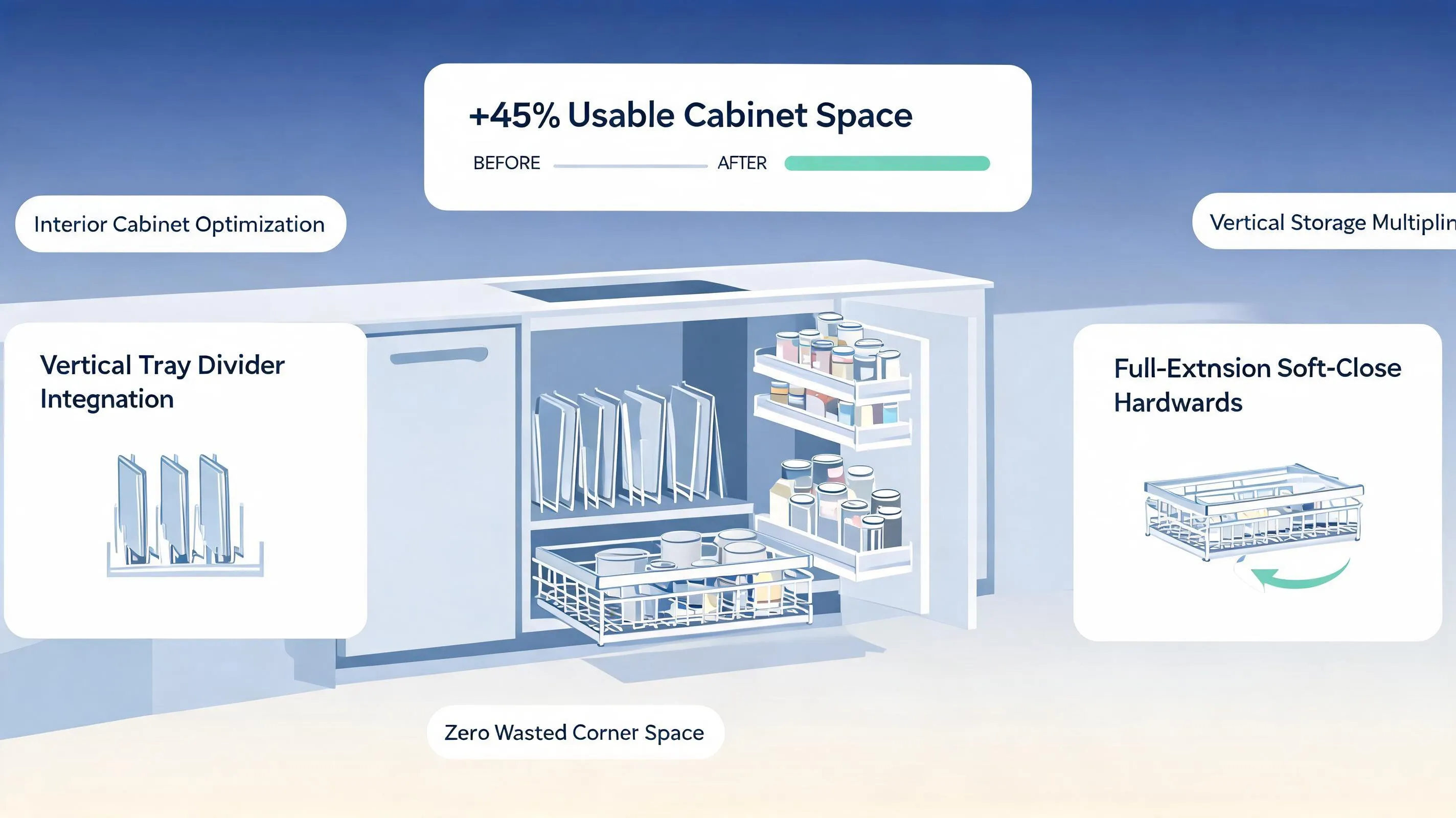
Drawer organization rules:
- Install Modular Acrylic Divider Trays: Measure drawer interior dimensions and install interlocking plastic trays to keep pens, sticky notes, and paperclips pinned in place.
- File Notebooks Vertically: Stand active planners and notebooks vertically inside deep drawers like books rather than stacking them horizontally on top of each other.
- Reserve Top Drawers for Active Tools: Keep your top drawer exclusively for daily tools, placing secondary items like extra printer ink in lower bays.
Visualize Your Complete Office Storage Layout Today
Trying to calculate drawer clearances, test floating shelf placements, or picture how a vertical filing cabinet fits beside your desk can feel overwhelming. You don’t need to spend thousands of dollars on custom cabinetry or get lost in complex CAD software to build an organized, high-performance workspace.
Upload your room measurements to test customized desk layouts, check cabinet clearances, experiment with built-in wall shelving, and walk through your complete home office sanctuary in rich 3D before buying a single piece of furniture.
Try Floorplanner Free →5,000+
2D & 3D Furniture Symbols
100%
Browser-Based Workflow
0.1 mm
Wall & Room Snap Precision
4K
Blueprint & Render Exports
4. Add Shelving Above Your Desk Without Losing Work Surface
When floor space is limited, the empty wall space directly above your desktop becomes your most valuable real estate asset.
Utilizing home office shelving ideas and mounting floating shelves above desk setups pulls storage upward, keeping your primary work surface 100% clear.
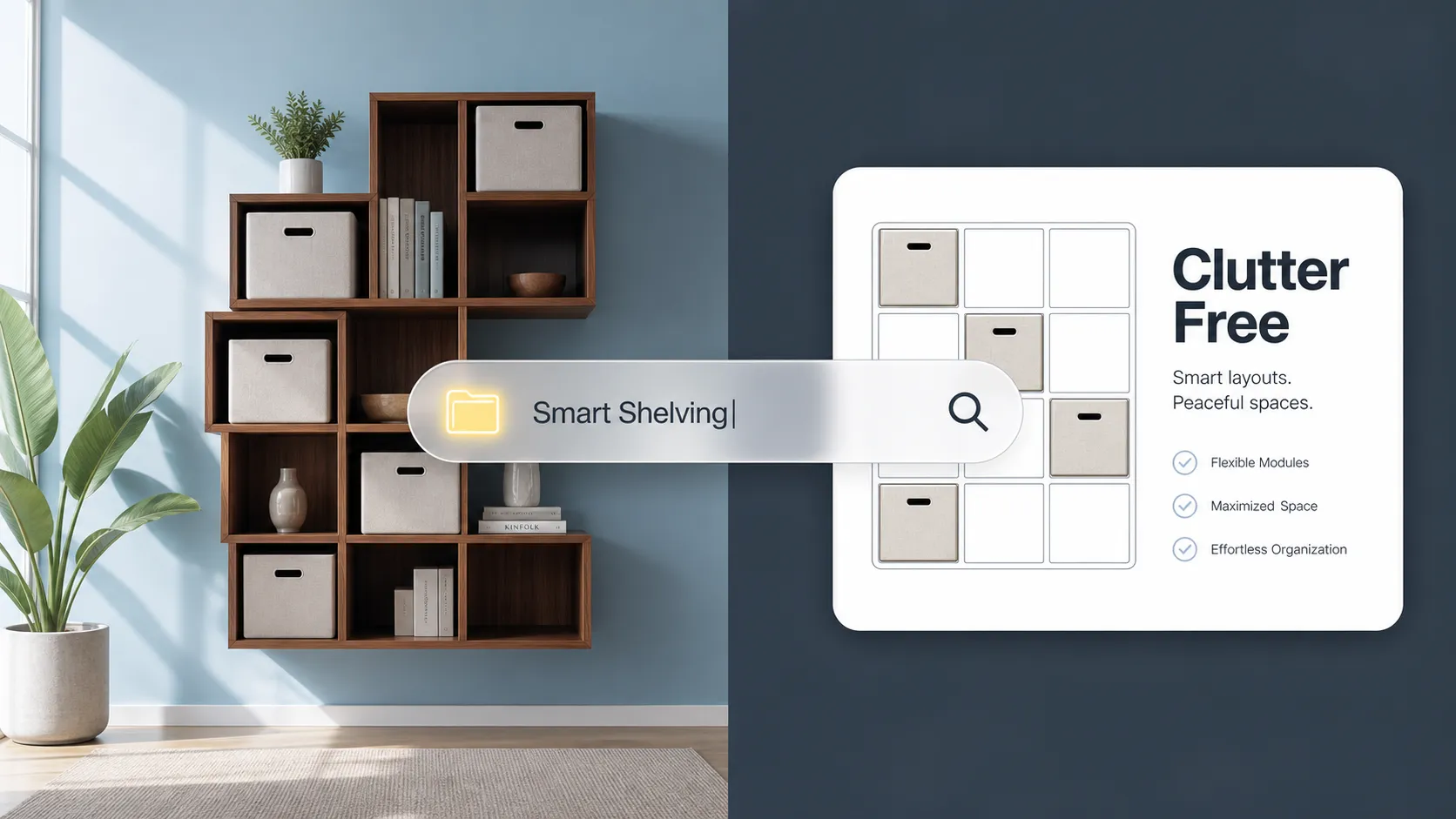
Vertical shelving rules:
- Anchor Directly into Wall Studs: Ensure heavy-duty floating shelves are anchored directly into timber studs using lag screws to support heavy reference books safely.
- Install Integrated LED Task Strips: Mount low-profile 2700K LED tape lighting beneath the lowest shelf to flood your desktop deck in uniform, shadow-free light.
- Keep Shelves Symmetrical: Align shelf widths with your desk frame below to maintain clean architectural proportions across the room.
For broader vertical wall tactics, read our vertical wall strategies that lift storage off floorboards.
5. Choose Filing Cabinets and Drawers for Important Documents
Loose stacks of client contracts, tax filings, and insurance policies create immediate mental stress when left scattered across flat surfaces.
Selecting a dedicated home office filing cabinet delivers secure office document storage that keeps sensitive paperwork organized and easy to retrieve.
  [ DOCUMENT TIER 1: Active Client Files ] ===> Lateral suspension drawer inside desk
                                                      |
  [ DOCUMENT TIER 2: Annual Tax Records  ] ===> Locked mobile pedestal under desk
                                                      |
  [ DOCUMENT TIER 3: Archival Papers     ] ===> Labelled storage boxes inside closet
Filing selection rules:
- Choose Full-Extension Ball-Bearing Slides: Ensure drawers pull out completely so you can access files at the very back of the cabinet without straining.
- Select Heavy-Duty Lateral Files: If processing large volumes of paperwork, opt for wide lateral filing cabinets that hold hanging folders side-by-side.
- Incorporate Locking Drawers: Protect sensitive financial and client documents by selecting cabinets equipped with integrated key locks.
6. Use Bookcases and Open Shelves for Books, Files, and Equipment
A well-styled bookcase does double duty: it provides massive storage volume for heavy reference manuals while adding warmth and personality to your room.
Executing stylish home office bookcase ideas relies on balancing functional office bookshelf organization with decorative styling.
Bookshelf styling guidelines:
- Use the 60/30/10 Rule: Fill 60% of shelf space with books, 30% with uniform storage boxes or binders, and 10% with decorative accents like potted plants or framed photos.
- Incorporate Matching Storage Bins: Group loose tech accessories or paper supplies inside uniform linen or leather storage boxes on open shelves to eliminate visual clutter.
- Distribute Weight Evenly: Place heavy hardcover books and paper boxes on lower shelves to keep the bookcase stable and prevent tipping.
7. Make the Most of Corners and Narrow Spaces With Compact Storage
If your home office is situated in a tight spare bedroom or hall alcove, adding large freestanding furniture pieces can block walking paths.
Unlocking high-performance small home office storage ideas relies on utilizing compact rolling carts, slim towers, and narrow office storage cabinet designs.
- Swallows open floor space
- Restricts chair movement
- Fits neatly beside desk legs
- Preserves 36" clear walking path
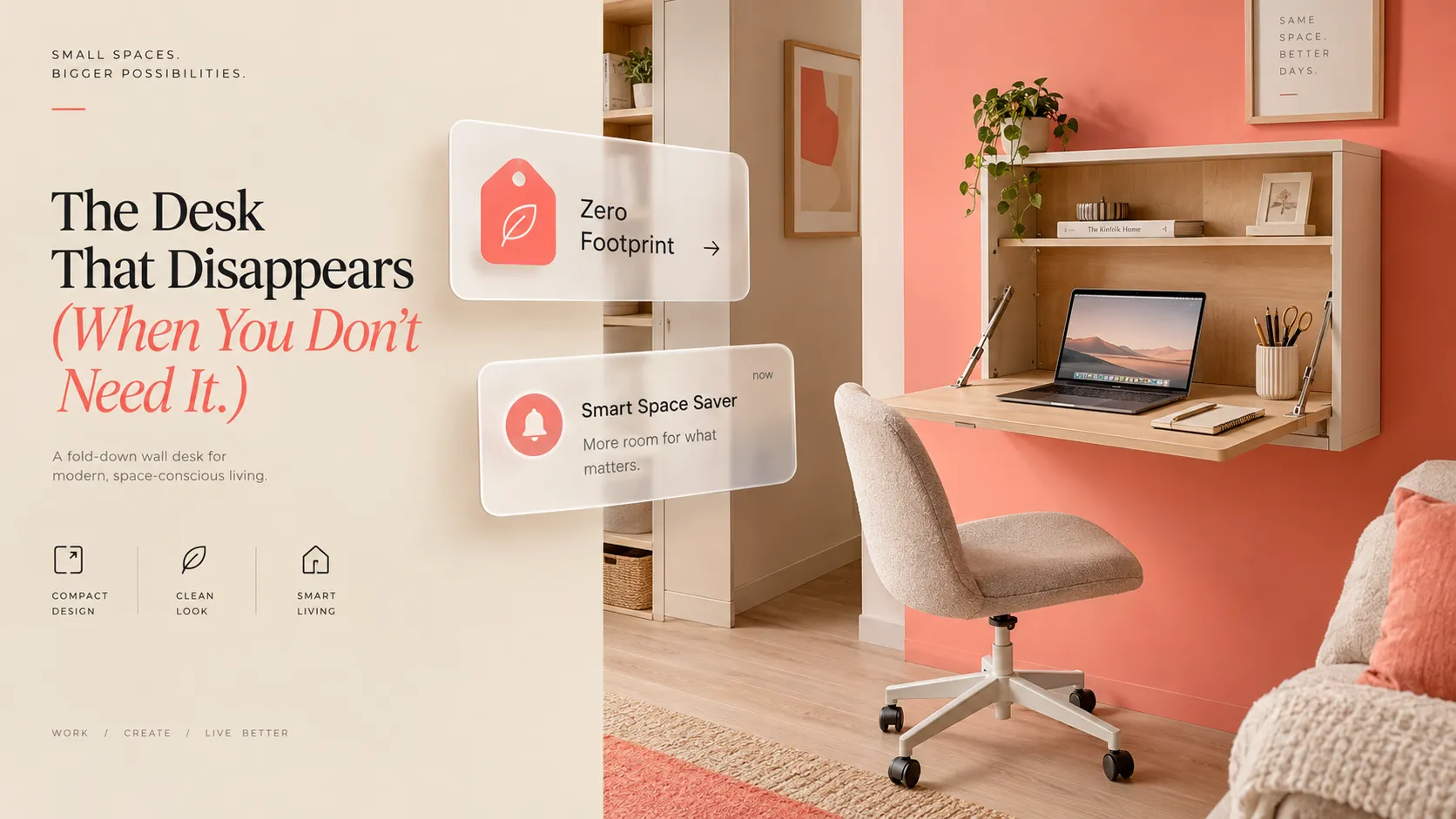
Compact storage strategies:
- Utilize Rolling Utility Carts: Position a 3-tiered metal rolling cart beside your desk to hold secondary work items, sliding it into a closet when work ends.
- Install Corner Shelving Units: Capitalize on dead wall intersections by mounting triangular floating corner shelves to hold speakers and small decor.
- Choose Slim Pedestal Cabinets: Select narrow 12-inch wide mobile drawer pedestals that tuck directly beneath your desk frame without crowding your legs.
For matching furniture proportions to your floor plan, see our sizing guide for fitting furniture into tight traffic paths.
8. Hide Printers, Chargers, and Office Equipment Inside Cabinets
Bulky plastic laser printers, paper shredders, and desktop computer towers ruin your home's aesthetic when left exposed on open desk surfaces.
Investing in a dedicated printer storage cabinet or implementing hidden office equipment storage keeps heavy electronics powered but completely out of sight.
Equipment concealment rules:
- Install Heavy-Duty Pull-Out Slides: Mount printers on 100-pound rated full-extension drawer slides inside lower credenza bays so you can glide the printer out effortlessly during use.
- Ensure Active Cabinet Ventilation: Drill 2-inch ventilation cutouts or install low-decibel USB cooling fans in rear cabinet panels to exhaust warm air generated by electronics.
- Route Power Internal to Cabinets: Install an internal surge protector inside the cabinet so equipment stays permanently plugged in out of sight.
For a deeper approach to hiding office gear completely, read our concealment strategies for vanishing workstations inside shared living spaces.
9. Organize Cables, Chargers, and Small Electronics
Nothing destroys a beautiful workspace faster than a chaotic web of black power cords, dangling surge protectors, and misplaced phone chargers.
Mastering home office cable management and executing smart electronic accessories storage ensures your desk remains sleek, organized, and stress-free.
  [ Cable Management Step 1: Screw J-channel raceway underneath desktop ]
                                      |
  [ Cable Management Step 2: Mount multi-outlet surge protector under desk ]
                                      |
  [ Cable Management Step 3: Route cords down grommet holes into trays ]
Cable management tactics:
- Mount Power Strips Under the Desk: Screw a multi-outlet surge protector directly to the underside of your desktop so only a single master power cord exits to the wall outlet.
- Use Under-Desk Cable Trays: Install a wire basket or J-channel raceway beneath your desk deck to lift heavy power bricks and cord bundles completely off the floor.
- Set Up a Dedicated Charging Drawer: Build a shallow drawer equipped with an internal power strip and velvet dividers to store and charge phones, tablets, and wireless earbuds out of sight.
10. Create a Storage System for Paperwork, Stationery, and Supplies
Having plenty of cabinets won't help if items are thrown inside randomly without a structured categorization system.
Executing effective office supply organization and building a sustainable home office storage organization system ensures every item can be retrieved and returned in under five seconds.
Systematization guidelines:
- Label Everything: Use a digital label maker or chalk tags on all storage bins, file folders, and drawers so household members know exactly where items belong.
- Enforce One-In, One-Out Rules: When buying new stationery or tech gear, discard or donate an old item to keep your storage volume perfectly balanced.
- Group by Task Function: Keep all mailing supplies (stamps, envelopes, tape) inside a single portable caddy so you can grab the entire kit for shipping tasks.
For guidance on non-toxic finish standards, low-VOC paint formulations, and eco-friendly furniture millwork, visit the Sustainable Furnishings Council (SFC).
11. Keep a Small Home Office Organized Without Filling It With Furniture
Overcrowding a small home office with bulky cabinets makes the room feel dark, cramped, and claustrophobic.
Unlocking high-performance small home office storage relies on using multi-functional furniture, narrow wall profiles, and flexible compact office storage ideas.
- Freestanding heavy bookcase
- Swallows 70% of floor space
- Vertical floating wall shelves
- Multi-functional credenza storage
Space-preserving strategies:
- Select Floating Wall Desks: Choose a wall-hung desk with built-in upper cubbies. Revealing continuous floorboards beneath creates the visual illusion of a larger room.
- Use Multi-Functional Credenzas: Replace standalone filing cabinets with a sleek credenza that functions as a printer stand, document holder, and room decor display.
- Capitalize on Vertical Height: Extend shelving all the way to the ceiling line rather than spreading wide cabinets horizontally across limited wall space.
For multi-function workspace design, read our multi-function workspace playbook for rooms pulling double duty. For soft divider tactics that define zones without drywall, see our folding screen and shelf playbook for carving storage zones without walls.
12. Build a Home Office Storage Layout That Stays Organized
Ready to build a streamlined, highly functional home office storage layout that stays clutter-free forever?
Before buying furniture, ordering drawers, or drilling wall anchors, bring all your spatial measurements, storage needs, and equipment power requirements together into a clear home office storage layout. To preview everything before committing, read our digital preview workflow for testing storage layouts before buying cabinets.
  [ Step 1: Audit Office Supplies & Purge Unused Cables & Papers ]
                                 |
  [ Step 2: Establish 18" Reach Zone & Clear Primary Desk Surface Deck ]
                                 |
  [ Step 3: Mount Under-Desk Cable Trays & Conceal Power Strips ]
                                 |
  [ Step 4: Install Vertical Wall Shelving & Pull-Out Printer Bays ]
                                 |
  [ Step 5: Execute Home Office Storage Solutions with Total Confidence ]
The Ultimate Home Office Storage Sign-Off Checklist:
- [ ] Validate Desktop Clearances: Confirm primary desk deck surface stays 90% clear of permanent supplies.
- [ ] Organize Drawer Interiors: Install acrylic divider trays in top drawers for small daily tools.
- [ ] Mount Under-Desk Cable Trays: Lift power bricks, surge protectors, and cord bundles off the floor.
- [ ] Conceal Bulky Electronics: Store printers and desktop towers inside vented lower credenza cabinets.
- [ ] Anchor Vertical Wall Shelves: Secure floating shelves directly into wall studs using heavy lag screws.
- [ ] Label Storage Bins: Apply clear labels to all file folders, storage containers, and drawer units.
Step Into Your Streamlined Workspace Sanctuary Today
You deserve a home office that supports your professional ambitions with effortless order, smart organization, and uncompromised style. Eliminating desk clutter and building a high-performance storage layout doesn't require architectural guesswork or endless daily tidying.
By focusing on point-of-use drawer storage, vertical wall shelving, concealed cable management, and structured document systems, you can eliminate daily frustration and build a balanced workspace tailored to your exact lifestyle.
What specific storage bottlenecks are currently holding you back? How can we help you customize the ultimate organized workspace layout today?
External Resources & Industry Standards
To explore deeper technical insights into residential space planning, electrical safety, and lighting metrics, consult these authoritative industry resources:
- National Kitchen & Bath Association (NKBA) – Official space planning guidelines, ergonomic clearances, and residential design standards.
- Illuminating Engineering Society (IES) – Technical lighting standards, glare prevention, and ergonomic task lighting metrics.
- International Code Council (ICC) – Residential building codes, electrical access regulations, and safety standards.
- Sustainable Furnishings Council (SFC) – Official guidelines for non-toxic finishes, low-VOC paints, and sustainable office furniture.
Frequently Asked Questions About Home Office Storage Ideas
Why does my desk turn into a chaotic disaster zone by the middle of every week?
Desktop clutter accumulates when daily tools lack rigid, immediate physical boundaries. When returning a pen, notebook, or charging cable requires standing up or digging through a deep, unorganized cabinet across the room, you naturally drop items onto your flat desktop instead. Installing modular drawer divider trays directly beneath your primary typing zone gives every item an instant landing spot, protecting your working surface from visual overload.
How do I stop my home office from feeling cramped when adding more storage furniture?
Adding heavy, floor-bound filing cabinets swallows precious square footage and makes tight rooms feel claustrophobic. Reclaim open floor space by building upward: mount sturdy floating wall shelves above your desk and choose vertical storage towers that extend toward the ceiling. Capturing empty wall real estate increases storage capacity while leaving floorboards open, preserving clear walking pathways.
What is the most effective way to organize deep desk drawers so supplies don't disappear?
Deep drawers quickly degenerate into chaotic junk drawers when loose tools roll around uncontained. Measure your drawer interior and drop in interlocking acrylic divider trays to lock pens, sticky notes, and paperclips into dedicated channels. Stand active notebooks and planners vertically like books on a shelf rather than stacking them horizontally, giving you instant visual access to everything inside.
How can I store bulky laser printers and shredders without ruining my office decor?
Large plastic electronics ruin room aesthetics when left exposed on open desk surfaces. Integrate a dedicated credenza fitted with lower cabinet doors and heavy-duty 100-pound pull-out drawer slides. Mounting heavy printers on sliding trays allows you to glide equipment out effortlessly during printing tasks and slide it completely out of sight the moment your workday ends.
How do I permanently eliminate the web of tangled cords and power strips under my desk?
Taming cable chaos relies on under-deck management hardware. Screw a metal J-channel raceway and a multi-outlet surge protector directly to the underside of your desktop deck. Route monitor cables, laptop power supply bricks, and lamp cords down through rear desktop grommets straight into the hidden basket below, lifting cord bundles completely off your floorboards.
What should I do with piles of loose paper and tax records taking over my workspace?
Unorganized paperwork creates constant mental friction when scattered across flat surfaces. Divide paper files into three distinct tiers: active daily projects go into a vertical desktop rack, weekly reference files move into a lateral filing drawer, and long-term tax or legal documents get archived inside labeled storage boxes stored safely in a closet.
How do I choose between open shelving and closed cabinet storage for my office?
Base your storage selection on visual density. Reserve open floating shelves for items you want to see—such as decorative plants, framed artwork, and uniform cloth-bound books. Route visual clutter—like extra printer paper stock, backup tech cables, and unorganized binders—behind solid wooden cabinet doors or inside matching fabric storage bins to keep sightlines calm.
Can I create functional storage in a small home office without buying expensive built-ins?
Absolutely. Optimize tight spaces by utilizing multi-functional, mobile storage solutions. Place a slim, 3-tiered metal rolling utility cart beside your desk frame to hold active project folders and stationery. Glide the cart directly to your workstation during focus hours, then roll it into a closet or room corner when your shift ends.
How do I keep small tech accessories, chargers, and dongles from getting lost?
Grouping small electronics requires dedicated point-of-use compartments. Create a shallow "charging drawer" fitted with internal cable clips and velvet-lined acrylic inserts. Assign specific channels for phone chargers, wireless earbuds, display dongles, and external hard drives so you never waste time hunting down a missing cable before a presentation.
How can I make open bookcase shelves look organized instead of cluttered?
Follow a balanced styling ratio across open shelving runs: fill 60% of shelf space with books, 30% with uniform storage boxes or binders, and 10% with decorative accents like potted greenery. Group loose paper items inside identical linen storage boxes with chalkboard tags, concealing visual chaos while adding warmth to your walls.
How do I stop my daily workspace from getting re-cluttered after I just organized it?
Sustainable organization depends on low-friction return routines. Keep high-frequency daily items within an easy 18-inch arm's sweep of your seating position so putting things away takes zero effort. Spend exactly two minutes at the end of every shift returning tools to their designated spots so you start the next morning fresh.
How can I test different storage layouts before buying heavy cabinets or drilling into walls?
Avoid costly sizing mistakes by mapping your exact furniture footprints, drawer clearances, and wall stud locations virtually before ordering equipment or drilling into drywall. Verifying your storage capacities and walking aisles in advance guarantees every cabinet fits your room with absolute spatial precision.


